Gulistan to Jizzakh: the road across the Hungry Steppe
About 80 kilometres of steppe separate two neighbouring regional capitals. How to travel this road, how the transport options differ and what to know about the route.
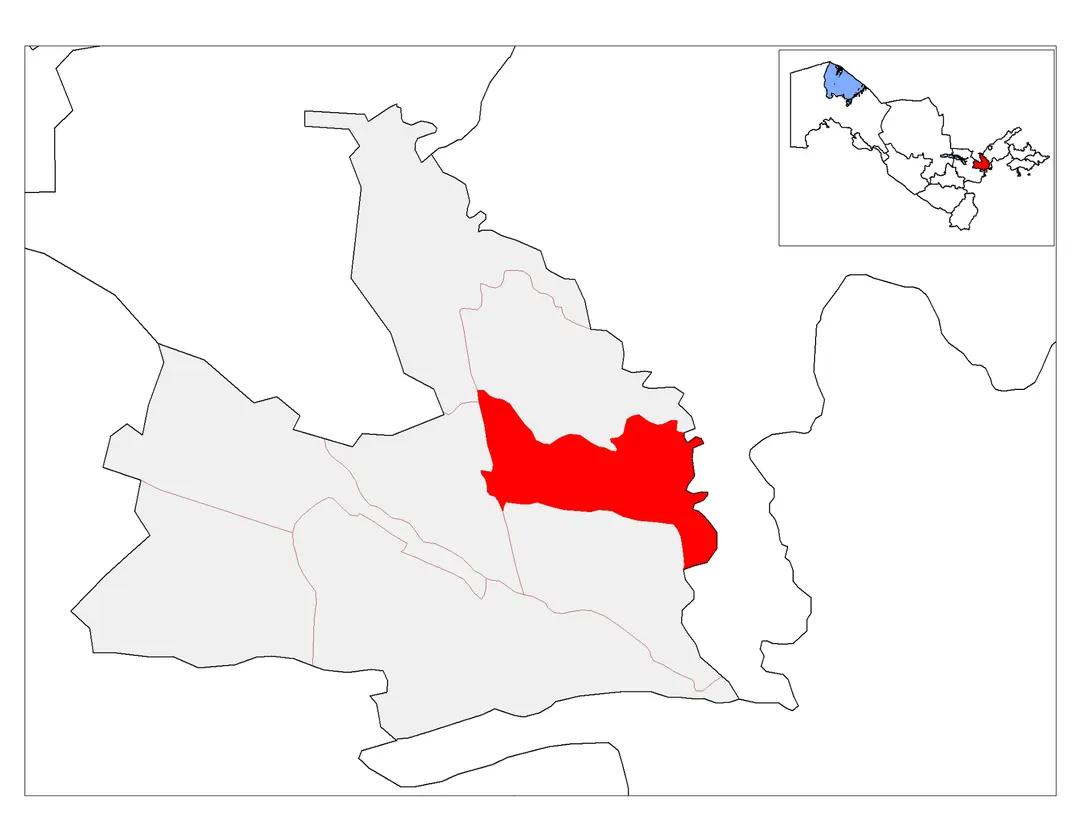
Gulistan and Jizzakh are regional capitals that sit close together on one of the country's main highways, Tashkent to Samarkand. Between them lies the Hungry Steppe, in Uzbek Mirzachul, a vast plain that was developed for cotton and irrigation in the twentieth century. Crossing it needs no elaborate preparation, but it has features worth knowing in advance.
Distance and time
By road there are about 80 to 100 kilometres between Gulistan and Jizzakh, and the drive takes an hour to an hour and a half. The highway is mostly flat and straight with good surfacing, but roadworks and dense truck traffic can slow you down. In winter the open steppe brings strong crosswinds, fog and occasional snow, and in summer heat and dust.
What the Hungry Steppe is
The Hungry Steppe is the plain between the Syrdarya and the foothills, where for centuries almost nothing grew because of salinity and lack of water. Large-scale development began in the nineteenth and twentieth centuries with the building of canals, and today it is one of the country's most important cotton regions. From the window you will see rows of trees along canals, fields, farm machinery and low-rise settlements.
This is not a tourist route in the usual sense: there are no ancient cities or museums. But you can see what modern Uzbek agriculture looks like and take a photo or two of the sunset sky over the steppe.
How to get there
Buses and minibuses
Minivans and buses run between Gulistan and Jizzakh. They leave when full and suit you if you are not in a hurry and do not mind a tight cabin. Prices are low and the schedule is flexible.
Train
Both cities lie on the Tashkent to Samarkand railway. Passing trains do not stop everywhere, so check the timetable: the closest in time are usually regional electric trains and some fast services. Buy a ticket in the official app or at the ticket office, and check prices before you travel.
Taxi and shared rides
If there are two or three of you, a whole-cab taxi can be a reasonable price on such a short distance. If you are alone, it is cheaper to join a driver who is already going your way: you book one seat in the Yo'ldosh app and see the driver's profile and departure time. The highway is busy, so finding fellow passengers is relatively easy. See the trips here: Gulistan to Jizzakh and the opposite direction Jizzakh to Gulistan.
What to see in and around Jizzakh
Jizzakh is the centre of a region set between the plain and the mountains. The city itself is relatively young, but there is plenty to do:
- the city bazaar, with local sweets, nuts and dried fruit;
- the mountains of the Turkestan range in the south of the region, among which the Zaamin nature park is worth mentioning, with forests, streams and summer guest houses;
- the Jizzakh fortress (citadel) and monuments tied to the history of the region.
If you have a full day, you can go from Jizzakh to the Zaamin foothills: in the hot months it is cool and quiet there. The road takes about two hours one way, and a car is best for it.
Practical tips
- Fill up beforehand: there are enough stations between the cities, but in bad weather queues can be longer.
- In summer take water and a hat.
- Overtaking on the open highway is dangerous, especially in fog, so do not rush the driver.
- Wear a seat belt in any seat.
- If you plan to continue to Samarkand, remember that about two more hours of road separate Jizzakh from the ancient city.
Plan the road
This is one of the simplest routes in terms of logistics, and you can travel it at any time of year. To find a trip, open Gulistan to Jizzakh or Jizzakh to Gulistan. Other directions are in all routes, and drivers who travel this highway regularly will find the for drivers page useful.
Cover photo: Jamshid Nurkulov, CC BY-SA 4.0, Wikimedia Commons.
