Khoja Daniyar Mausoleum: A Shrine of Three Faiths in Samarkand
Why Muslims, Christians and Jews all come to the Prophet Daniel, where the legend of the growing tomb comes from, and the best view of the Siab stream.
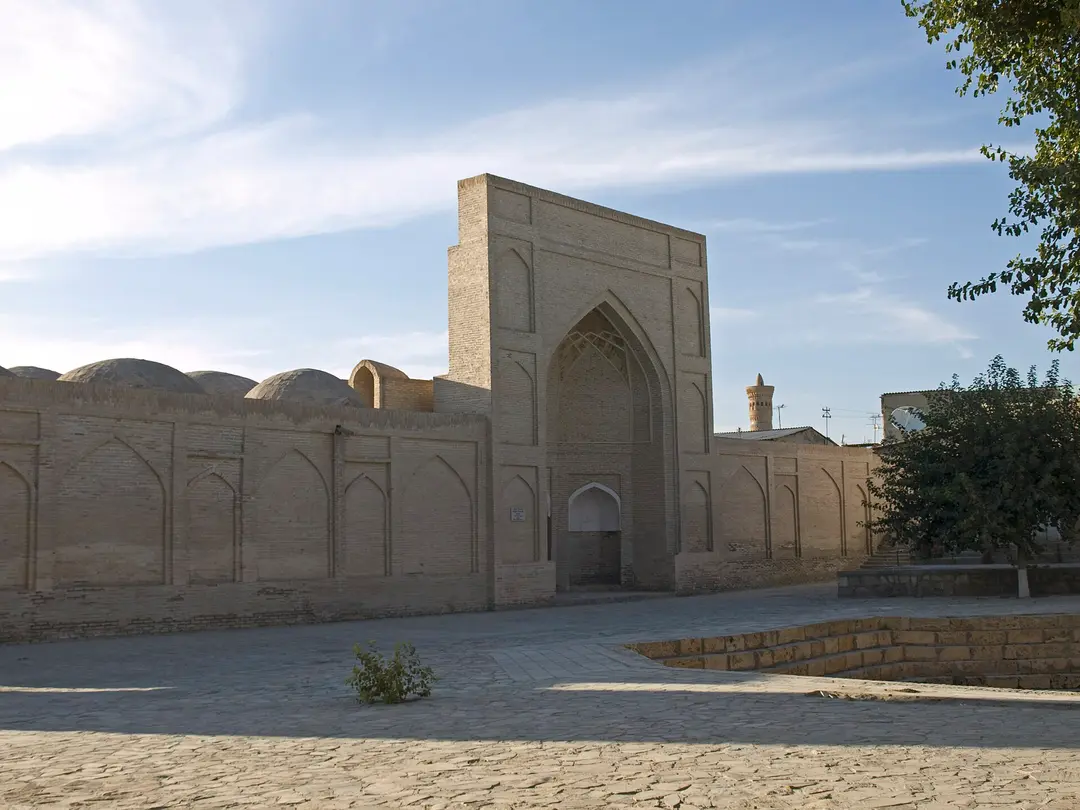
On the north-eastern slope of the Afrasiab hill, above the narrow green valley of the Siab stream, stands a long, low building with five domes. Inside lies a tombstone roughly eighteen metres long. Locals call the place Khoja Daniyar and believe that the biblical Prophet Daniel rests here. The mausoleum is one of the few places in Uzbekistan revered equally by Muslims, Christians and Jews.
Who Daniel was and how he "came" to Samarkand
The Prophet Daniel is known from the Old Testament book that bears his name: he lived in the Babylonian exile, interpreted the dreams of kings and, according to the story, survived unharmed in the lions' den. In Islamic tradition he is also honoured as a righteous man and prophet. Daniel's tomb is traditionally placed in the Iranian city of Susa.
The Samarkand legend links the shrine to Amir Timur. As the story goes, during his campaigns Timur could not capture a certain city, and he was told that the city was protected by the remains of a saint. So he took part of the relics and brought them back to his capital. On the way, the legend says, the pack animals stopped by the Siab and refused to go any further, and the relics were buried right there. Historians treat this version with caution, but for pilgrims it has long been part of the shrine.
The legend of the growing tomb
The most famous detail of the mausoleum is the unusual length of the tombstone. There are several explanations, and you will hear all of them at the entrance:
- one version says the tomb grows a little every year, which is why the building had to be lengthened;
- another says the length was deliberate, to hide the exact place of burial;
- a third links the size to the belief that prophets and saints were people of extraordinary height.
Long tombstones appear at other shrines in Central Asia too, and folk tradition often connects them with the image of a giant righteous man. The present five-domed building dates from the 20th century and replaced earlier structures. The interior is simple: pale walls, carpets and the long tombstone under a green cover.
Why people of different faiths come here
Visit on an ordinary day and you will see a very mixed crowd. Muslims recite verses and pass their palms over their faces. Christians, especially pilgrims from Russia and Europe, come to honour a prophet of the Old Testament. Jewish visitors remember Daniel as one of the heroes of their sacred history. For centuries Samarkand was a city where different communities lived side by side, and Khoja Daniyar is a living reminder of that.
The caretakers like to tell one more story. An old pistachio tree grows beside the mausoleum. It is said to have been considered dead for a long time, and after Patriarch Alexy II of Moscow prayed here in 1996 the tree turned green again. For some this is a miracle, for others a beautiful coincidence, but everyone walks over to the tree.
The spring and the view of the Siab
Below the mausoleum, by the staircase, there is a spring. Its water is considered healing, and many people fill bottles. Whether to drink it is up to you; if your stomach is sensitive, simply rinse your face.
The real charm of the place is the quiet and the view. From the terrace in front of the mausoleum the Siab valley opens up with willows, mulberry trees and a thin ribbon of water. From here it is easy to see why the ancient city chose this hill: steep slopes, water below and a view in every direction. In the warm season the evening light is soft, and towards sunset it is cooler here than in the city centre.
Practical tips
- Clothing. This is an active shrine: cover shoulders and knees; women should bring a headscarf.
- Shoes. You may be asked to remove your shoes inside the mausoleum - follow what others do.
- Stairs. Steps lead down the slope to the mausoleum, and you will have to climb them again on the way back. If you have knee problems, pace yourself.
- Time. The visit itself takes 30-40 minutes, but do not rush away from the terrace.
- Entry. Usually free, and you can leave a donation at the entrance. Rules may change, so check on site.
Getting there and what is nearby
The mausoleum is about two to three kilometres from the Registan, on the road to the Ulugbek Observatory. On foot from Siab Bazaar it takes about twenty minutes; by taxi, a few minutes. A natural half-day loop: Siab Bazaar, Shah-i-Zinda, the Afrasiab Museum, Khoja Daniyar and the Ulugbek Observatory, all strung along the same road.
The road from Tashkent
Tashkent to Samarkand is about 300 km, roughly four to four and a half hours by car along the highway via Gulistan and Jizzakh. If you would rather not fit around train timetables, a shared ride is an option: on Yo'ldosh drivers publish trips and you book a seat in the app. It is cheaper than a private taxi, and drivers are verified. Leave the capital in the morning and you will be in Samarkand by lunchtime, with time to reach Khoja Daniyar before sunset.
Look for available seats on the Tashkent - Samarkand route page. Tips on choosing a ride and what to bring are in the for passengers section.
Cover photo: Ymblanter, CC BY-SA 4.0, Wikimedia Commons.
