The Savitsky Museum in Nukus: the Louvre of the desert
How a collection of Russian avant-garde came together in the heart of Karakalpakstan, what to see first and how much time to allow for the visit.
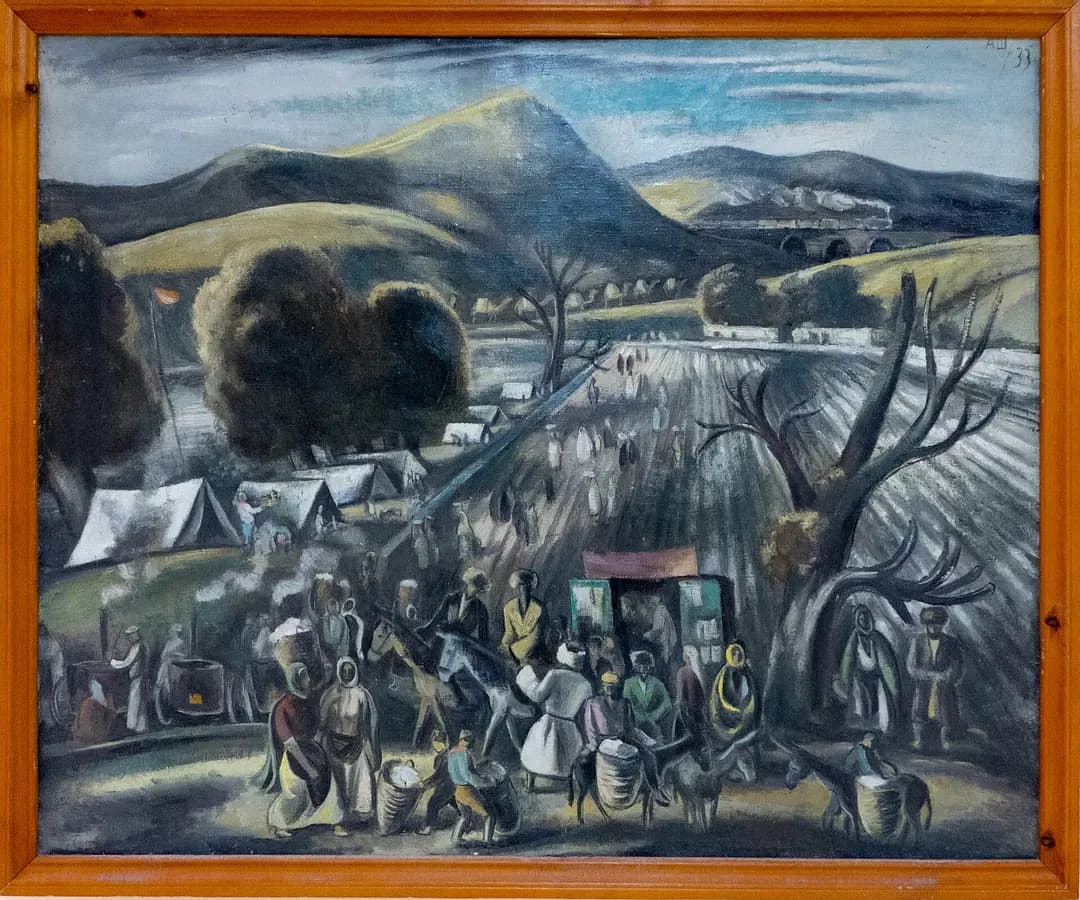
In Nukus, the capital of Karakalpakstan, stands a museum called the Louvre of the desert. The Igor Savitsky State Museum of Arts holds one of the most unusual collections of Russian and Soviet art in the world. It is not easy to get here: the city is far from the usual routes, but for those who value art the journey pays off in full.
Who Savitsky was
Igor Vitalyevich Savitsky (1915-1984) was an artist and archaeologist. He came to Karakalpakstan in the 1950s with an expedition to study ancient Khorezm and stayed for a long time. He became fascinated not only by archaeology but also by folk art: he collected Karakalpak embroidery, jewellery, carpets and household objects. Later Savitsky began collecting works by Russian and Soviet artists whom the authorities rejected and who had been left without attention.
How the collection was assembled
In the 1920s and 1930s many avant-garde artists came under ideological pressure: their works were called formalist, exhibitions were closed, and canvases were hidden in storerooms or destroyed. Savitsky found such works among widows, heirs and friends. He bought them with modest funds and begged for them, exchanging other items and records. He registered the pictures as exhibits of the Karakalpak museum, and since the region was far from Moscow and ideological control, the works were safe here. The museum was founded in 1966, and Savitsky directed it until his death.
Today the collection numbers tens of thousands of items. It is one of the largest collections of Russian avant-garde in the world, as well as works by artists connected with Uzbekistan and Central Asia.
What to see first
The museum is vast, and if time is short, concentrate on a few directions.
Russian avant-garde
The museum's chief pride is the paintings and graphics of artists from the 1910s to the 1930s: Alexander Volkov, Robert Falk, Nadezhda Udaltsova and others. Here you can see vivid colour solutions, geometric forms and experiments with free composition.
The Turkestan avant-garde
These are works by artists who lived in Central Asia, in particular in Tashkent and Samarkand. They joined the Russian school with Eastern motifs: bright colours, patterns, bazaar scenes and city views. Such masters include Ural Tansykbaev.
Karakalpak art
Separate floors present embroidery, national dress, jewellery and traditional household objects. They show how the region lived before and after sovietisation.
Archaeological finds
Part of the display is devoted to ancient Khorezm: ceramics, jewellery, objects from excavations. They complement the theme of a trip to the Ellikkala fortresses well.
How much time you need
A quick tour takes about an hour and a half. To walk the main halls calmly, allow 2 to 3 hours. If you love art and read the captions, you will need more. It is better to come at opening to avoid groups.
Practical information
- Entry is paid. Prices and hours may change, so check before you visit. Sometimes photography inside is restricted or requires a separate fee.
- The museum is closed one day a week, usually at the start of the week. Check the schedule in advance.
- The museum has guides who tell the history of the collection. A tour helps you see what does not catch the eye.
- Dress for the weather: the halls are not always well heated or cooled.
How to get to Nukus
Nukus is a distant city. From Tashkent you can fly or take a train, and by road it is a very long way. From Khiva to Nukus it is about 200 kilometres, a trip of roughly three to four hours. Trips in these directions are collected on the Tashkent to Nukus and Khiva to Nukus pages. In the Yo'ldosh app you can book a seat with a driver and share costs with fellow passengers.
What else to see in Nukus
- The Karakalpak regional museum: history and ethnography of the region.
- The central bazaar: local produce and craft items.
- The surroundings: Mizdahkan, Chilpyk, a trip to the Aral Sea.
Practical tips
- Book accommodation in advance: in season there are few places.
- Bring cash: Karakalpakstan has fewer card terminals.
- If you are heading towards the Aral Sea, keep Nukus as your base: it is easy to set out from here.
- Treat the collection as a rare treasure: do not touch the paintings and follow museum rules.
Plan your trip
To get to Nukus, open the Tashkent to Nukus or Khiva to Nukus pages. Other directions are in all routes. Drivers heading to Karakalpakstan will find the for drivers page useful.
Cover photo: Fabienkhan, Public domain, Wikimedia Commons.
