Namangan: City of Gardens and the Flower Festival
Mulla Kyrgyz Madrasa, the Khoja Amin mausoleum, parks in bloom, a lively market and trips to Chust and Kasansay: a guide to the northern hub of the Fergana Valley.
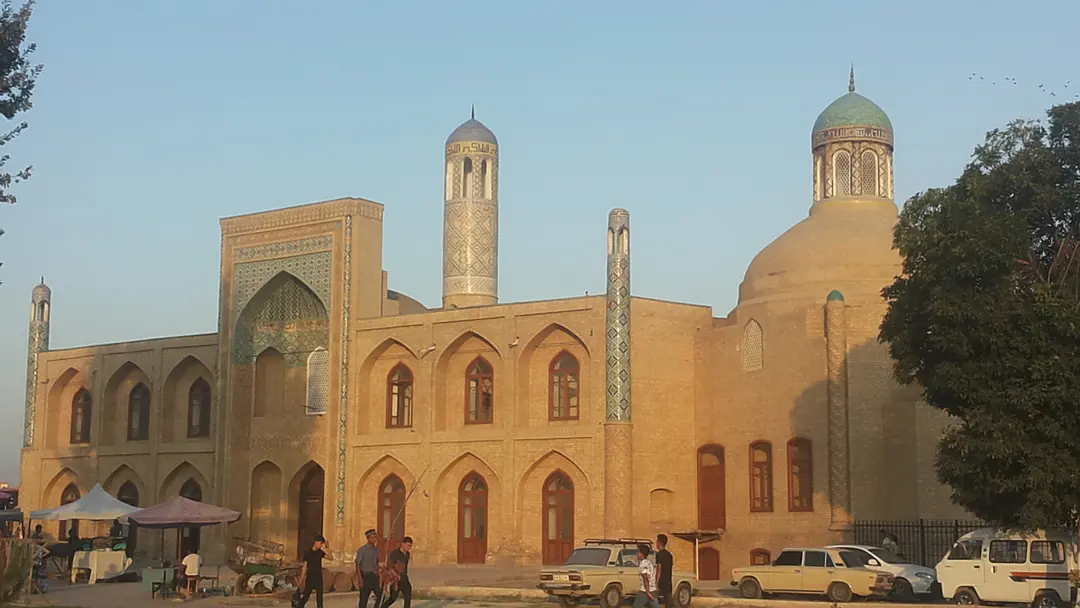
Namangan lies on the northern side of the Fergana Valley, on the right bank of the Syr Darya, and from the first minutes it feels like a garden city. There are parks and flowerbeds everywhere, and in May the city holds a flower festival that draws visitors from across the country. But Namangan is not only about flowerbeds: it has early 20th-century madrasas, old mosques and an 18th-century mausoleum, and nearby lie the ruins of Akhsikent, an ancient capital of the valley. Here is how to spend a day or two in the city and where to go in the surroundings.
Getting there
From Tashkent to Namangan it is about 290 km. The road goes through Angren and over the Kamchik Pass, then via Pap. The journey takes roughly 5 hours. From Fergana it is about one and a half to two hours, depending on which Syr Darya crossing you take.
Drivers leave often on the Namangan — Tashkent route, and the Namangan — Fergana route is a convenient way to move around the valley. In both cases you can take a single seat without paying for a whole car.
Mulla Kyrgyz Madrasa
The city's main architectural symbol is the Mulla Kyrgyz Madrasa, built in 1910. Its portal is decorated with patterned brickwork and carving, and the inner courtyard is ringed by students' cells. The building blends the traditional techniques of Fergana masters with early 20th-century decoration in an unusual way. The facade photographs best in the morning or late afternoon, when the sun is not shining into your lens.
The Khoja Amin Mausoleum
The Khoja Amin Mausoleum (Khojamni Kabri) is an 18th-century building with a portal faced in carved terracotta and glazed tiles. It is one of the most valuable historic monuments in the city. It is a revered place, so keep quiet, dress modestly and do not wander into the surrounding cemetery without reason.
Mosques
- The Ota Valikhon Tura Mosque is a large early 20th-century mosque with striking domes and verandas.
- The neighborhood mosques of the old town are small, often with carved wooden columns. Many are in active use, so look inside only outside prayer times and with permission.
Parks and the flower festival
Namangan is rightly proud of its parks. The central park, named after Babur, has old trees, alleys and fountains. On summer evenings families stroll here and musicians perform on the stages.
The flower festival usually takes place in May: the city is decorated with floral compositions and installations, gardeners hold exhibitions and there are concerts. Exact dates change every year, so check in advance and book accommodation early, as the city fills with visitors.
The bazaar
Namangan's central market is large and colorful. Look out for:
- dried fruit and nuts from local orchards;
- Namangan flatbread, fluffy and patterned, often taken home as a gift;
- spices and dried herbs;
- local sweets and honey.
Come in the morning, bring cash and bargain politely.
What to try
Namangan cooking is part of the wider Fergana tradition. Look for plov served at lunchtime, shashlik, hearty soups and, of course, the bread. In summer, try local apricots, cherries and grapes. Teahouse prices are low but change, so check on the spot.
Trips around Namangan
Chust
Chust is a small town about 40 km to the west, famous for handmade knives and skullcaps with the "kalampir" (pepper pod) pattern. Blacksmiths' workshops operate here, and the bazaar sells Chust knives in all sizes. Rides on the Namangan — Chust route take less than an hour.
Kasansay
Kasansay, north of Namangan, is a foothill district with a reservoir, a river and orchards. People come here for picnics and cooler air in the hot months. The drive is short, but in the mountains it is best to travel in daylight.
Akhsikent
The ruins of ancient Akhsikent by the Syr Darya were once one of the valley's main centers in the early Middle Ages. Today it is an archaeological site with remains of walls and a steep bluff above the river. Bring water and closed shoes.
Where to stay
Namangan has hotels of various levels and guesthouses, most of them in the center or near the main streets. Staying centrally is more convenient: you can walk to the madrasa, the bazaar and the park, and it is easier to leave for Chust or Kasansay in the morning. During the flower festival free rooms are scarce, so book ahead and confirm the terms directly with your hosts.
Two-day plan
| Day | What to do |
|---|---|
| 1 | Mulla Kyrgyz Madrasa, Khoja Amin Mausoleum, the bazaar, evening in the park |
| 2 | A trip to Chust or Kasansay, and Akhsikent if time allows |
Tips
- The best time is May (the festival), as well as September and October.
- Summer days are hot, so plan sightseeing for mornings and evenings.
- Modest clothes are needed for mosques and mausoleums.
- You will need cash at the bazaar and in Chust's workshops.
Getting around
Namangan is easy to include in a longer valley trip. Through Yo'ldosh you can find rides on the Namangan — Tashkent, Namangan — Fergana and Namangan — Chust routes: seats are booked in the app, drivers are verified, and you choose when to leave. All directions are on the routes page.
Cover photo: Ziqo, CC BY-SA 4.0, Wikimedia Commons.
