Ramadan in Uzbekistan: What Travellers Should Know
How food service works during the fasting month, what iftar is, what evenings look like and which courtesy rules a guest should follow.
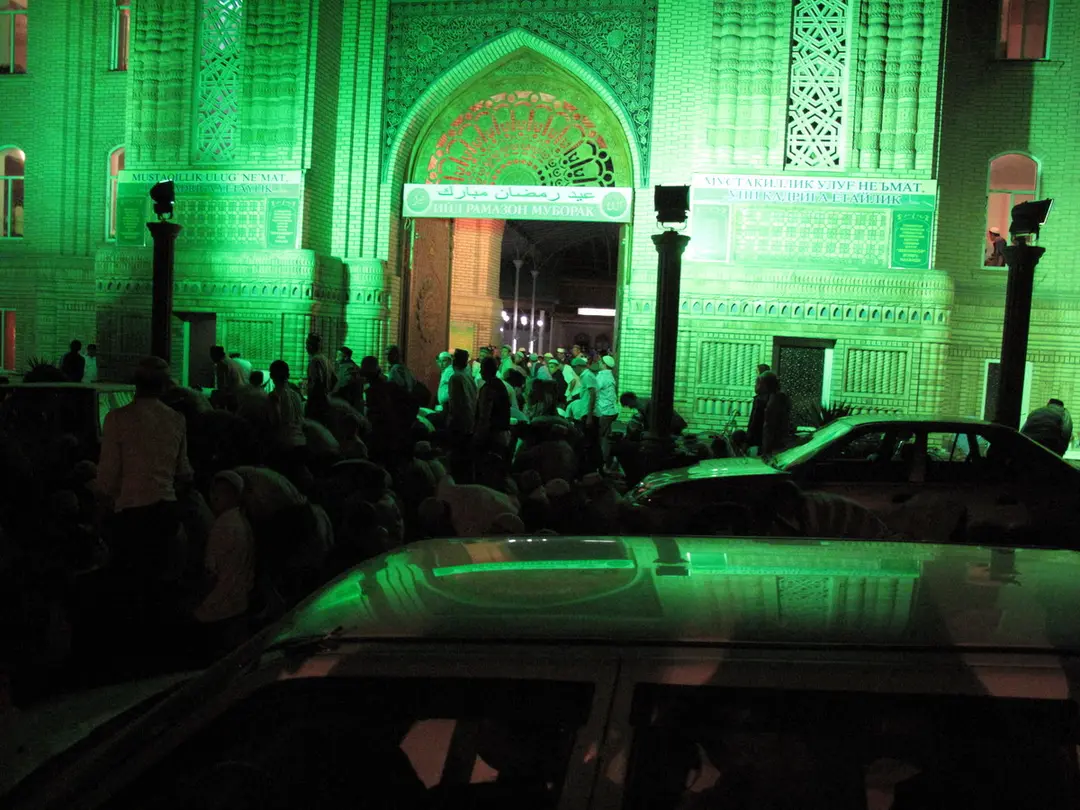
Ramadan ("Ramazon" in Uzbek) is the ninth month of the Islamic calendar, a time of fasting from dawn to sunset. Uzbekistan is a secular country where far from everyone fasts, but the month is still noticeable: the rhythm of cities, working hours and the atmosphere of the evenings change. Travelling then is possible and interesting if you know a few simple rules.
When Ramadan falls
The Islamic calendar is lunar, so Ramadan shifts about 10 to 11 days earlier in the Gregorian calendar each year. Exact dates depend on the sighting of the new moon and are announced by religious authorities shortly before the start. The month ends with the festival of Ramazon Hayit (Eid al-Fitr). Check the dates for the year of your trip.
What it looks like in Uzbekistan
Uzbekistan has a moderate attitude toward religion. Many people fast fully or partly, others do not. Tourists do not need to fast, but it is worth showing respect to those who do.
What you will notice:
- in some towns and villages it is quieter than usual by day;
- some cafes and canteens are closed by day or work with curtained windows, especially in the regions;
- in big cities, particularly Tashkent, most venues are open and tourist restaurants work as usual;
- in the evening before sunset the streets are lively: people hurry home or to restaurants for iftar;
- after sunset cities come alive, cafes and bazaars work and many people stroll late.
Iftar and suhoor
Iftar is the evening meal that breaks the fast after sunset. It usually starts with water or dates, followed by tea, samsa, soup and plov. Suhoor is a light meal before dawn. If locals invite you to iftar, it is a big sign of respect. Bring a small treat such as sweets or fruit, and do not refuse the food offered.
Many restaurants, especially in Tashkent and Samarkand, offer special iftar menus. It is best to book tables in advance, especially at weekends.
Courtesy rules
- Do not eat, drink or smoke ostentatiously on busy streets and near mosques in daylight, especially in small towns. In a hotel, a cafe and on enclosed premises it is fine.
- Dress modestly. Covered shoulders and knees, and covered clothing for women in holy places.
- Do not be noisy in the evening near mosques during evening prayers (tarawih).
- Greet and thank. "Ramazon muborak" (blessed Ramadan) is a nice greeting.
- Respect the routine. Do not schedule business meetings for the time just before sunset, when people may be tired.
- Photograph with care. Do not photograph people at prayer without permission.
How venues and sights operate
Museums and monuments are mostly open, though some may run shorter hours. Bazaars work, although by day in small towns activity is lower. Generally in big cities everything is available, while in the regions it is better to check.
If you are hungry by day, look for:
- a restaurant at a hotel or a tourist spot;
- cafes in shopping malls;
- markets with ready food, if they are open;
- a stock of snacks in your room.
The festival of Ramazon Hayit
At the end of the month comes Ramazon Hayit. It is one of the main holidays: days off, family feasts and visits to relatives. Many people travel to other cities, so demand for transport grows on popular routes. Buy tickets early and plan trips.
How to plan a trip
- Pros. Fewer tourists, a warm family atmosphere, evening festivities and special dishes.
- Cons. Some venues are closed by day, and lodging and transport are busy before the holiday.
- Weather. Depending on the year Ramadan falls in different seasons. If it falls in summer, fasting in the heat is harder and life shifts to the evening.
The most convenient approach is to travel between cities in the morning or daytime and leave the evening for walks. For a trip from the capital to Bukhara there is the Tashkent to Bukhara route: about 600 km, usually 7 to 8 hours by car with stops. If you need to take food and water on the road, do it in advance, since roadside cafes may be closed by day.
In the Yo'ldosh app, drivers publish trips between cities in advance. You choose a time, book a seat and see the driver's profile. If your driver is fasting, agree on stops for prayer or iftar beforehand: it is respectful and makes the trip more comfortable for both of you.
Practical tips
- Take water and a snack for the day, especially for trips.
- Plan main activities for the morning and leave the evening for walks and dinner.
- Do not expect loud parties or alcohol in public places.
- If you are ill or taking medication, nobody expects you to fast: look after your health.
- Remember two phrases: "Rahmat" (thank you) and "Ramazon muborak".
Bottom line
Ramadan is not an obstacle to travel but a chance to see Uzbekistan in a special, warm and restrained atmosphere. Show respect, plan food and transport ahead, and you will be welcomed warmly. Choose your direction on the page for Tashkent to Bukhara and plan the road around sunset.
Cover photo: Peretz Partensky, CC BY-SA 2.0, Wikimedia Commons.
