The Aral Sea in 2 Days: Nukus, Muynaq and the Ustyurt Plateau
How to organise a trip to the Aral Sea: a 4x4 with a driver, the ship graveyard of Muynaq, Lake Sudochye, the Ustyurt canyons and a night in a yurt right by the water.
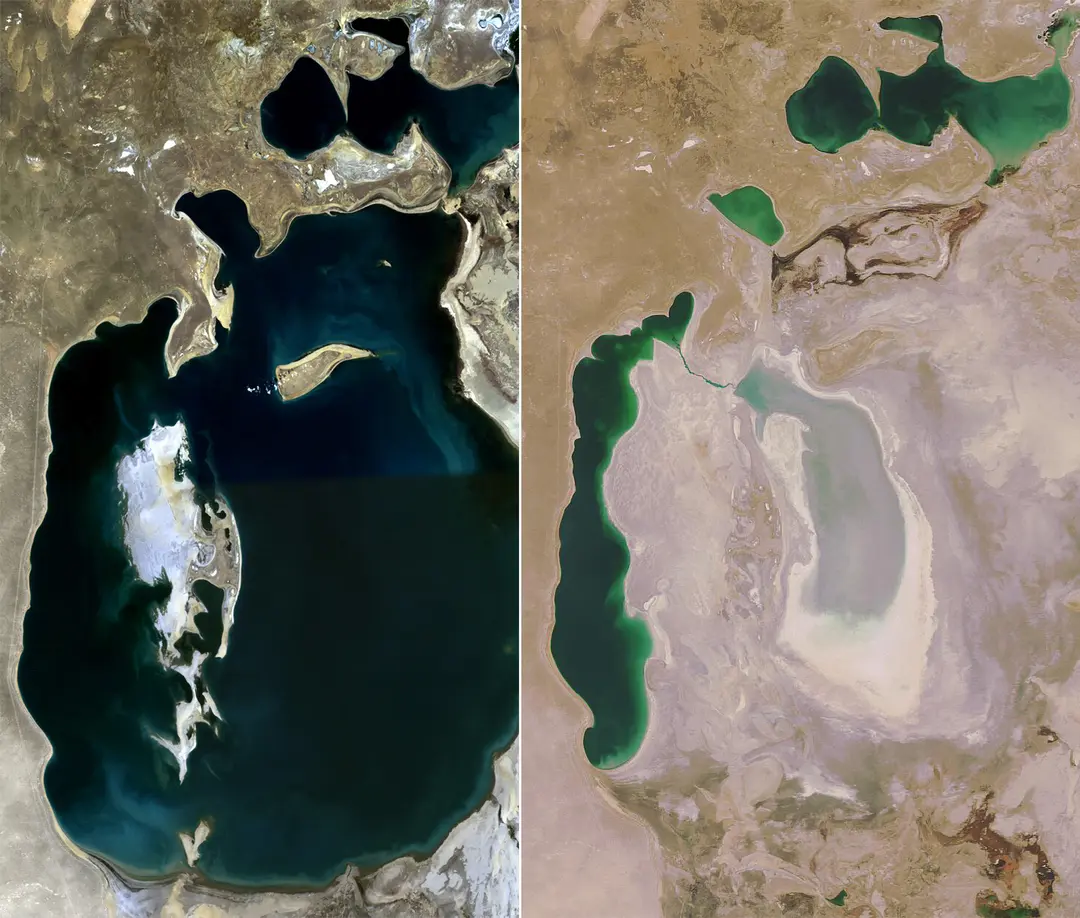
The Aral Sea is one of the most powerful places you can see in Central Asia. Once the fourth-largest lake in the world, it has retreated hundreds of kilometres, leaving salt flats, rusting ships and former port towns behind. Reaching the remaining water is not easy, as the asphalt ends long before the shore. But with proper preparation, two days from Nukus is entirely realistic.
How the trip works
You cannot reach the sea on your own in an ordinary car. The last few hundred kilometres are dirt tracks across the Ustyurt Plateau and the former seabed. You need a 4x4 with an experienced driver who knows the tracks and the state of the descents to the shore. Tour operators in Nukus organise these trips, and you can join others to share the cost.
The basic plan:
- Day 1. Nukus, Muynaq, Lake Sudochye, the Ustyurt canyons and a yurt camp on the Aral shore.
- Day 2. Sunrise by the sea, a swim, and the drive back to Nukus via Qongirot or Muynaq.
Day 1. From Nukus to Muynaq
Leave early. Muynaq is about 200 km and roughly 3 hours by paved road from Nukus. You can also do the Nukus — Muynaq leg before the expedition, for example if you want to spend an evening in Muynaq on its own.
Muynaq was once a fishing port on the shore. Now the sea is far away, and rusting fishing boats stand on the former seabed, the famous ship graveyard. Nearby are a viewpoint over the old shoreline, a memorial and a small museum with photographs of Muynaq as it used to be. The place leaves a heavy but very important impression.
Lake Sudochye and the Ustyurt canyons
From there the route heads west. Sudochye is a system of lakes and reed beds and an important stop for migrating birds. In spring and autumn you can see pelicans, cormorants and herons. Ruins of old buildings stand on the shore, including an abandoned lighthouse.
After Sudochye the car climbs onto the Ustyurt Plateau, a vast table-like upland edged by sheer cliffs known as chinks. The canyons and white cliffs at sunset are one of the most beautiful sights in the country. Along the chinks there are viewpoints where drivers stop.
A night in a yurt by the Aral
Yurt camps on the shore operate in the warm season. Conditions are simple: felt yurts, mattresses, a shared table, limited electricity and a dry toilet. Dinner is usually included. In the evening there is total silence and a starry sky you will never see in a city.
Day 2. Sunrise and the road back
Get up for sunrise by the water. Swimming in the Aral is possible, but the water is very salty and the bottom near the shore is muddy and sticky, so walk in carefully and rinse off the salt with fresh water afterwards.
You can return the same way via Muynaq or via Qongirot, a district town on the road to the Ustyurt. The Nukus — Qongirot leg is about 100 km and 1.5–2 hours on asphalt. Most trips are back in Nukus by evening.
Distances
| Leg | Distance | Driving time |
|---|---|---|
| Nukus to Muynaq | about 200 km | about 3 hours |
| Muynaq to the Aral shore | about 200 km off-road | 4–5 hours with stops |
| Nukus to Qongirot | about 100 km | 1.5–2 hours |
All figures are approximate; off-road, much depends on the weather and ground conditions.
When to go
- May–June and September–October are the best season: less heat, and the yurt camps are open.
- Summer is very hot by day but warm for swimming.
- Winter and early spring are cold, the camps are closed and tracks can become impassable after rain.
What to pack
- A supply of drinking water, although operators usually provide it.
- A hat, sunglasses and sunscreen.
- Warm clothes for the evening: desert nights turn cold sharply, even in summer.
- Wet wipes, a torch and a power bank.
- Your passport, as document checks happen in southern Karakalpakstan.
- Shoes you do not mind getting covered in mud.
Tips and safety
- Never go alone. Only travel with a driver who knows the route, ideally in a two-car convoy.
- Connectivity. Mobile coverage on the plateau is poor or absent.
- Respect for people. Muynaq and its surroundings have lived through a severe ecological disaster. Speak about it respectfully and do not treat the place as a backdrop.
- Cost. The price depends on group size and season. Ask several operators and compare.
Preparing in Nukus
Before the trip, be sure to visit the Savitsky Museum. It has sections on Karakalpak culture, and its famous art collection sets the tone for the whole journey. Outside the city, the Mizdakhan necropolis is worth seeing.
Getting to Nukus and Muynaq
Shared rides are a convenient way to reach Nukus from Khiva and Urgench: in the Yo'ldosh app you can book a seat with a verified driver and leave when it suits you. If you want to reach Muynaq in advance or return via Qongirot, use the Nukus — Muynaq and Nukus — Qongirot routes. More options are listed under all routes.
Cover photo: NASA, derivative work by Zafiroblue05 at en.wikipedia, Public domain, Wikimedia Commons.
