Imam al-Bukhari Complex near Samarkand: Layout, Etiquette, Getting There
One of Uzbekistan's main pilgrimage centres, in the village of Khartang: what is inside the complex, how to behave and how to get there from Samarkand.
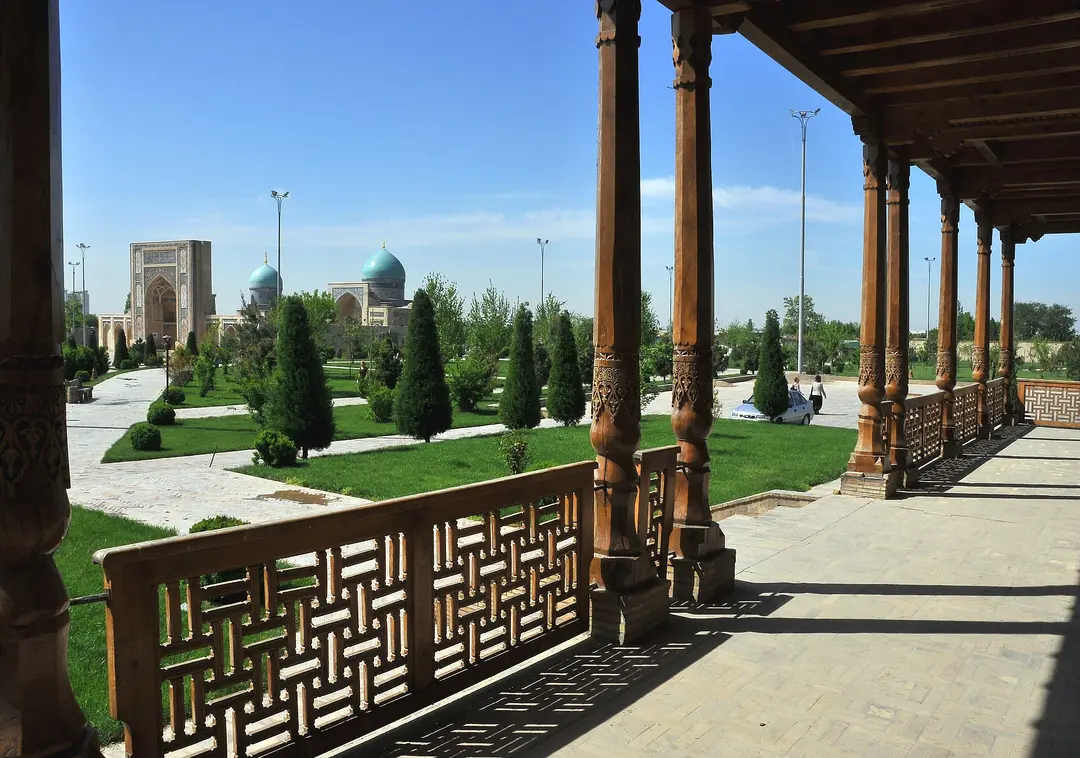
A little over twenty kilometres north of Samarkand, in the village of Khartang in Payariq district, lies a place that draws pilgrims from across the Muslim world. This is the burial place of Imam Muhammad ibn Ismail al-Bukhari, compiler of the hadith collection "Al-Sahih", which Sunni tradition regards as the most authoritative book after the Quran. For a traveller, the complex is interesting both as an example of contemporary Islamic architecture and as a chance to see the country's living religious life.
Who Imam al-Bukhari was
Imam al-Bukhari was born in Bukhara in 810. While still young he set off on long journeys through the cities of Arabia, Iraq, Syria and Egypt, collecting reports of the words and deeds of the Prophet Muhammad. According to tradition, out of hundreds of thousands of reports he selected several thousand, checking the chain of narrators for each one. The result was "Al-Sahih", meaning "The Authentic".
Late in life the scholar ended up in Khartang, where relatives of his lived, and he died here in 870. For centuries the grave remained a modest village shrine. In Soviet times access was very limited, and in 1998, for the 1225th anniversary of the imam's birth by the lunar calendar, a large memorial complex was built on the site.
How the complex is laid out
The grounds are spacious and well kept, with gardens, fountains and wide paths. The main parts are:
- The mausoleum - a square building with a blue dome and richly decorated walls. Inside stands a cenotaph of marble and onyx. The actual burial lies lower, in an underground crypt that is usually closed to visitors.
- The mosque - a large Friday mosque with an iwan resting on carved wooden columns. The columns and ceilings were made by craftsmen from different regions of the country, and comparing their styles is a pleasure in itself.
- Minarets flank the mosque entrance and are visible from far away.
- The museum - a small display of manuscripts, editions of "Al-Sahih" in various languages and gifts from delegations of many countries. It is not always open, so check on site.
- A research centre where scholars study the imam's legacy.
One important point: this is not an open-air museum but an active shrine. People come with their families, recite prayers at the mausoleum and sit on benches in the garden. The atmosphere is calm and welcoming.
Visiting rules
Entry for foreigners and locals is usually free or symbolic, but the etiquette should be followed carefully:
- Clothing. Shoulders and knees must be covered. Women are advised to bring a headscarf, especially for entering the mausoleum and the mosque. Shorts and sleeveless tops are not appropriate.
- Shoes. Shoes come off at the entrance to the mosque. Wear something easy to slip on and off.
- Quiet. Do not talk loudly near the mausoleum and do not play music.
- Photos. You may photograph the architecture from outside, but do not photograph people while they pray. Photography inside the mausoleum may be restricted - look for signs or ask the attendant.
- Friday. At midday on Friday there is congregational prayer and the place gets crowded. For a quiet visit choose another day or come in the morning.
- Ramadan. During the month of fasting, do not eat or drink openly on the grounds.
Getting there from Samarkand
Khartang is about 25-30 km from central Samarkand, roughly 30-40 minutes by road. There are several options:
- Taxi - the most convenient way. Agree on a return trip with waiting time: the visit takes an hour to an hour and a half, and finding a car back from the village can be tricky.
- Tour - many hotels and travel agencies offer a trip to Imam al-Bukhari as part of a Samarkand shrines itinerary.
- Public transport - minibuses do run towards Payariq, but with changes and no clear timetable. For a visitor with limited time this is not practical.
On major holidays such as Eid al-Fitr and Eid al-Adha the flow of people and cars increases sharply. If you want peace and quiet, choose a weekday.
When to go and what to bring
The best months are April, May, September and October. In summer the grounds are green and shady in places, but the sun is still fierce, and early morning is the coolest time. Bring water, a scarf, a little cash for a donation if you wish to leave one, and socks, as the mosque floor is cool.
It is a good idea to combine Imam al-Bukhari with other Samarkand pilgrimage sites: the Mausoleum of Khoja Daniyar on Afrasiab, the Shah-i-Zinda ensemble and the Mausoleum of Imam al-Maturidi in town. That makes a rich day with a clear theme.
The road from Samarkand to Tashkent
Many travellers schedule the visit to Imam al-Bukhari for their last day in Samarkand: Khartang in the morning, the drive to the capital in the afternoon. Samarkand and Tashkent are about 300 km apart, roughly four to four and a half hours by car. A shared ride via Yo'ldosh is convenient here: you book one seat with a verified driver, pay less than for a private taxi, and pick a departure time that does not cut your sightseeing short.
Find current trips on the Samarkand - Tashkent route page, and browse every direction in the routes section.
Cover photo: LBM1948, CC BY-SA 4.0, Wikimedia Commons.
