Qiziltepa: a stop between Navoi and Bukhara
A short guide to Qiziltepa and its surroundings: where to eat on the road and what to see near the highway, from Rabat-i Malik to the Vabkent minaret.
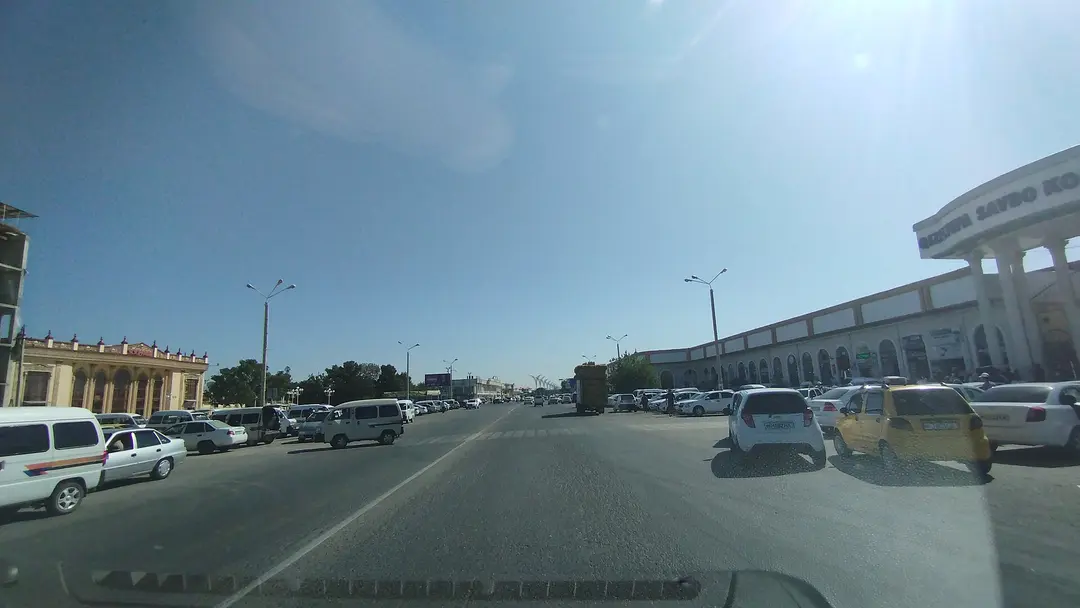
The road from Navoi to Bukhara is one of the most "historic" highways in the country: the Great Silk Road once ran here, and caravanserais, sardoba water cisterns and minarets still stand along it. Qiziltepa is a small town roughly halfway along this stretch. It is not a tourist destination in itself, but it is very convenient for a stop, lunch and a short excursion. Here is what to see along the way and how to plan the journey.
Where Qiziltepa is
Qiziltepa is a district town in the Navoi region, about 30–40 km south-west of Navoi on the highway to Bukhara. Bukhara is around 70 km further on. The whole Navoi–Bukhara drive takes roughly 1.5–2 hours without stops.
The name means "red hill". The town lies on the lower reaches of the Zarafshan, in an oasis of cotton fields, melon patches, orchards and canals. It is a farming district, and in summer it is worth stopping just for the melons and watermelons sold along the highway. The town itself has a bazaar, petrol stations and ATMs, handy for topping up water and cash before the next stretch, where such chances are fewer.
What to see along the way
Rabat-i Malik and the sardoba
The best-known sight on this stretch is the ruined caravanserai of Rabat-i Malik, built in the eleventh century under the Karakhanids. Its monumental portal survives, along with fragments of walls with distinctive half-columns. Across the road stands a sardoba, a domed underground cistern where caravans replenished their water. The site lies on the way from Navoi towards Qiziltepa and Bukhara and is clearly visible from the highway.
A stop takes 30–40 minutes. Do not enter fenced-off areas where work is under way, and take care crossing the highway.
Karmana
If you start from Navoi, look into neighbouring Karmana, an old town that Navoi has now practically merged with. Here you will find the sixteenth-century khanaka of Kasym Sheikh and the mausoleum of Mir Said Bahrom, one of the early brick mausoleums of Central Asia.
Gijduvan
Closer to Bukhara the highway approaches Gijduvan, a town famous across the country for its ceramics. Gijduvan pottery is recognisable by its warm brown, yellow and green tones. Workshops of hereditary potters operate in town, where you can watch the potters at work and buy a lagan platter or tea bowls. The fifteenth-century Ulugh Beg madrasa is here too.
Vabkent
Another reason for a detour is the twelfth-century minaret in Vabkent. It is slender, decorated with bands of carved brick, and is considered one of the most beautiful minarets in the Bukhara oasis. Vabkent is north of Bukhara on the road from Gijduvan.
Where to eat on the road
Qiziltepa and the highway have plenty of teahouses and roadside cafes. What to order:
- Bukhara plov: made differently from Tashkent or Fergana plov, often with plenty of meat and without chickpeas.
- Shashlik: the roadside classic.
- Samsa: hot from the tandoor.
- Shurpa: if you want soup after a long drive.
- Melons and watermelons: sold right by the highway in season; there is no better dessert.
Tip: choose teahouses full of local drivers. That usually means fresh food and fair prices.
A one-day route
An example of a trip from Navoi to Bukhara with stops:
- 8:00: Karmana, with the khanaka of Kasym Sheikh and the Mir Said Bahrom mausoleum.
- 9:30: Rabat-i Malik and the sardoba.
- 10:30: Qiziltepa for tea, a snack and some fruit.
- 12:00: Gijduvan for the ceramics workshops, the Ulugh Beg madrasa and lunch.
- 14:30: Vabkent and its minaret.
- 15:30: arrive in Bukhara.
When to go
- Spring (March to May): green fields and pleasant weather, ideal for stops.
- Summer: very hot, above 40°C in the afternoon. Leave early and plan your stops for the morning.
- Autumn (September to November): melon and grape season with mild weather.
- Winter: cool, sometimes foggy in the morning; the monuments are empty and photogenic.
How to get there
Minibuses and taxis run from Navoi to Qiziltepa and from Qiziltepa to Bukhara. A convenient alternative is a shared ride: on the Qiziltepa – Navoi and Qiziltepa – Bukhara routes drivers post trips on Yo'ldosh. You book a seat at the time you need and pay only for yourself. If you want to stop at the monuments, agree with the driver in advance; many are happy to make a short stop.
Practical tips
- Carry water and a hat, as there is little shade at the monuments.
- You will need cash for roadside cafes and workshop purchases.
- You can bargain in the Gijduvan workshops, but politely: this is handmade work.
- Ask for fragile ceramics to be packed well, as the road can be bumpy.
Qiziltepa is not a final destination but a convenient point on one of the most beautiful historic highways in Uzbekistan. To plan your journey, check rides on the Qiziltepa – Navoi and Qiziltepa – Bukhara routes.
Cover photo: Mirzoulugʻbek, CC0, Wikimedia Commons.
