Margilan: The Silk Capital of the Fergana Valley
Margilan is famous for its ikat silks, but the town is more than one factory: Kumtepa bazaar, old mosques, family workshops and hearty Fergana plov.
Margilan is one of the oldest towns in the Fergana Valley; it celebrated its 2,000th anniversary in 2007. It has long been called the silk capital, and with good reason. But if you come only for the factory and leave straight away, you will miss the best part: a living town of craftspeople, where looms clatter in courtyards and bargaining at the bazaar is as spirited as it was a century ago. This guide shows you how to see the whole of Margilan in one full day.
Getting there
Margilan has almost merged with Fergana: the centers are 15–20 km apart, a 20–30 minute drive. Many travelers therefore stay in Fergana and visit Margilan as a day trip. On the Margilan — Fergana route it is easy to find a shared ride at any time of day.
From the capital the journey is longer, about 300 km over the Kamchik Pass, roughly 5–6 hours. For that distance the Margilan — Tashkent route is convenient: you book one seat rather than the whole car and leave when it suits you.
Silk: how it is made
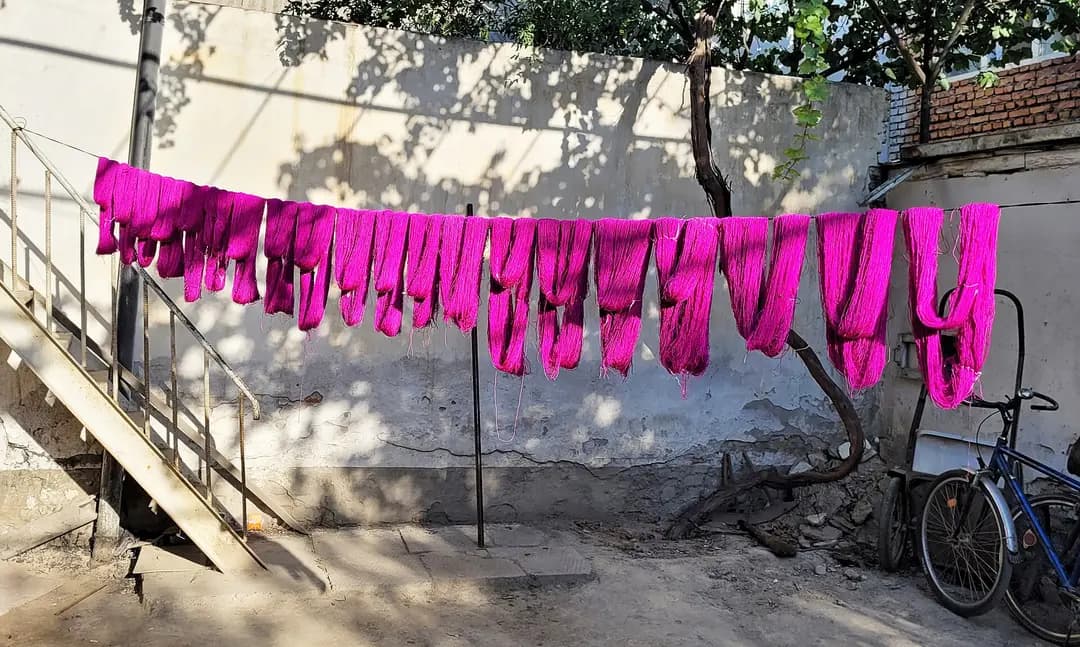
Margilan is famous for ikat fabrics known as atlas (pure silk) and adras (silk and cotton). The threads are bundled and dyed according to a pre-tied pattern before weaving, which gives the design its characteristic blurred edges. The process is long: unwinding cocoons, twisting thread, tying, dyeing with natural or synthetic dyes and finally weaving.
The best-known place to see every stage is the Yodgorlik silk factory. Staff show how cocoons are unwound in hot water, how patterns are tied by hand and how the weavers work. At the end you can buy fabric or finished items. Check tour times and visiting conditions in advance.
Beyond the factory, the town has many family workshops; ask about them at the crafts center or among locals.
Kumtepa Bazaar
Kumtepa is a large market on the edge of town that draws people from the whole surrounding area. It sells everything: fabrics and clothes, carpets, crockery, spices, dried fruit, household goods and livestock. For a traveler it is the best chance to see everyday valley life without any staging.
Bazaar tips:
- The busiest days are market days, usually toward the end of the week; confirm the exact schedule locally.
- Arrive in the morning, as by noon it gets hot and noisy.
- Bargaining is normal, but keep it polite. Ask the price first, then make your offer.
- Ask permission before photographing people.
Old mosques and madrasas
- The Said Ahmad Khoja Madrasa is a small 19th-century madrasa with a cozy courtyard. Craftspeople work in its cells, so you can watch weaving, embroidery and carpet-making and buy directly from the makers.
- The Toron Mosque is a neighborhood mosque with carved wooden columns, a quiet spot in the old part of town.
- The Chakar Mosque dates from the early 20th century and has a beautiful painted veranda, one of the most photogenic places in town.
When visiting mosques, follow simple rules: cover shoulders and knees, keep quiet, and do not enter during prayers unless invited.
Where and what to eat
Margilan is a good place to try Fergana Valley cooking. Plov is made toward midday, and by one o'clock it may already be gone, so arrive on time. Also look for:
- tandoor-baked samsa with meat and onion;
- lagman noodles and shurpa soup in small canteens;
- fresh flatbread, baked in every neighborhood;
- in summer, melons, grapes and apricots straight from the bazaar.
Choose places full of locals; it is the best sign of fresh food. Prices in simple eateries are low but change, so use them only as a rough guide.
Planning your day
- Early morning: Kumtepa Bazaar, before the heat.
- Late morning: the silk factory or workshops.
- Lunch: plov at a nearby teahouse.
- Afternoon: the Said Ahmad Khoja Madrasa and a walk to the mosques.
- Evening: return to Fergana or stay overnight in Margilan.
What to buy
| Item | What to check |
|---|---|
| Atlas and adras | fabric content: pure silk or silk-cotton blend |
| Scarves and shawls | density and neat edges |
| Suzani and embroidery | handmade or machine-made |
| Dried fruit and nuts | taste before you buy |
If you are buying expensive fabric, ask the maker about its content and dyeing method; an honest seller will explain the difference between pure silk and a blend.
Best time to visit
Spring and early autumn are ideal: warm, but without exhausting heat. In May the valley usually hosts craft and silk festivals, but dates change, so check ahead. In summer, set out early and plan indoor visits for the hottest hours.
Getting there and back
Margilan fits easily into any trip around the valley. For a short hop, use the Margilan — Fergana route; for the long ride home, try Margilan — Tashkent. On Yo'ldosh drivers are verified and a seat can be booked in the app in a couple of minutes. See other directions across the country on the routes page.
Cover photo: Bgag, CC0, Wikimedia Commons.
