The Mausoleum of Abdulkhaliq Gijduvani: A Sufi Shrine near Bukhara
Gijduvan is a pilgrimage site for one of the masters of the Khwajagan Sufi tradition. What to see in the complex, how to behave and what else the town offers.
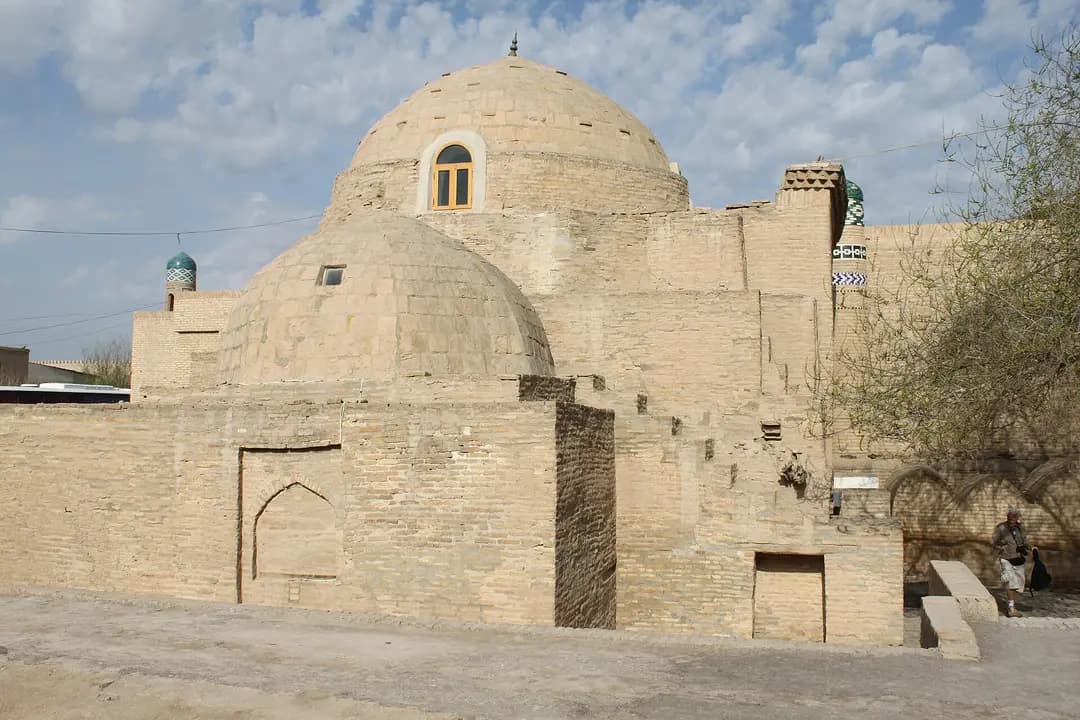
Some 45 kilometres from Bukhara, in the small town of Gijduvan, lies one of Uzbekistan's most important Sufi shrines. This is the resting place of Abdulkhaliq Gijduvani, a 12th-century teacher regarded as one of the founders of the Khwajagan path, from which the Naqshbandi order later grew. For Bukhara's pilgrims the site is part of the circuit of the "seven saints"; for a traveller it is a chance to see a living tradition away from the tourist crowds.
Who Abdulkhaliq Gijduvani was
Abdulkhaliq Gijduvani lived in the 12th century and came from this area. He studied in Bukhara and became a master whose teaching was handed down through a chain of teachers known as the Khwajagan, "the masters". A few generations later this line led to Bahauddin Naqshband, whose memorial complex stands on the outskirts of Bukhara.
Gijduvani is credited with formulating the core principles of the path: awareness in every breath, attention to every step, and "solitude in the crowd", the ability to keep inner focus among people and everyday affairs. These principles later became the foundation of Naqshbandi practice. An important feature is the quiet, inner dhikr, without loud rituals.
What the complex contains
The complex is not large, but it has several important parts:
- Gijduvani's grave, the main shrine. It lies in the courtyard, and pilgrims approach it to pray and recite the Quran.
- The Ulugbek Madrasa, one of the three madrasas built by Ulugbek (the other two are in Samarkand and Bukhara). The Gijduvan madrasa was built in the 1430s next to the sheikh's grave, which shows how revered the site already was in the Timurid era. The portal and tiled decoration partly survive.
- A mosque and courtyard with trees and places to rest, where pilgrims sit and drink tea.
The complex is well kept and has been landscaped in recent years. The atmosphere is calm: families come here to pray and leave donations.
Pilgrimage and the "seven saints"
Bukhara has a tradition of visiting seven holy men, the "Yetti Pir". The circuit includes seven teachers of the Sufi chain, and Abdulkhaliq Gijduvani comes first. Many pilgrims visit all seven sites in one or two days, starting in Gijduvan.
If you want to follow the circuit, set aside a full day and arrange it with a driver in advance, as the shrines are spread across Bukhara and the surrounding districts.
Etiquette
- Dress modestly: long trousers or a long skirt, shoulders covered. Women should ideally carry a headscarf.
- Speak quietly, do not disturb people praying, and do not photograph people without permission.
- Remove your shoes before entering the mosque if the rules on site require it.
- Donations are voluntary and nobody will pressure you.
- Friday midday and religious holidays are busier than usual.
Gijduvan is more than a shrine
The town is known for two more things that make a stop worthwhile:
- Gijduvan ceramics. One of the country's best-known pottery schools works here, with characteristic brown, yellow and green glazes. A family workshop-museum in town lets you watch the potters at work and buy pieces.
- Gijduvan kebab. Throughout the Bukhara area, "Gijduvan-style" means a special minced lamb kebab. In the town itself many roadside places grill it; try it with fresh flatbread and a salad.
Getting there
Gijduvan is about 45 km from Bukhara, 50 minutes to an hour by car. The road is flat and passes villages and cotton fields of the Bukhara region.
Shared rides on the Bukhara to Gijduvan route are published regularly on Yo'ldosh. That is handy if you want to arrive in the morning before the heat and be back by lunch. You book your seat in the app, and the driver can drop you right at the complex. Return trips also appear throughout the day.
When to go
Spring and autumn are the best seasons. In summer the Bukhara region can top forty degrees, so set off early and rest in the shade of the courtyard. In winter there are few tourists, but it is quite cold, especially in the mornings.
A trip to Gijduvan takes half a day, but it shows you a different Bukhara: not a museum city but a living one, where the Sufi tradition is still part of everyday life. Look for other destinations in the region on the routes page.
Cover photo: Faqscl, CC BY-SA 3.0, Wikimedia Commons.
