Sultan Saodat and the Mausoleum of Al-Hakim al-Termezi
An ensemble of the Termez sayyids built over seven centuries and the shrine of a Sufi scholar by the Amu Darya — the two main Islamic monuments of Termez and how to visit them.
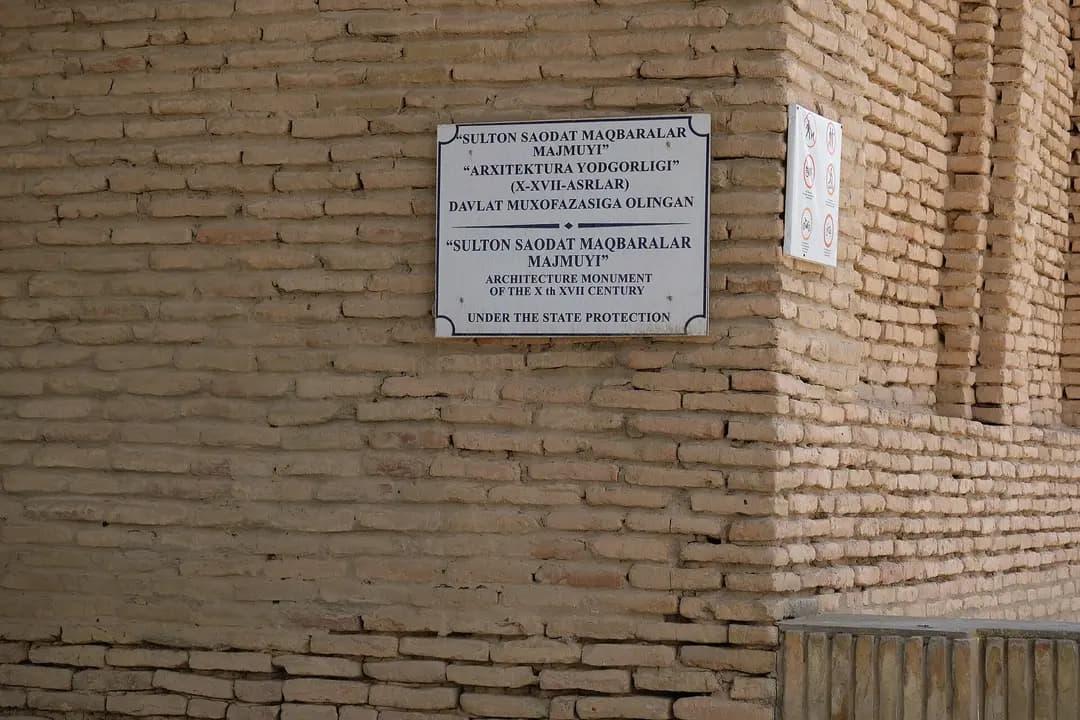
Termez is often thought of as a city of Buddhist ruins, but for people in Uzbekistan it is above all a place of pilgrimage. Two shrines in this southern city draw families from every region of the country: the Sultan Saodat ensemble and the mausoleum of al-Hakim al-Termezi. They are close to each other and easy to visit in half a day. Below is what these places are, how to explore them and how to behave while you are there.
Sultan Saodat: seven centuries in one ensemble
Sultan Saodat is the family necropolis of the Termez sayyids, descendants of the Prophet Muhammad who played an important role in the life of the city. The ensemble took shape between the 10th and 17th centuries, with each generation adding new mausoleums, mosques and rooms.
That is exactly what makes it interesting. As you walk along the long row of buildings, you can see how the architecture changed over time:
- Early domed mausoleums — massive, built of fired brick with patterned masonry. They show how builders worked before the Mongol invasion.
- Later additions — iwans, a khanaqah and a mosque, joined into a single line around an inner courtyard.
- Decoration — mostly brick and carving, without the colourful tilework familiar from Samarkand. Here the restraint is the beauty.
Pay attention to the courtyard itself: long and narrow, it feels like a street that pilgrims have walked along for centuries. The ensemble has been well restored and is surrounded by a garden.
Al-Hakim al-Termezi: the city's patron saint
Abu Abdullah Muhammad ibn Ali al-Hakim al-Termezi was a 9th-century scholar and Sufi, the author of many works on theology and mysticism. He is regarded as one of the early thinkers of Sufism and, in popular tradition, as the spiritual patron of Termez. Locals sometimes simply call him "Termez Ota", Father of Termez.
The mausoleum stands on the bank of the Amu Darya, next to the ruins of Old Termez. The complex includes:
- the mausoleum itself, with a tombstone decorated with fine carving;
- a mosque and khanaqah — rooms for prayer and gatherings;
- a well-kept courtyard and garden, where pilgrims rest and recite prayers.
There is a view of the river from the complex. Remember that the state border runs nearby, so photograph only the ensemble and never point your camera at border installations.
Visiting etiquette
These are active shrines where people come to pray, not just to look. A few simple rules:
- Dress. Shoulders and knees should be covered. Women are advised to bring a headscarf.
- Shoes. Take your shoes off before entering prayer rooms — watch what others do.
- Quiet. Speak softly and do not disturb people at prayer.
- Photos. Photography is usually fine in the courtyards; inside the mausoleums it is better to ask. Do not photograph people while they pray.
- Fridays. On Fridays and religious holidays the shrines are especially crowded. For a calmer atmosphere, choose a weekday morning.
- Donations. Welcome but not required.
Combining it with other sights
Half a day in the southern part of Termez could look like this:
| Time | What to see |
|---|---|
| Morning | Al-Hakim al-Termezi mausoleum and Old Termez |
| Late morning | Sultan Saodat ensemble |
| Midday | Termez Archaeological Museum (a refuge from the heat) |
| Evening | A walk around the centre and dinner |
If you have a spare day, many pilgrims also visit the mausoleum of Imam al-Tirmidhi, the famous collector of hadith, in the Sherabad district north of the city. That is a separate trip of several hours.
Getting there from Tashkent
Termez is about 700 km from the capital. By car the journey takes roughly 10 to 12 hours, via Samarkand or Qarshi, over mountain passes and through Surkhandarya. There are also trains and flights, but many people choose to travel by road so they can stop along the way and enjoy the passes.
A convenient option is a shared ride. On the Termez — Tashkent route and in the opposite direction, drivers post their trips on Yo'ldosh: you book one seat, see the driver's profile in advance and pay less than for a private taxi. On such a long road this is especially handy, as you can agree on departure time and stops.
When to go
- Spring (March–May) is the best time: greenery and moderate temperatures.
- Autumn (October–November) is also comfortable, and the markets are full of pomegranates and persimmons.
- Summer is very hot, often above 40 °C. Visit the shrines early in the morning.
- Winter is mild by Uzbek standards, and there are few tourists.
Good to know
- Always carry your passport in Termez and the surrounding area — this is a border region.
- For pilgrims, visiting during Ramadan or religious holidays is a special experience, but hotels may be full at those times.
- Do not wander off from the complexes towards the river on your own: the border zone begins closer to the Amu Darya.
- Bring water and a hat, even for a short visit.
Why go
Sultan Saodat and the mausoleum of al-Hakim al-Termezi show a different Uzbekistan: no tourist crowds, a living tradition of pilgrimage and architecture older than many of Samarkand's monuments. It is a place where history and faith are still woven into everyday life.
Heading south? Check the trips on the Termez — Tashkent route and other destinations under all routes. Tips on booking a seat are collected on the for passengers page.
Cover photo: Panpanchik, CC BY-SA 4.0, Wikimedia Commons.
