Zarafshan: The Gold Miners' Town in the Kyzylkum
How a modern town in the middle of the desert, built for the Muruntau gold deposit, lives today, what a visitor will see and how to get there without a company bus.
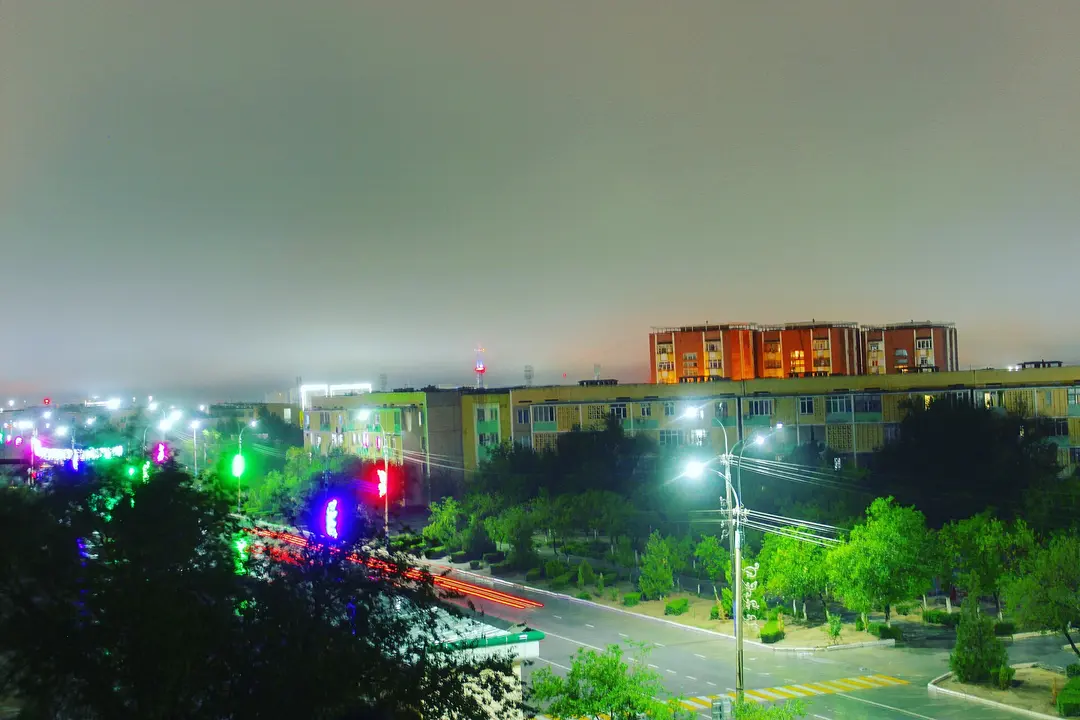
Picture this: several hours across a scorched plain dotted with saxaul shrubs, and then, suddenly, apartment blocks, green courtyards, parks and fountains appear on the horizon. This is Zarafshan, a town in the very heart of the Kyzylkum Desert. It did not grow out of an ancient oasis like Bukhara or Khiva. It was built in the second half of the 20th century for one purpose: mining gold at the Muruntau deposit, one of the largest in the world. Today tens of thousands of people live here, and the town is a rare example of how people build a life where nature offers almost no help.
A little history
The Muruntau deposit was discovered in the late 1950s. To develop it, a settlement was started nearby in the 1960s, and it quickly became a town. The name comes from the Zarafshan River, meaning "gold-strewing" in Persian, even though the river itself flows far from here. Over time, the Muruntau pit became one of the deepest open-pit mines in the world.
Water is piped to the town over a long distance; without it, life here would be impossible. That is why Zarafshan's greenery is so striking: every tree here was planted and raised by people.
The town today
Zarafshan is a tidy town of Soviet-era and modern buildings: straight streets, apartment districts, schools, sports facilities and parks. Life revolves largely around the mining company, but the town has its own everyday rhythm too: a bazaar, cafes, playgrounds and families out for evening walks.
What you can see:
- The central park and boulevards, with shady alleys and fountains, especially pleasant in the evening.
- The town bazaar, with fresh fruit brought in from the oases, flatbread and dried fruit.
- The architecture, with apartment blocks typical of industrial towns and mosaics and murals on the facades.
- The desert beyond the town: dunes, clay flats, saxaul thickets and spring blooms.
Important: the pit itself and the production areas are restricted sites. Visits are possible only with official approval, and photographing industrial zones without permission is not allowed.
The desert around
For travelers, Zarafshan's real value is the chance to see the Kyzylkum up close. In spring, in April and early May, the desert turns green for a short while: tulips and poppies appear and tortoises emerge. Autumn brings soft light and cool nights. The starry sky far from big cities is an experience in itself.
But the desert demands respect:
- Do not stray far from roads without a local companion.
- Always carry a water supply, at least several liters per person.
- In summer temperatures can exceed 40°C, so go out only in the morning and evening.
- Tell someone your route and when you expect to be back.
- Mobile signal disappears outside town.
Getting there without a company bus
Many mine employees travel on company buses, but these are not open to visitors. Your options:
| From | Distance | Travel time |
|---|---|---|
| Navoi | about 220–230 km | 3–3.5 hours |
| Tashkent | 600–700 km depending on the road | 9–10 hours |
Scheduled buses are not always convenient, so check timetables in advance. The most flexible option is a shared ride. Both residents and visiting specialists travel the Navoi — Zarafshan route, so rides come up regularly. From the capital, the direct Tashkent — Zarafshan route is convenient: it is a long journey, and sharing it with fellow passengers and a verified driver is more pleasant and cheaper than taking a taxi.
Tips for the road
- Leave early in the morning to cross the desert during the cooler hours.
- There are few fuel stations and cafes on the long stretches between settlements, so bring water and snacks.
- In summer protect your head and eyes from the sun; a cap and sunglasses are essential.
- There are document checkpoints along the way, so keep your passport handy.
Where to eat and stay
Zarafshan has hotels and guesthouses, but the choice is limited, so book ahead and confirm the terms. You can eat at cafes and teahouses: plov, shashlik, lagman and samsa. Prices are similar to other small towns in the country, but check on the spot.
Best time to go
The most comfortable times to travel to Zarafshan are mid-March to mid-May and late September to November. In winter the desert can bring frost and strong winds, and in summer the heat makes the journey tiring even in an air-conditioned car. When planning, leave some spare time in case of delays on the road.
Who should go
Zarafshan is not a classic tourist destination. It is worth the trip if you are interested in:
- industrial history and towns built from scratch;
- desert landscapes and photography;
- off-the-guidebook travel where you see everyday life.
If you are going on business or to visit relatives, set aside at least an evening for a walk around town and a sunrise outside it. The Kyzylkum is worth it.
The road into the desert
For a stress-free trip to Zarafshan, choose a ride on Yo'ldosh: seats are booked in the app, drivers are verified and departure times are visible in advance. See the Navoi — Zarafshan and Tashkent — Zarafshan routes, and find other cities on the routes page.
Cover photo: Upirimqulov, CC BY-SA 4.0, Wikimedia Commons.
