Chust Knives and Skullcaps: The Craft Traditions of Namangan
How the famous Uzbek pchak knife is made, why the Chust skullcap with its white pattern became a national symbol, how regional skullcaps differ and how to take a knife home.
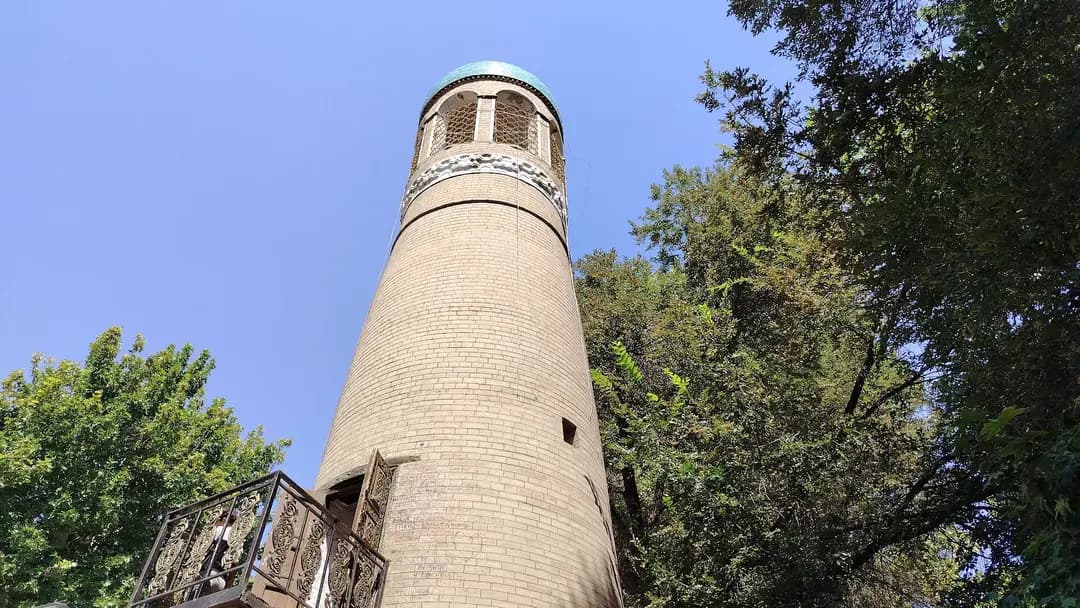
The small town of Chust in the north of the Fergana Valley is famous across the country for two things: knives and skullcaps. A Chust pchak sits in the kitchen of almost every Uzbek family, and the black skullcap with a white pattern has become as much a symbol of Uzbekistan as plov and blue domes. If you find yourself in Namangan, Chust is well worth half a day.
The pchak: a knife for plov and bread
The pchak is the traditional Uzbek knife, with a wide blade and a straight spine. It is used to cut meat and vegetables for plov, slice onions paper-thin and butcher mutton. The craft runs in families, and in Chust there are still many knifemakers whose grandfathers and great-grandfathers did the same work.
What a pchak is made of:
- The blade: wide, with a thick spine and a smooth grind down to the edge. It is often engraved and carries the maker's mark.
- The bolster (gulband): a metal piece between blade and handle, often brass or nickel silver, sometimes patterned.
- The handle: horn, bone or wood, and in souvenir versions coloured plastic or stacked materials.
- The sheath: leather, often embossed and stitched.
How a pchak is made
The process varies from master to master, but the main stages are similar:
- Forging. A steel blank is heated in the forge and hammered into the shape of a blade.
- Hardening. The blade is heated and quickly cooled so the steel becomes hard.
- Grinding and sharpening. The blade gets its bevels and a keen edge.
- Engraving and stamping. The pattern and the workshop mark are applied.
- Fitting the handle. The bolster and handle are fitted and polished.
In a workshop you will see the forge, the anvil and the grinding wheels. Many masters are happy to show visitors the process.
How to choose a knife
- For the kitchen, pick a knife with a simple sturdy handle in wood or horn. Decorative handles look great but cope less well with washing.
- Check the blade: it should be straight, with no warping, and the edge should have no nicks.
- Look for a maker's mark. A craftsman's knife usually has one; mass-produced knives often do not.
- Carbon steel sharpens easily and holds an edge, but it can darken and rust if left wet, so always dry it.
Prices depend on materials and finish: a plain kitchen pchak is inexpensive, while a handmade knife with a horn handle and engraving costs several times more. Treat prices as approximate and ask the maker.
How to carry a knife
This is an important practical point:
- On a plane, a knife can travel only in checked luggage, never in your carry-on.
- Ask the seller for a certificate stating that the knife is a household utensil and not a weapon. Many workshops issue such a document.
- In a car, keep the knife sheathed and packed in a bag, not in your pocket.
- Before you travel, check the rules for bringing knives into your home country.
The skullcap: from Chust to Khiva
The skullcap, called doppi in Uzbek, is the traditional headwear. The Chust doppi is the most recognisable: black and four-sided, with white pepper- or almond-shaped motifs (bodom) on each side and a white border. Men wear it for celebrations, weddings and the mosque, and it is given as a mark of respect.
How it is made: the fabric is quilted in several layers so the cap holds its shape, then the pattern is embroidered. A good Chust doppi is stiff and even, with a dense, symmetrical pattern.
Skullcaps from different regions
| Region | Features |
|---|---|
| Chust | Black, white almond motif, austere |
| Bukhara | Velvet and gold embroidery |
| Shahrisabz | Bright, dense cross-stitch |
| Margilan and Fergana | Variations on the Chust style, varied patterns |
| Khorezm | A fur hat is often worn instead |
Women's skullcaps are brighter than men's, with beads, multicoloured embroidery and sometimes silk.
Getting there
The Namangan – Chust route is about 40–45 km, roughly an hour's drive. From Tashkent, the Tashkent – Namangan route is about 290 km over the Kamchik pass and usually takes 4.5–5.5 hours.
A good plan: arrive in Namangan in the morning, continue to Chust, visit the workshops and the bazaar, and return by evening. If you would rather avoid changing at bus stations, find a ride on Yo'ldosh and book a seat in a car at a time that suits you.
Cover photo: Madinawiki12, CC0, Wikimedia Commons.
