Samarkand to Bukhara: getting between the cities in 2 to 4 hours
About 270 km along the most visited stretch of the Silk Road. We compare train and car and explain why a stop in Navoi and at Rabati Malik is worth it.
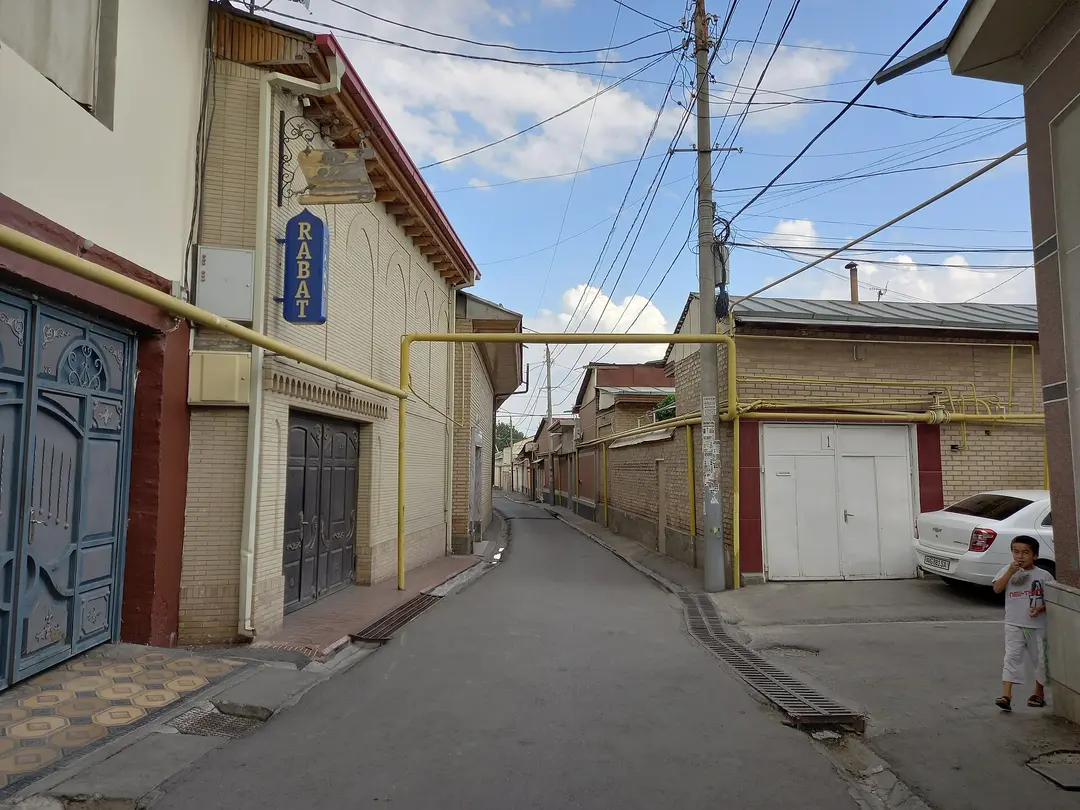
Between Samarkand and Bukhara lies the shortest and most visited stretch of Uzbekistan's Silk Road. Caravans travelled here for centuries, and today almost everyone who comes to the country makes this journey. It is not far, about 270 km, so the real question is not how to get there but how to make the most of it: zip through on a train, or spend half a day on the road and see things you would never notice from a carriage window.
Route figures
- Road distance: about 270–280 km.
- Afrosiyob high-speed train: about 1.5–2 hours.
- Regular passenger train: about 3 hours.
- Car: 3.5–4 hours without long stops.
- Samarkand to Navoi: about 165 km, roughly 2 hours by car.
The train: the quick option
The high-speed train covers this stretch fastest, and for many it is the obvious choice: leave Samarkand in the morning and be strolling around Bukhara by lunchtime. Buy tickets in advance, especially for morning and midday departures in high season. Regular passenger trains are slower but cheaper, and they help out when the high-speed ones are sold out.
Remember Bukhara's main quirk: the station is in Kogon, around 12–15 km from the old town. Add 20–30 minutes for a taxi, and the real door-to-door time by train is no longer so short. Samarkand station is also outside the historic centre, so you will need a taxi there too.
By car: a road with stops
By car the drive takes 3.5–4 hours, and door to door it can be almost the same as the train once you count taxis to and from stations. In return, you decide where to stop. The highway runs north-west along the Zarafshan valley, past Kattakurgan to Navoi, and then across the steppe to Bukhara.
Kattakurgan
The first big town after Samarkand. Nearby is the Kattakurgan reservoir, which locals call the sea. People come here to relax in summer, and for travellers it is simply a handy place to stretch your legs and have some tea.
Navoi
Navoi is a young industrial city founded in the middle of the last century. It is not a tourist town as such, but in the old district of Karmana stands the Mir Said Bahrom mausoleum, a small but very early building valued by architecture lovers. Away from the highway, in the Nuratau mountains, lies Sarmishsay gorge with thousands of rock carvings, though that is a separate half-day trip.
If you need to get to Navoi rather than Bukhara, for work or to visit family, there is a separate Samarkand — Navoi route. Drivers travel this section often, and finding a seat in a car is usually easy.
Rabati Malik and the sardoba
The most interesting stop on the way. Between Navoi and Bukhara, right next to the highway, stand the ruins of the Rabati Malik caravanserai, built in the 11th century. Its massive portal survives and is easy to see from the road. Across the highway is a sardoba, a domed underground cistern where caravans topped up their water. The stop takes 20–30 minutes and leaves a stronger impression than many museums.
Gijduvan
On the approach to Bukhara lies Gijduvan, a town of master potters. Gijduvan ware is easy to recognise by its warm yellow and brown tones and patterns. If you were planning to bring ceramics home, it is a good excuse to visit a workshop.
Which to choose
| Option | Time | Pros | Cons |
|---|---|---|---|
| High-speed train | 1.5–2 h | fast, comfortable | stations far from centres, sells out |
| Regular train | about 3 h | cheaper | fewer departures |
| Car | 3.5–4 h | stops, door-to-door | longer on the road |
If you have already seen Rabati Malik or speed matters most, take the train. If it is your first time and you want to feel the Silk Road, go by car and leave in the morning.
Shared rides
If you have no car but want to travel by road, there are shared rides. On Yo'ldosh, drivers publish trips on the Samarkand — Bukhara route and you book a seat in the app, with the departure time, price per seat and driver's profile all visible. If you want to stop at Rabati Malik, message the driver in the chat beforehand; most agree to a short stop. A seat usually costs about the same as the train and noticeably less than a private taxi.
When to go
The nicest months for this trip are April, May, September and October: the steppe is not yet, or no longer, too hot, and fields and orchards along the Zarafshan are green. The road is fine in summer too, but leave early in the morning. In winter the highway is usually quiet, there are few tourists and train tickets are easier to get, although low-lying areas can be foggy and icy in the morning, so drivers take it slower.
Practical tips
- In summer, leave before 9 am: after noon the steppe between Navoi and Bukhara gets scorching.
- Some streets in old Bukhara are pedestrian only, so ask your hotel where a car can drop you.
- Carry cash for small purchases and tea at roadside teahouses.
- For photographers, the best light at Rabati Malik is in the morning and late afternoon.
Seats on the Samarkand — Bukhara and Samarkand — Navoi routes appear on Yo'ldosh every day, and the full list is on the routes page.
Cover photo: Jamshid Nurkulov, CC BY-SA 4.0, Wikimedia Commons.
