Mingtepa: The Ancient City of Dayuan and the Heavenly Horses
Mounds near Marhamat that many researchers believe were the capital of legendary Dayuan, the land whose horses a Chinese emperor sent armies to win. What we know and what you can see.
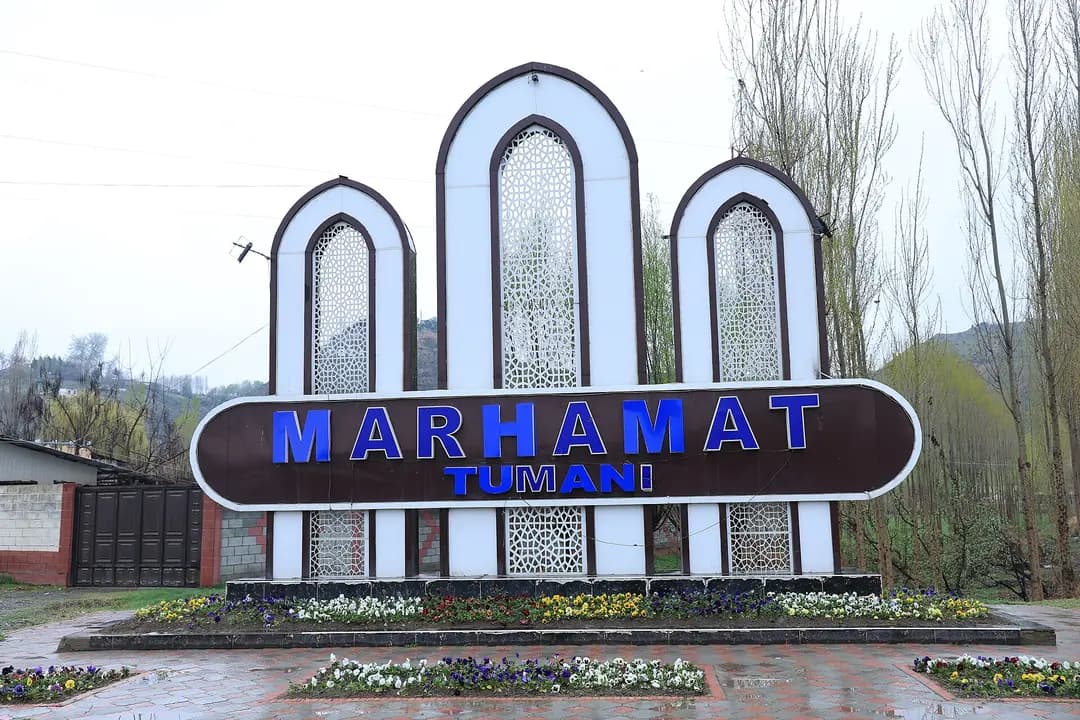
Chinese chronicles from two thousand years ago tell of a distant western land called Dayuan, where remarkable horses were bred — fast, hardy and said to "sweat blood". For the sake of these horses, an emperor of the Han dynasty sent an entire army across deserts and mountains. Historians still debate exactly where the capital of Dayuan stood, but one of the leading candidates is the ancient site of Mingtepa in the Marhamat district, not far from Andijan. A trip here is a chance to stand where one of the most vivid stories of the Silk Road may have unfolded.
What Dayuan was
Dayuan was the name Chinese sources gave to a state in the Fergana Valley in the 2nd and 1st centuries BC. It was first described in detail by the envoy Zhang Qian, who travelled to Central Asia in the second half of the 2nd century BC. He portrayed Dayuan as a densely populated country with towns, farming, vineyards and famous horses.
These horses mattered enormously to the Han Empire: its army needed strong mounts to fight the nomads in the north. The Chinese chronicles call them "heavenly horses".
The war for the heavenly horses
When Dayuan refused to hand over its horses, Emperor Wu sent an army against it under the general Li Guangli. The first campaign, around 104 BC, ended in failure: the exhausted army turned back empty-handed. The second campaign was more successful — the Chinese besieged the Dayuan capital, the city of Ershi, and eventually got what they wanted, taking several thousand horses back to China.
This episode became one of the first documented cases of direct contact between China and Central Asia and an important milestone in the formation of the Silk Road.
Why Mingtepa
The name means "a thousand hills". The site is surrounded by massive earthen ramparts and covers a large area. Its size, its location in the fertile part of the valley and the dating of the finds make Mingtepa one of the main candidates for Ershi.
In recent years joint archaeological expeditions, including Uzbek-Japanese teams, have worked here. They have clarified the city's boundaries, studied its fortifications and collected material that helps explain life in Fergana at that time. There is no final answer yet, which only adds to the mystery.
What you can see
Mingtepa is an archaeological site with no reconstruction and no museum facilities. Here is what you will find:
- Earthen ramparts. The remains of the city walls stretch for hundreds of metres and are easy to trace in the landscape. This is the main impression: the scale of the city becomes clear as you walk along the rampart.
- Mounds inside the site. Raised areas where buildings and quarters once stood.
- Excavations. If a team is working during your visit, you may see cleared areas. Do not enter them without permission.
- The landscape. Fields, orchards and village houses all around, and on a clear day mountains on the horizon.
Tip: bring a printout or screenshot of a satellite view of the site — it makes it much easier to understand where the walls ran.
Getting there from Andijan
Marhamat is about 30 km from Andijan, roughly 40 minutes by road. The site is close to the district centre, and the last few kilometres are on rural roads.
Options:
- A shared ride to Marhamat. On the Andijan — Marhamat route drivers post trips on Yo'ldosh — ride to the district centre and take a local taxi from there.
- A taxi for half a day from Andijan. Convenient if you want to take your time and stop elsewhere along the way.
- With a local guide. A good choice if you want to hear details about the excavations.
Before setting out, mark the spot on an offline map and ask locals for directions — they know Mingtepa.
When to go
| Season | What to expect |
|---|---|
| April–May | Green ramparts, orchards in bloom, mild weather |
| June–August | Hot, almost no shade, come in the morning |
| September–October | Dry, harvest time, good views of the mountains |
| November–March | Muddy after rain, damp |
What to bring
- water, a hat and sunscreen;
- comfortable closed shoes;
- cash for a taxi and snacks;
- your passport — the district is close to the border with Kyrgyzstan.
Combining it with other places
Mingtepa fits easily into a day with Andijan: Babur's house museum and the Jami mosque in the morning, then a trip to Marhamat and a walk along the ramparts in the afternoon. It makes an interesting pairing of two eras — ancient Dayuan and Babur's Timurid Fergana. If you are spending longer in the valley, it is easy to continue from here to Fergana, Margilan or Namangan.
Why go
Mingtepa will not dazzle you with architecture, but it offers a rare sense of connection with great history. One of the chapters of the Silk Road began here, and the mounds still hold answers that archaeologists are only beginning to find.
To plan your trip, see the Andijan — Marhamat route and other destinations in the valley under all routes.
Cover photo: Komilkhuja, CC0, Wikimedia Commons.
