Teshik-Tash Cave: A Neanderthal Site in the Boysun Mountains
Where the remains of a Neanderthal child were found in 1938, how to reach the cave in the Boysun mountains, who to go with and what else to see in the area.
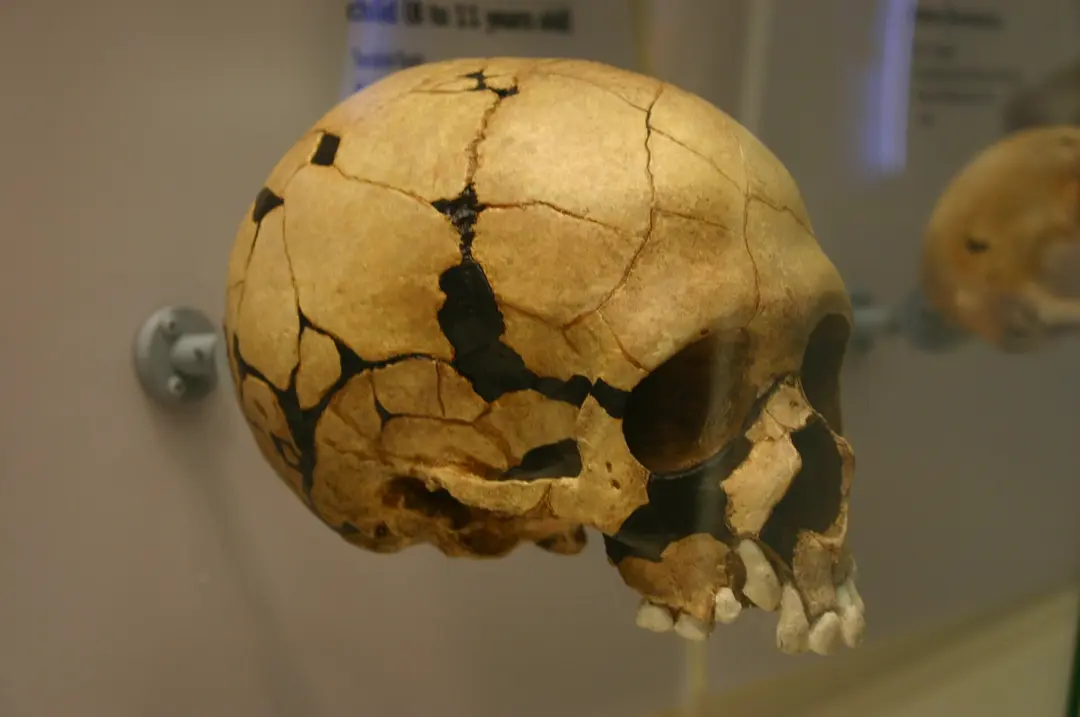
Boysun is a mountainous district in the south of Uzbekistan that ordinary tourists rarely reach. Yet it is here, in the limestone cliffs of the Boysuntau range, that one of Central Asia's most famous archaeological finds was made. In Teshik-Tash cave researchers found the remains of a Neanderthal child, at the time the easternmost Neanderthal find known. It is a place for those prepared for a mountain road and a climb on foot, who want to see human history quite literally at its roots.
What was found at Teshik-Tash
The cave was excavated by the Soviet archaeologist Alexey Okladnikov in 1938. In Middle Palaeolithic layers he found stone tools, animal bones and, above all, parts of the skeleton of a child aged around eight or nine. Anthropologists identified it as a Neanderthal.
What drew particular attention were the horns of mountain goats lying around the remains. Okladnikov interpreted this as evidence of a ritual burial. Scientists still debate whether it was a deliberate burial, but the find became a textbook classic. Later genetic studies confirmed that the child was indeed a Neanderthal, and the discovery proved that their range extended far east, into Central Asia.
The remains and artefacts are kept in scientific collections and are not in the cave. What you see is the site itself: a grotto in the rock, its setting and the view over the gorge.
Where the cave is
Teshik-Tash means "stone with a hole". The cave lies in a gorge in the Boysuntau mountains at about 1,500 metres. Its entrance is a wide grotto clearly visible from the slope. Around it are cliffs, juniper trees and a mountain stream below.
Reaching the cave on your own is difficult. From Boysun you drive along mountain roads towards remote villages and then walk along a trail. The road may be unpaved and washed out after rain, so an ordinary car is not always suitable.
Who to go with
There is only one recommendation here: go with a local guide. The reasons:
- The trails are unmarked, and finding the right way without local knowledge is hard.
- There is no reliable mobile signal in the mountains.
- Locals know after which rains the trail becomes dangerous and where you can and cannot pass.
- A guide can arrange transport to the trailhead.
It is best to find a guide through guesthouses and residents in Boysun, or through tour operators working in the south of the country. The cost depends heavily on the route and transport, so discuss it in advance.
Preparing for the hike
- Footwear: hiking shoes with good grip. Stones on the trail can be slippery.
- Water and snacks: there is nothing to buy on the way.
- Layers: mornings in the mountains are cool, middays hot in the sun.
- Hat and sunscreen: the sun is strong at altitude.
- First-aid kit and a charged phone with an offline map.
- Tell your guesthouse where you are going and when.
Do not light fires in the cave, leave litter or dig: it is a protected archaeological monument.
Best time to go
The best seasons are late spring (May) and early autumn (September to October). In summer the foothills are very hot, while in winter and early spring the trails may be covered in snow or washed out.
What else to see in Boysun
Combine a trip to Teshik-Tash with getting to know Boysun itself:
- The Cultural Space of Boysun District is inscribed on UNESCO's list of the Intangible Cultural Heritage of Humanity. Ancient rituals, songs, crafts and festivals survive here.
- Mountain villages with terraced orchards and traditional houses.
- The Boysun Bahori spring festival, if your dates coincide, with folklore, costumes and crafts.
- Gorges and springs around the town for short walks.
Getting to Boysun
Boysun lies on the highway linking Termez with Guzar and Samarkand. From Termez it is about 150 km, roughly two and a half to three hours. From Tashkent the journey is long: around 600 km and nine to ten hours, often with an overnight stop.
You can find shared rides on the Termez to Boysun and Tashkent to Boysun routes on Yo'ldosh. Over the long distance from Tashkent this is especially convenient: drivers go direct, and you can agree on rest stops along the way. You book a seat in advance in the app, and drivers have verified profiles. Read more about how it all works on the for passengers page.
Teshik-Tash is not the easiest trip, but it is one of the most unusual in the country. Standing at the mouth of a grotto where people of another species lived tens of thousands of years ago, looking out at the same mountains they saw, is an experience that is hard to compare with anything else.
Cover photo: Ryan Somma from Occoquan, USA, CC BY-SA 2.0, Wikimedia Commons.
