Nurata Fortress and the Chashma Spring: What to See in Nurata
A holy spring full of fish, fortress ruins linked to Alexander the Great and an old mosque: how to spend a day in Nurata between Samarkand and Bukhara.
Nurata is a small town at the foot of the Nuratau range, on the edge between the mountains and the Kyzylkum desert. People come here not for domed ensembles as in Bukhara, but for the atmosphere of an old pilgrimage site: a cold spring where hundreds of fish swim, fortress ruins on a hill and a mosque where people have prayed for centuries. Nurata is a good stop if you are travelling through the Zarafshan valley and want to see something other than the big cities.
The Chashma spring and its sacred fish
Nurata's main shrine is the Chashma spring. Clear water rises from underground and fills a pool and a channel. Hundreds of fish swim in it, and nobody catches or eats them, as they are considered sacred. Pilgrims feed them bread, and the fish swarm up in shoals.
The water stays at roughly the same temperature all year, around 19 degrees, so it is cool by the spring in summer, and in winter steam rises above the surface.
Legends surround the spring. The best known says the water appeared where a light, "nur", fell from the sky, which gave the town its name. Other traditions link the spring's origin to righteous figures of early Islam. For local people it is above all a place of prayer and gratitude, so behave respectfully.
The mosque and the complex by the spring
Next to the Chashma stands a memorial complex with mosques. The Friday mosque with its large dome stands out as one of the biggest in the region. Inside it is spacious and cool, with plain walls and no bright tiles, typical of provincial architecture.
Around it are a courtyard, shady trees and places where pilgrims sit. It gets busy on Fridays and holidays.
The rules are simple:
- modest dress, and a headscarf for women in the mosque;
- shoes off before entering the prayer hall;
- feed the fish only bread, do not throw litter into the water and do not try to touch them;
- photograph people only with permission.
The Nur fortress
On a hill above the spring you can see the remains of a mud-brick fortress. Tradition links it to Alexander the Great, who campaigned through Sogdiana in the 4th century BC. The Nur fortress is believed to have been founded as one of the strongholds on the edge of the steppe.
What survives are eroded mud walls and ramparts. It is an archaeological site rather than an architectural monument in the usual sense, and it takes a little imagination to make out the outline of the fortifications. In return, the hilltop gives the best view of Nurata, the spring, the green strip of orchards and the mountains beyond the town.
The climb is short but steep and dusty. Shoes with a good grip are essential; in summer go up in the morning or towards evening.
Karizes: underground channels
Around Nurata there are surviving karizes, ancient underground water channels that carried water from the foothills to the fields. From above they look like a line of wells. They are a rare example of traditional irrigation, and if the subject interests you, locals can show you where to see them.
What else is nearby
- Lake Aydarkul, a large lake in the desert about 60 to 70 km north of Nurata. Yurt camps around it offer overnight stays.
- The Nuratau range, with mountain villages, walnut groves and hiking routes. Rural tourism with guesthouses is well developed here.
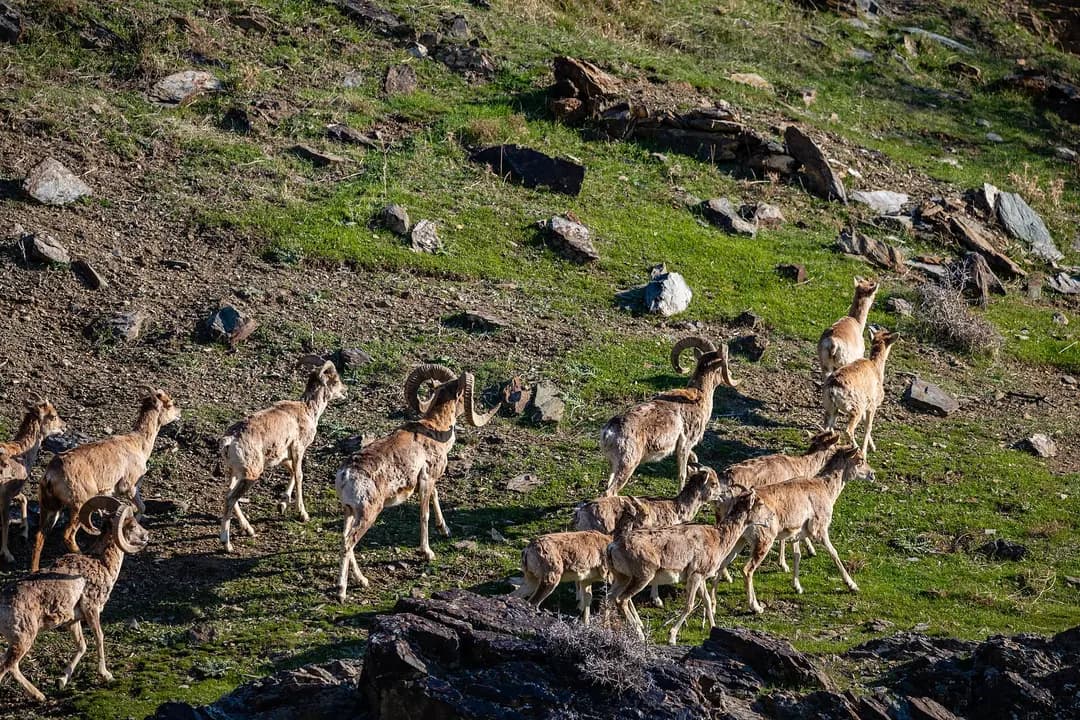
- Protected areas with mountain goats and wild sheep, away from the villages.
Getting there
Nurata lies about 70 km north-east of Navoi, roughly an hour's drive. Navoi is on the main highway between Samarkand and Bukhara, so the easiest way is to get to Navoi and continue to Nurata by local transport or taxi.
Coming from the east, Yo'ldosh has shared rides every day on the Samarkand to Navoi route: about 170 km and two and a half hours. After Nurata you can return to Navoi and carry on along the Navoi to Bukhara route, another 100 km or so and an hour and a half. You book your seat in advance in the app, drivers have verified profiles, and departure times are usually flexible.
Planning the day
- Morning: transfer from Navoi to Nurata.
- The Chashma spring, the mosque and a walk around the complex.
- Climb the Nur fortress hill before it gets hot.
- Lunch at a local teahouse, where plov and shurpa soup are well made.
- Return to Navoi, or head to Aydarkul for a night in a yurt.
The best seasons are spring and autumn. Summer is hot in Nurata, but you can always find cool air by the spring. Winter can be windy and cold, especially on the hill.
Nurata is quiet and unhurried. There are no tourist crowds, but there is a feeling that life around the spring goes on just as it did hundreds of years ago. Other destinations in the region are on the routes page.
Cover photo: Marat Nadjibaev, CC BY-SA 4.0, Wikimedia Commons.
