Tashkent's Railway Museum: Steam Locomotives in the Open Air
Steam, diesel and electric locomotives next to the capital's main station: what to see, how long to allow and how to combine the museum with a trip to Samarkand.
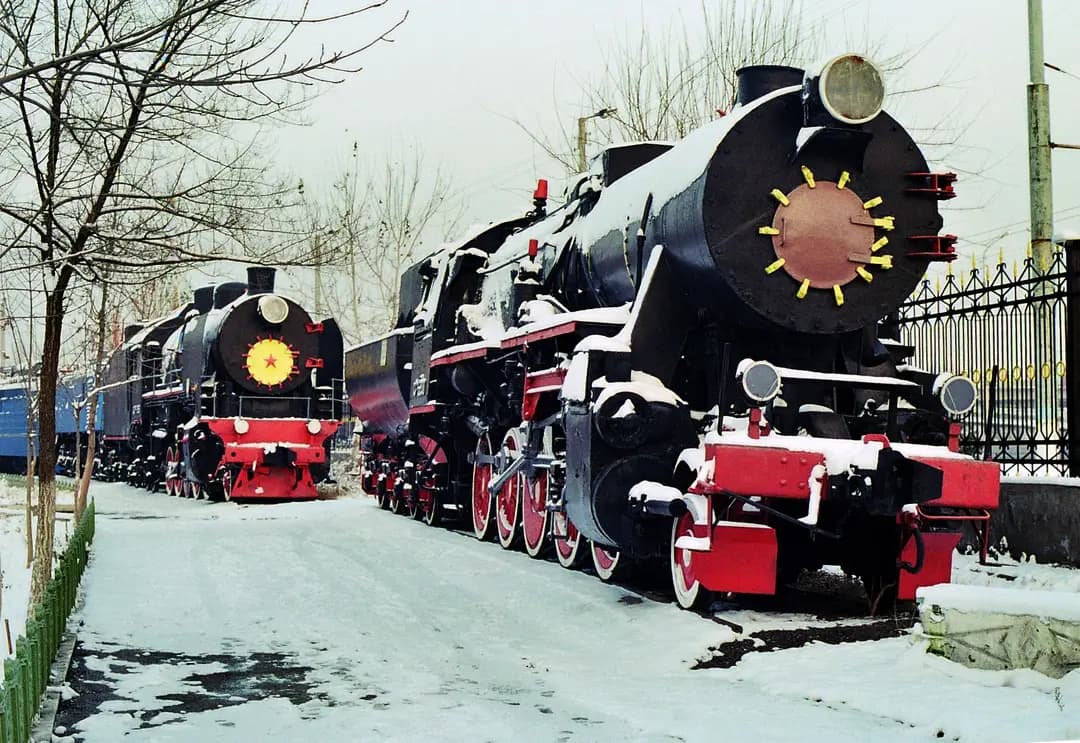
If you have a spare hour before your train, or you are travelling with children, Tashkent has a place that adults and little ones will both enjoy. The Museum of Railway Technology is an open-air yard next to the main station, with rows of steam, diesel and electric locomotives from different eras. You can look at many of the machines up close, and you can even peek into some of the cabs.
A little history
The railway reached Tashkent at the end of the 19th century and has shaped the city's life ever since. Trains ran from Tashkent to Orenburg and Moscow, into the Fergana Valley, and to Samarkand and Bukhara. In Soviet times Uzbekistan's capital became the largest railway hub in Central Asia.
The museum opened in the late 1980s to preserve equipment that had finished its service on the region's lines. The collection has grown since then, and today it is one of the most interesting displays of its kind in Central Asia.
What to see
The exhibition is split between an open-air yard and a small indoor hall.
In the open air:
- Steam locomotives, the most spectacular part of the collection, with huge wheels, black boilers, red details and chimneys. There are engines of different classes that worked main lines and shunting yards in the first half of the 20th century.
- Diesel locomotives, which replaced steam in the 1950s to 1970s. Seen side by side with the steam engines, they show clearly how design and engineering changed.
- Electric locomotives and small motor units, from early models to more recent ones.
- Carriages and special equipment: passenger and service cars, draisines, cranes and snowploughs.
Each machine usually has a sign with its class, year of manufacture and a short description.
In the indoor hall:
- model trains and station layouts;
- railway uniforms from different periods;
- tools, lamps, signalling equipment, tickets and documents;
- photographs of railway construction in Uzbekistan.
With children
For children the museum is a real find. They can walk all the way round the giant machines, and they are sometimes allowed up into individual cabs, depending on the condition of the equipment and the staff's decision. The yard is flat and safe, but keep an eye on children climbing steps and handrails: the metal is old and gets very hot in summer.
How long to allow
- A quick look: 40 minutes.
- A relaxed visit with photos and the indoor hall: an hour and a half.
- With children who want to sit in every cab: two hours or more.
Practical tips
- There is an entrance fee, usually modest; taking photos or video may cost extra. Prices and opening hours change, so check before you go.
- The museum may be closed on one day of the week, so look up the schedule in advance.
- In summer come in the morning, as there is little shade and the metal heats up.
- Wear comfortable shoes, as there is gravel and track between the exhibits.
- Soft morning or evening light gives great shots that bring out the texture of the metal and paint.
Combining it with a trip to the station
The museum's big advantage is its location. It is a few minutes' walk from Tashkent's central railway station, where high-speed and regular trains leave for Samarkand, Bukhara and other cities. There is a metro station nearby.
A rough plan:
- Arrive at the station two or three hours before your train.
- Leave your luggage in the station left-luggage office if the service is available.
- Spend an hour and a half at the museum.
- Have lunch at a cafe near the station.
- Board your train.
Train or car to Samarkand?
The journey from Tashkent to Samarkand is about 300 km. The high-speed train takes just over two hours, but tickets sell out quickly in high season, especially for weekends and holidays. By car the trip takes four to five hours.
If the train is full or you would rather leave at a different time, look at shared rides Tashkent to Samarkand on Yo'ldosh. Drivers leave throughout the day, you book your seat in the app, and the price is usually lower than a private taxi. A bonus: if you arrange it with the driver in the chat, you can be picked up near the museum. More details are on the for passengers page.
The Railway Museum is one of those places you do not need to change your plans for: it slots naturally into your route if you are passing through the station. And the giant steam engines, now part of the cityscape, are a reminder of how Tashkent became the main crossroads of Central Asia's railways.
Cover photo: Toothswung, CC BY-SA 3.0 de, Wikimedia Commons.
