Khiva: a guide to the museum city and its surroundings
Not just Itchan Kala: the outer town of Dishan Kala, the bazaar by the east gate, craft workshops and the ancient fortresses of Khorezm worth a trip.
Khiva is usually pictured in a single image: the mud walls of Itchan Kala, the turquoise Kalta Minor minaret, sunset over flat rooftops. And it really is impressive — the entire inner city is a UNESCO World Heritage Site. But if you only walk within the walls, you may miss what makes Khiva worth two or three days: the living outer town, the bazaar, the crafts and the desert fortresses of ancient Khorezm all around.
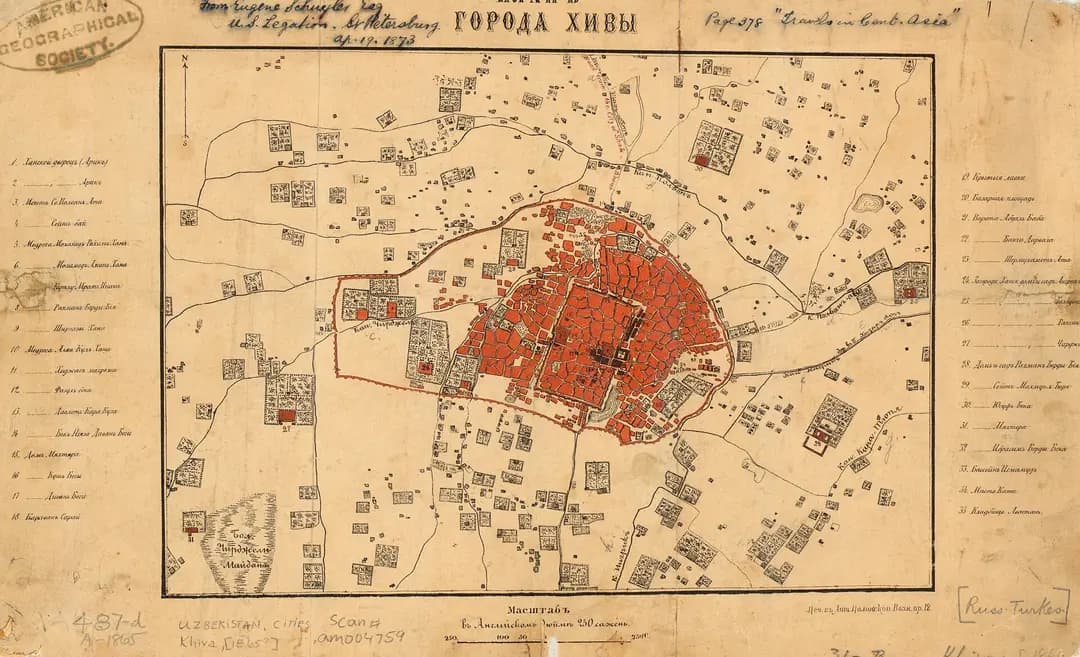
How Khiva is laid out
- Itchan Kala — the inner city behind massive walls, about 26 hectares of monuments, madrasas, mosques, palaces and narrow streets. People live inside, and there are guesthouses and shops.
- Dishan Kala — the outer town, once enclosed by a second ring of walls. Today it is an ordinary residential area with the bazaar, workshops and a few interesting buildings.
- Modern Khiva — the surrounding districts with the railway station, hotels and the roads to Urgench.
You enter Itchan Kala through four gates. The main one for visitors is the western Ota Darvoza, where the combined ticket for the inner city's museums is sold.
Itchan Kala: what not to miss
Everything inside the walls is close together, but there are so many monuments that seeing them properly takes a full day:
- Kalta Minor — an unfinished minaret clad in turquoise tiles, the symbol of the city;
- Kunya Ark — the khans' old fortress with a throne room and a viewing platform on the wall;
- The Juma Mosque — a hall filled with a forest of carved wooden columns, some of them very old;
- The Islam Khodja Minaret — the tallest in Khiva, with views over the whole city;
- The Pakhlavan Makhmud Mausoleum — a revered site dedicated to the poet and wrestler who is the city's patron;
- Tash Hauli Palace — with tiled courtyards for the harem and reception halls.
Tip: climb the wall or a minaret at sunset — it is the best time for the views.
Dishan Kala and the bazaar
Leave Itchan Kala through the eastern Palvan Darvoza gate. Just beyond it are the market stalls and the Allakuli Khan caravanserai, and further on the city bazaar. This is where Khivans buy vegetables, fruit, bread, spices and household goods — the best way to see everyday Khiva.
In the outer town, walk to the Nurullaboy Palace — the residence of the last khans, where early 20th-century European interiors sit alongside oriental decoration. It sees far fewer tourists.
Crafts
Khiva has always been famous for its craftsmen:
- woodcarving — columns, doors and Quran stands; in the workshops you can watch the carvers at work;
- carpet weaving and embroidery — carpets and suzani with traditional patterns;
- ceramics — dishes and tiles in Khorezm's blues and greens.
It is best to buy directly from the makers: you see the process and understand what you are paying for. Prices depend on size and handwork, and bargaining is normal.
What to eat
Khorezm cuisine differs from that of Samarkand and Tashkent. Be sure to try:
- shivit oshi — green dill noodles served with a meat sauce and sour yoghurt;
- tukhum barak — dumplings with an egg filling;
- the local plov, which is cooked in its own way here.
Around Khiva
If you have a spare day, head out of town:
- Urgench — the modern regional capital 30–35 km away, a base with an airport. Trips on Khiva — Urgench on Yo'ldosh are handy for getting to the airport or moving to another hotel.
- The fortresses of ancient Khorezm — Ayaz Kala, Toprak Kala and other mud-brick fortresses in the desert, 1–1.5 hours away. People go by taxi for the whole day or on a tour. Bring water and a hat — there is no shade.
- The villages around Khiva — orchards, melon fields, irrigation canals and mud-brick houses; a chance to see rural life in Khorezm.
When to go
| Season | Conditions |
|---|---|
| April–May | the best time, warm and green |
| June–August | heat above 40 °C, walk only in the morning and evening |
| September–October | mild weather, melon season |
| November–March | cold and windy, few tourists |
Getting there and moving on
Khiva is far from the capital, so plan your route carefully:
- From Bukhara — about 450 km across the Kyzylkum, 6–7 hours. Khiva — Bukhara shared rides are an easy way to cross the desert without hunting for a taxi; leave early to avoid driving in the worst of the heat.
- To Tashkent — about 1,000 km. Most people fly from Urgench or take the train, but there are also Khiva — Tashkent trips — an option if you want to see the country on the way or are carrying a lot of luggage.
On Yo'ldosh you book a seat in the app and agree on the pick-up point with the driver — for example, by the western gate of Itchan Kala.
The bottom line
Give Khiva at least two days: one for Itchan Kala, the second for the bazaar, Dishan Kala, the workshops or the desert fortresses. All destinations for your onward journey are on the routes page.
Cover photo: Eugene Schuyler, Public domain, Wikimedia Commons.
