Visa-Free Entry to Uzbekistan in 2026: Who and for How Many Days
How the visa-free regime works, which groups of countries it covers, what an e-visa is and what to do if you need to stay longer.
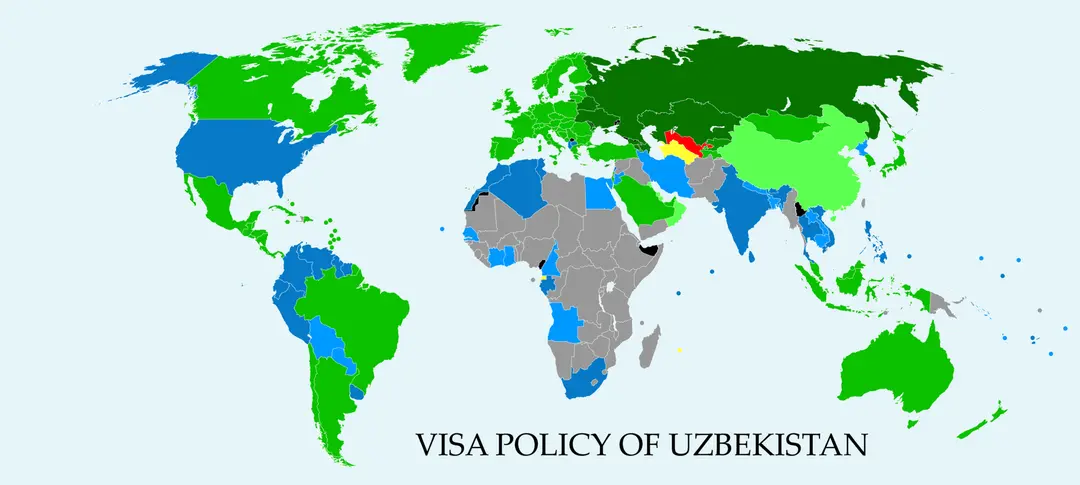
In recent years Uzbekistan has noticeably simplified entry for tourists. Citizens of many countries enjoy a visa-free regime, and for others there is an electronic visa issued online. But rules and lists are updated, so this article gives a general picture and pointers, not a final answer. Before your trip, be sure to check current information on the official website of Uzbekistan's Ministry of Foreign Affairs, at a consulate or on the e-visa portal. A mistake in a deadline or a country list can cost you your trip.
The visa-free regime: general principles
Visa-free entry means a citizen of a certain country does not need to obtain a visa in advance to enter Uzbekistan as a tourist for a limited period. The principles are:
- there is a list of countries with a visa-free regime, officially approved;
- different stay lengths are set for different countries;
- visa-free usually applies to tourism, business and private purposes, but not to work and study;
- conditions can be one-sided (Uzbekistan admits citizens of another country but not the reverse) or mutual.
Countries and durations: pointers
It is best to check exact lists and durations on official resources. The general picture is as follows (and may change):
- CIS countries. Citizens of many CIS states may stay in Uzbekistan without a visa for a longer period than others, with different conditions for different countries.
- Many countries of Europe, Asia and other regions. For citizens of a considerable number of countries a visa-free regime applies for up to 30 days. The list includes many European Union states and a number of other countries.
- Other countries. A visa is needed, which can be arranged through the e-visa system or at a consulate.
Because the list changes and the period depends on citizenship, make sure your passport qualifies for visa-free entry right now.
The electronic visa
If visa-free does not apply to you, an e-visa is the most convenient option. The principle:
- Fill in the application on the official e-visa portal.
- Upload a photo and a scan of your passport.
- Pay the consular fee online by card.
- Receive the visa by email and print it.
Processing times, cost and visa types (single entry, multiple entry, different durations) vary, so check them on the portal. Use only the official site: the internet has many intermediary sites that charge extra.
What you need at entry
As a rule, at the border they may check:
- a passport with sufficient validity (usually at least six months at entry, but confirm);
- a visa, if required;
- information on the purpose of the trip and accommodation;
- onward tickets, if asked;
- a migration card or electronic entry record, if one is provided for;
- insurance: advisable and in some cases mandatory.
Today you usually do not need to fill in many papers, but confirm the procedure before travelling.
How long you may stay
The length of stay is determined by citizenship and type of entry. Count days carefully: the day of entry and the day of departure are counted under rules worth confirming. Overstaying may lead to a fine, an entry ban and problems on departure. So do not count on it somehow working out.
What to do if you need to stay longer
If you need more time than visa-free gives:
- Arrange the right visa in advance, if your type of stay allows it.
- Contact the migration service before the deadline to learn about extension options. Extension rules depend on citizenship and purpose.
- Leave and re-enter. In some cases this is permitted, but rules on re-entry and day counting may restrict such practice, so confirm in advance.
- Do not overstay. This is the riskiest option.
If you plan a long stay, work or study, arrange the relevant visa or permit in advance.
Registration and visa-free entry
Visa-free entry does not cancel registration at your place of stay. In a hotel staff usually handle it, and with private persons the host does. Read about this in the separate article on registration of foreigners.
Transit and land borders
Rules for land borders may differ from those for airports. If you plan to enter overland, for example from neighbouring countries, check open crossing points and operating hours in advance. Waiting times at the border vary.
Practical tips
- Check your passport's validity and free pages.
- Photograph your documents and keep copies separately.
- Buy insurance that includes medical costs.
- Find out whether extra documents, such as an invitation, are needed.
- Book lodging at least for the first days.
- Keep a printout or e-ticket for departure with you.
- Follow official news on rule changes.
After entry: getting around the country
Once in the country, travel along the usual routes. For example, a popular route starts with the Tashkent to Samarkand route: about 300 km and 3.5 to 4 hours by car. In the Yo'ldosh app you book a seat in a shared car, see the driver's verified profile and choose a convenient time. Keep your passport and registration confirmation at hand, as documents may be checked on highways.
Bottom line
The visa-free regime and the e-visa have made a trip to Uzbekistan simple, but the rules change. Check current information on official resources, count your days of stay, register and do not overstay. Then choose a route, for example Tashkent to Samarkand, and enjoy the trip.
Cover photo: Twofortnights, CC BY-SA 3.0, Wikimedia Commons.
