Bukhara Beyond the Main Sights: Magoki-Attari, Bolo-Hauz, Chashma-Ayub
The city's oldest mosque, sunk below street level, an iwan on twenty wooden columns and the spring of Job: three monuments that tourists reach less often.
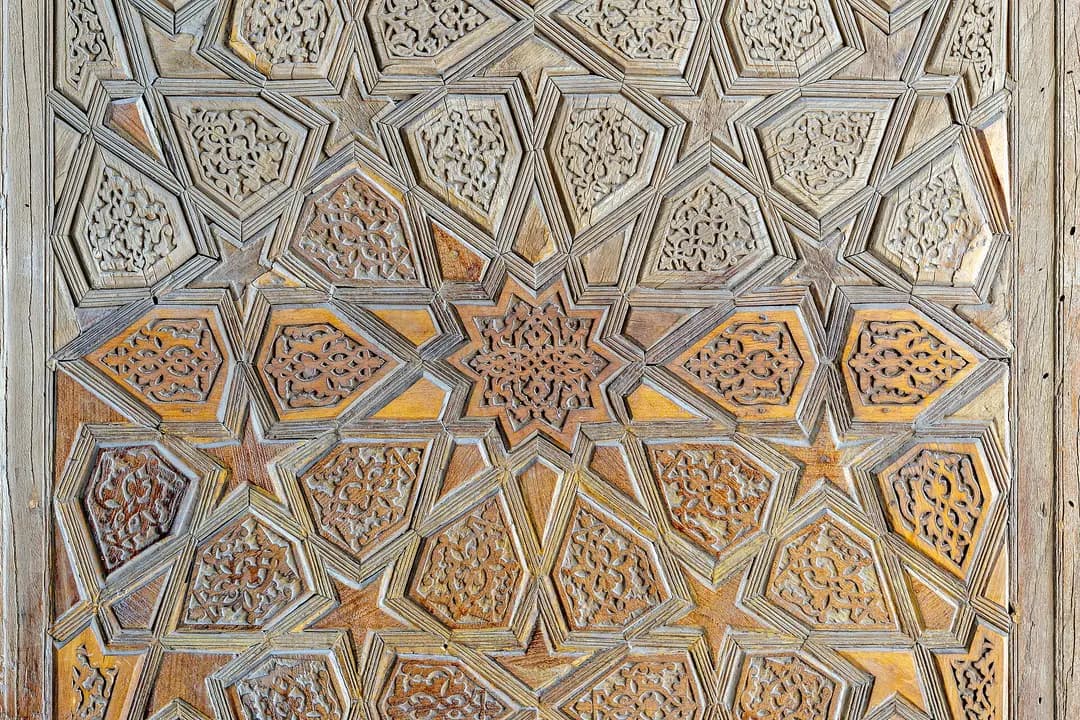
The classic route around Bukhara usually goes like this: Lyabi-Hauz, the trading domes, Po-i-Kalyan, the Ark. It is wonderful, yet afterwards many people feel the city is just a few squares with madrasas. In fact Bukhara has dozens of monuments, and some of the most interesting stand only minutes from the main routes. Magoki-Attari, Bolo-Hauz and Chashma-Ayub are three such places, each with its own surprising story.
Magoki-Attari: the mosque in a pit
A few steps from Lyabi-Hauz, next to the Sarrafon trading dome, stands a small mosque that looks as if it has been half buried. Its carved portal sits well below street level, and you walk down steps to reach the entrance. This is not a builders' mistake: over a thousand years the ground around it rose by several metres through layers of urban life, while the mosque stayed at its original level.
The name roughly means "the mosque in the pit by the spice sellers": "magok" is a hollow and "attari" refers to sellers of spices and remedies. A herbalists' market once bustled around it.
Magoki-Attari is considered one of the oldest surviving mosques in Bukhara. Its southern portal dates from the 12th century and is decorated with exquisitely fine carving in brick and terracotta. Archaeologists found remains of earlier buildings beneath the mosque, and tradition holds that a pre-Islamic temple once stood here. It is hard to say anything for certain, but the very idea that layers of several eras lie beneath your feet makes the visit special.
Today the mosque houses a carpet museum. Even if carpets are not your thing, step inside for the atmosphere and the cool air, and be sure to study the southern portal from different angles outside.
Bolo-Hauz: twenty columns and forty reflections
Opposite the Ark, across Registan Square, stands the Bolo-Hauz Mosque, one of the most elegant in the city. It was built in 1712 and served as the emir's Friday mosque: the ruler would leave the fortress and cross the square to pray here.
The mosque's best-known feature is its tall iwan resting on twenty slender carved columns, added later, in the early 20th century. The columns are wooden with muqarnas-style carved capitals, and the iwan ceiling is brightly painted. In front of the mosque is the pond that gave it its name: "bolo hauz" means "by the upper pond". The columns are reflected in the water, and locals say they become forty, hence the mosque's unofficial second name, the "mosque of forty columns".
A small minaret stands beside it. The mosque is active, so keep quiet during prayer times and dress modestly. The best time for photos is morning or the hours before sunset, when light falls across the columns from the side and the water is still.
Chashma-Ayub: the spring of Job
A few minutes from the Samanid Mausoleum stands an unusual building with a conical dome. This is Chashma-Ayub, "the spring of Job". According to legend, during a severe drought the Prophet Job (Ayub) came here, struck the ground with his staff, and a spring of pure, healing water gushed out.
The present building dates from the 12th century and was extended later, which is why different parts are covered by different domes. The conical dome over the main room is more typical of Khorezm and looks unusual for Bukhara. Inside today is a water museum explaining how Bukhara lived for centuries on canals and ponds and how the city got its water. The spring itself is still considered holy, and some visitors take water away with them.
Linking it all into one walk
The three monuments combine easily with places you already know:
- Morning: Lyabi-Hauz and straight on to Magoki-Attari while it is quiet.
- Through the trading domes to Po-i-Kalyan.
- To the Ark and across the square to Bolo-Hauz.
- Through Samanid Park to the Samanid Mausoleum and Chashma-Ayub.
The route takes 3-4 hours at an easy pace. Tickets for Magoki-Attari and Chashma-Ayub are sold on site; prices are approximate and change. Bolo-Hauz, as an active mosque, is usually open to look at freely from outside.
Tips
- Bring water and a hat: the stretch from the Ark to Samanid Park is exposed to the sun.
- The steps at Magoki-Attari are steep, so watch your footing.
- At Bolo-Hauz, do not step onto the carpets in shoes.
- If you want to learn more about each place, hire a guide for half a day; they will point out carving details on the Magoki-Attari portal that are easy to miss.
- There is a market by the park where you can buy fruit and grab a snack.
From Bukhara to Qarshi
If after Bukhara you plan to head south into the Kashkadarya region, the first large city is Qarshi, about 160-170 km away, roughly two and a half hours by car. In Qarshi the Kok-Gumbaz Mosque and the old brick bridge over the Kashkadarya are worth seeing, and from there it is easy to continue to Shahrisabz, Amir Timur's home town.
A shared ride via Yo'ldosh is a convenient way to go: book one seat with a verified driver. It is cheaper than a private taxi and simpler than waiting for the right minibus. See trips on the Bukhara - Qarshi route page and all directions in the routes section.
Cover photo: Nikolai Bulykin, CC BY-SA 4.0, Wikimedia Commons.
