Babur's House Museum and the Jami Mosque in Andijan
Andijan is the birthplace of Zahiriddin Babur, founder of the Mughal Empire. Here is what to see in his house museum, at the Jami mosque and in the historic centre of the city.
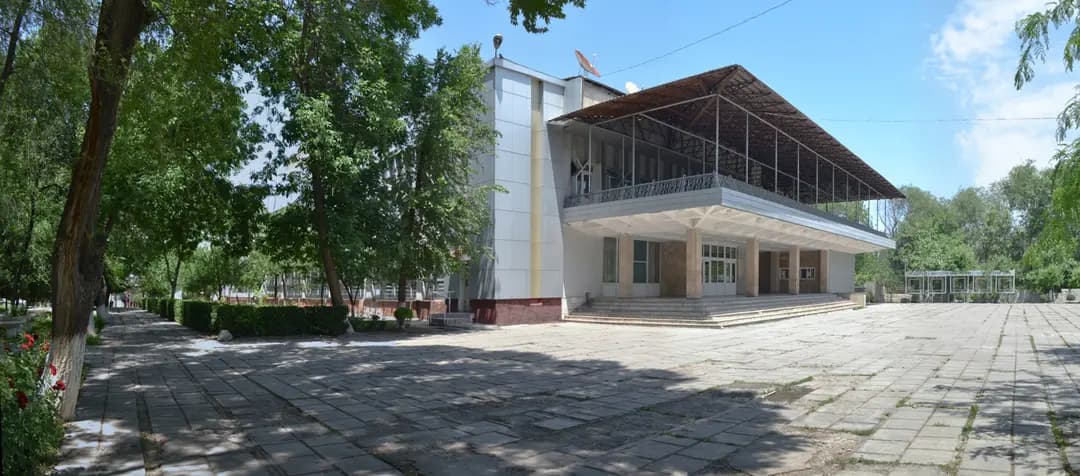
Andijan is one of the largest cities in the Fergana Valley and the easternmost regional capital of Uzbekistan. It sees fewer tourists than Samarkand or Bukhara, but it carries a name known far beyond the country's borders. It was here, in 1483, that Zahiriddin Muhammad Babur was born — a poet, a military leader and the founder of the empire that Europeans would later call the Mughal Empire. A walk through the places connected with Babur is the best way to get to know Andijan.
Who Babur was
Babur was a descendant of Timur on his father's side. His father, Umar Sheikh Mirza, ruled the principality of Fergana, and Andijan was his capital. At the age of 12, after his father's sudden death, Babur became ruler. His youth was spent in an endless struggle for Fergana and Samarkand, and he won and lost the throne several times.
In the end Babur went south, established himself in Kabul, and in 1526 won the battle of Panipat and founded a state in India. His descendants ruled there for more than three centuries, and their buildings include the Taj Mahal.
For Uzbek readers Babur is above all a poet and the author of the Baburnama, an autobiographical memoir written in Chagatai, the classical Turkic language that preceded modern Uzbek. In it he describes wars, nature, cities and people with remarkable frankness, and he writes warmly about Andijan and Fergana.
Babur's house museum
Babur's literary museum is in the old part of Andijan, on the grounds of the former citadel, the Ark, where according to tradition the future ruler spent his childhood. The museum occupies an old building with an inner courtyard.
What you can see:
- manuscripts and editions of the Baburnama in various languages, including reproductions of the famous miniatures illustrating scenes from the book;
- the family tree, showing how Babur was related to Timur and the descendants of Genghis Khan;
- an exhibition on Babur's life: childhood in Fergana, his campaigns, Kabul and India;
- objects from the period: weapons, tableware, clothing and books;
- his poetic legacy: Babur's ghazals and rubais, still read and sung in Uzbekistan today.
Forty minutes to an hour is enough. A tour in Russian is usually available on site; for English, check in advance. Tickets are inexpensive and prices change.
The Jami mosque and madrasa
Nearby stands Andijan's main historic religious complex, the Jami mosque with its madrasa and minaret. It was built in the late 19th century and survived the powerful earthquake of 1902 that destroyed much of the old city. As a result it is one of the few monuments of that era left in Andijan.
What to notice:
- The minaret, more than 30 metres tall and visible from many parts of the centre.
- The carved iwan with wooden columns, typical of Fergana Valley architecture.
- The madrasa courtyard with its hujras, the students' cells.
If the complex is in use during your visit, follow the usual etiquette: covered shoulders and knees, a headscarf for women, quiet voices and respect for people at prayer.
Babur Park
Outside the city, on Bogishamol hill, there is a large memorial park dedicated to Babur. It has a museum, avenues, viewpoints and a symbolic tomb: Babur himself is buried in Kabul, but soil from his grave was brought to the park.
It is a favourite place for locals to relax, especially in spring when the trees are in bloom, and at weekends. From the hill there is a view over the valley and the mountains on the horizon.
A one-day plan
| Time | What to see |
|---|---|
| 9:00–10:00 | Babur's house museum |
| 10:15–11:00 | Jami mosque and madrasa |
| 11:00–12:30 | A walk around the centre and the Andijan bazaar |
| 13:00 | Lunch: Andijan plov or samsa |
| 15:00–17:00 | Babur Park on Bogishamol hill |
It is easier to take a taxi between the centre and the park, as the park is outside the city.
Getting there from Tashkent
Andijan is about 330 to 350 km from Tashkent, roughly 5 to 6 hours on the road. The route crosses the Kamchik Pass and then runs through the valley via Kokand or Namangan.
Travel tips:
- Leave early so you cross the pass in good light.
- There is usually a checkpoint on the pass, so carry your documents.
- In winter, watch the weather, as snow and fog are possible.
A convenient option is a shared ride on the Andijan — Tashkent route or in the opposite direction. On Yo'ldosh drivers post trips with departure times and available seats, and you book a single seat and pay less than for a private taxi. You can read more about how it works on the for passengers page.
When to go
- April–May — orchards in bloom and mild weather, the best time for Babur Park.
- September–October — warm, with markets full of fruit and vegetables.
- Summer — hot, though a little milder in the valley than in the south of the country.
- Winter — cool, and the pass can be difficult.
What to eat
Andijan is famous for its food. Be sure to order Andijan plov, try tandoor-baked samsa, fresh flatbread and fruit from the bazaar. In spring the first strawberries and cherries appear, and in summer apricots and melons.
Why go
Andijan shows the Fergana Valley without the tourist gloss: a lively bazaar, warm hospitality and the story of a man who set out from here to build one of the largest empires of his time. If you read a couple of pages of the Baburnama before your trip, you will see the city through his eyes.
You can find a ride on the Andijan — Tashkent route, and other routes around the valley are listed under all routes.
Cover photo: deactualizator, CC BY 3.0, Wikimedia Commons.
