Gulistan: Heart of the Hungry Steppe
The small, calm capital of Syrdarya Province: the story of taming the steppe, where to eat and sleep, and where to go next, whether Jizzakh, Khovos or Yangiyer.
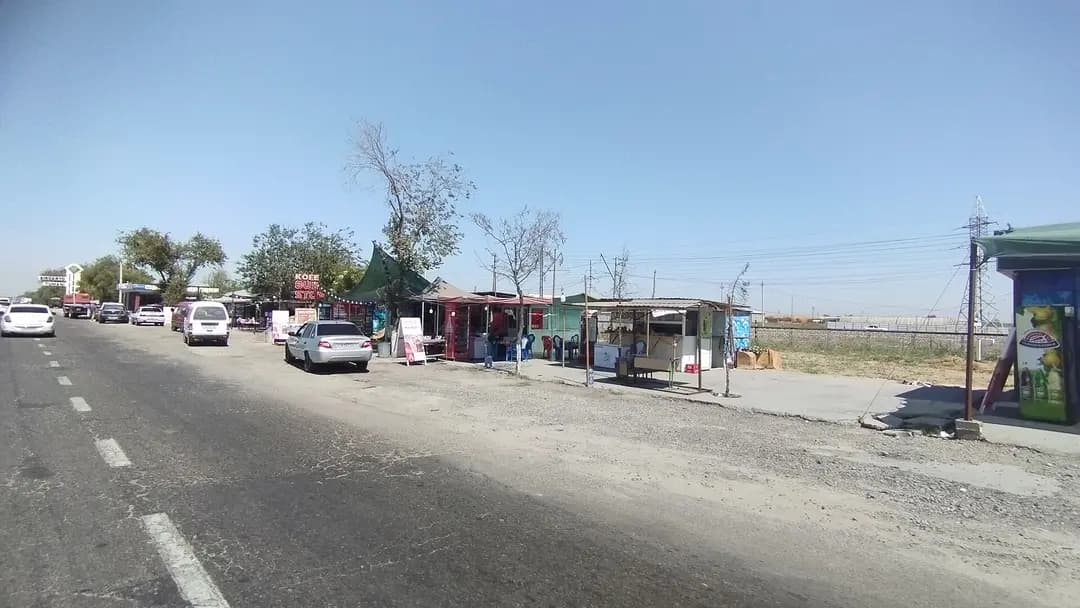
Gulistan means "flowering garden." For a city that grew up in the middle of the Hungry Steppe, the name is almost a mission statement. A century ago this was a scorched plain where almost nothing grew in summer. Today it is the green, calm capital of Syrdarya Province, surrounded by cotton fields, melon patches and canals. Tourists rarely come here, and that is its charm: Gulistan is a convenient, inexpensive and quiet stop between the capital, Jizzakh and destinations further south. Here is what the city offers and how to use it on your travels.
History: from steppe to garden
The Hungry Steppe (Mirzachul) is a vast plain on the left bank of the Syr Darya. The soil is fertile, but useless without water, so for centuries the steppe stayed nearly empty. The first large irrigation projects began in the late 19th century, and mass development took off in the mid-20th century, with canals, state farms, villages and entire towns being built.
Gulistan grew out of the small railway settlement of Mirzachul. In the 1960s it received its current name and became the center of a new province. The city was built to a plan: straight streets, residential blocks, parks and administrative buildings.
What to see
Gulistan is not a place for ticking off famous sights, but for a relaxed look at everyday life.
- The central square and park. A green center with alleys and fountains where families gather in the evening.
- The local history museum. Exhibits on the taming of the Hungry Steppe, the region's nature and archaeological finds. Check opening hours.
- The university district. The city has a state university, so there are lots of young people and a lively feel.
- The bazaar. The best place to buy fruit, melons and watermelons, which are especially good here in late summer.
A few hours are enough to get to know the city.
Where to eat
Gulistan has plenty of simple teahouses, shashlik grills and cafes. Be sure to try:
- plov, cooked for lunch;
- lamb shashlik;
- lagman and shurpa;
- local melons and watermelons in August and September.
Prices in small towns are noticeably lower than in the capital, but they change, so check on the spot.
Where to stay
The city has several hotels and guesthouses, from basic to more comfortable. The choice is limited, so book ahead, especially during university events and holidays. If you need an overnight stop on the way south, Gulistan is a good option: quieter and calmer than the highway near the big cities.
Getting there
Gulistan is about 120 km from Tashkent, a drive of roughly 1.5–2 hours. Many people travel the Gulistan — Tashkent route, including students, workers and families, so finding a shared ride is easy. A railway line also runs through the city.
Where to go next
Jizzakh
About 90 km to the southwest lies Jizzakh, with its famous samsa, bazaar and Tamerlane's Gate. From there, roads lead to Samarkand, Zaamin and Lake Aydarkul. Rides on the Gulistan — Jizzakh route take about an hour and a half.
Khovos
Khovos (Khavast) is a small district center and railway junction southwest of Gulistan, on the way to Samarkand and the south of the country. Here you can see rural Uzbekistan: the bazaar, teahouses and fields all around. The Gulistan — Khovos route is popular with locals.
Yangiyer
Yangiyer is another Hungry Steppe town, about 35 km to the south at the foot of the mountains, with views of the Turkestan Range foothills.
Practical tips
| What | Guideline |
|---|---|
| Time needed | half a day for the city, overnight optional |
| Best season | April–May, September–October |
| What to buy | melons, watermelons, dried fruit |
| Getting around | taxis, minibuses |
- Summer on the steppe is very hot, so keep water with you.
- Spring and autumn can be windy, so bring a jacket.
- Around Khovos and Yangiyer the state border is close: follow the rules and keep away from border facilities.
A day in Gulistan
- Morning: leave Tashkent and be in the city by 10 am.
- Before lunch: the local history museum and a walk around the center.
- Lunch: plov at a teahouse near the bazaar.
- Afternoon: the bazaar, picking up melons and dried fruit for the road.
- Evening: the park and a shashlik dinner, then stay overnight or move on to Jizzakh.
A day like this is not tiring and works well as a breather between big cities.
Why stop here
Gulistan will not dazzle you with ancient architecture, but it shows another side of the country: young towns built for the sake of water and land. It is a convenient place to rest on the road and a base for trips around southern Syrdarya Province and Jizzakh.
Rides on Yo'ldosh
To reach Gulistan and beyond, choose a ride with a verified driver: Gulistan — Tashkent, Gulistan — Jizzakh or Gulistan — Khovos. Seats are booked in the app, and you pay only for yourself. All directions are on the routes page.
Cover photo: Mirzoulugʻbek, CC0, Wikimedia Commons.
