The State Museum of the History of Uzbekistan
What to see in the country's main history museum if you want context before travelling: from the Buddhist monuments of the south to the Timurid era and the khanates.
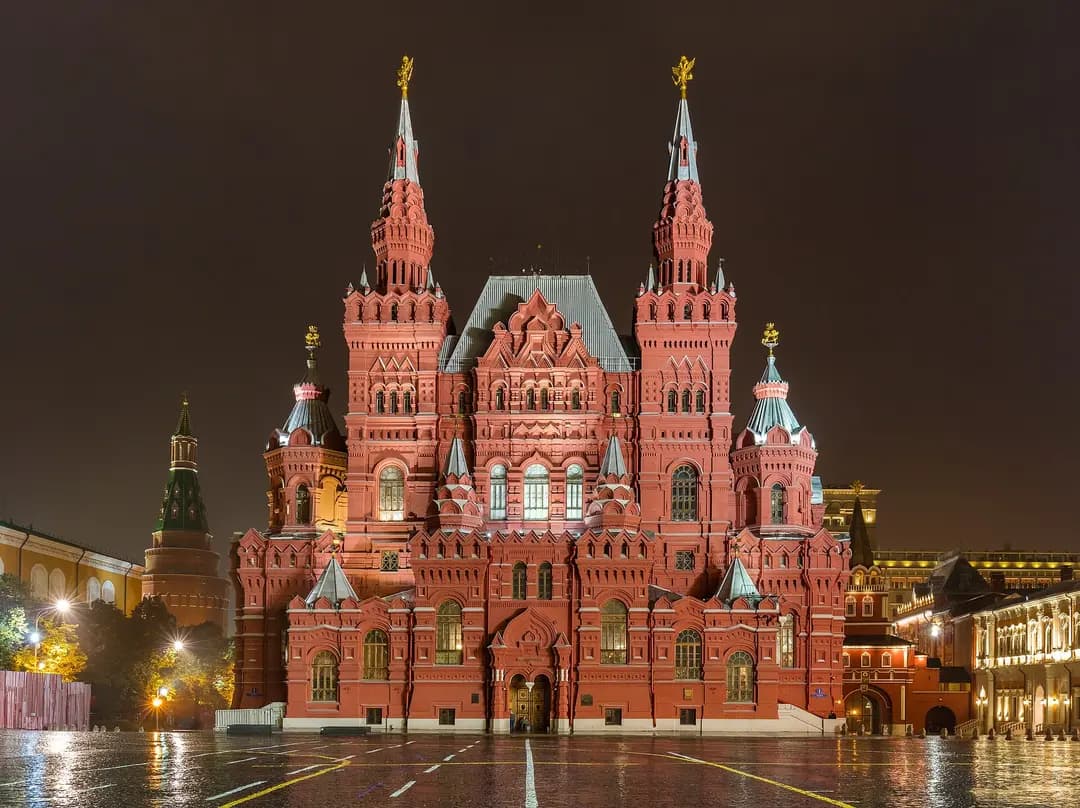
The State Museum of the History of Uzbekistan is one of the best ways to form a general picture of the country's past in a couple of hours. It is in Tashkent, and its display covers the period from the earliest times to recent history. If you are heading for Bukhara, Samarkand, Khiva or Termez, the museum lets you see the thread that connects these cities and gives your trip more meaning.
Why go to a history museum
Uzbekistan seems to be a set of beautiful monuments: the Registan, Ichan-Kala, the madrasas of Bukhara. But behind each of them stand an era, states and people. The museum helps you see the whole picture: where each culture appeared, how rulers changed, what was traded and how people lived. After such preparation a trip across the country feels different: you recognise details you would not otherwise have known.
Structure of the display
The display is built chronologically, from ancient times to the present. Hall names may change, but the general logic is this.
Earliest history
The first halls are devoted to the Stone and Bronze Ages. Tools, ceramics and jewellery found on the territory of present-day Uzbekistan are shown. They demonstrate that people lived in these lands before the first states appeared.
Antiquity and the early Middle Ages
Here you learn about the ancient states of the region: Bactria, Sogdiana, Khorezm. Objects of the Kushan kingdom, Greco-Bactrian influence and Sogdian culture are presented. A special place is taken by Buddhist art linked with the south of the country: fragments of sculpture and painting from monasteries near Termez help you imagine what religious life in the region looked like before Islam.
The Middle Ages and the Timurid era
These halls tell of the spread of Islam, the Arab conquest, the flowering of science and culture under the Samanids and Karakhanids, and then the Mongol invasion. A separate section is devoted to Timur, his empire and Ulugh Beg. Ceramics, weapons, jewellery and manuscripts give an idea of the era's high culture.
The khanates and the colonial period
Khiva, Bukhara and Kokand kept their independence until the region became part of the Russian Empire in the nineteenth century. The display shows daily life, crafts, trade and politics of that time. Compare this part with a visit to Ichan-Kala and the madrasas of Bukhara: you will better understand their purpose.
The Soviet period and independence
The last halls cover the twentieth century, including industrialisation, cultural change and independence in 1991. They help you understand where the country's modern cities and realities come from.
How much time you need
Allow 1.5 to 2.5 hours for the visit. If you read captions and want to dig into details, you will need more. For a quick version an hour is enough: concentrate on the halls of antiquity and the Timurid era.
Practical information
- Entry is paid. Prices and hours may change, and for foreign guests the cost is usually higher than for locals. Check current information before you visit.
- Captions may be in Uzbek, Russian and English, but not always in all languages. If you want depth, take a guide.
- It is usually cool in the museum, which is good in the heat.
- Photography is sometimes allowed for an extra fee.
The museum before a trip to Bukhara
The museum is best visited on the eve of a trip to the historic cities. A high-speed train runs from Tashkent to Bukhara, but you can also travel with a driver: trips are collected on the Tashkent to Bukhara page. In the Yo'ldosh app you book one seat and see the departure time and the driver's profile. The road takes several hours, so leave in the morning. And while you ride you will have a chance to recall what you learned at the museum.
What else to see in Tashkent
- The Museum of Applied Arts: crafts and a house with carved ganch.
- Amir Timur Square: a symbol of modern Tashkent.
- The Tashkent metro: stations decorated like works of art.
- The TV tower: a view over the city.
Practical tips
- Come in the morning: fewer people, and the light in the halls is better.
- Bring water and comfortable shoes.
- Plan the museum for the hot part of the day: it is cool inside.
- Do not skip the sections on Khorezm and Sogdiana: they will help on trips north and to Samarkand.
When to go
The museum is open all year. Tashkent is best visited in spring and autumn.
Plan your trip
To continue your journey to Bukhara, open the Tashkent to Bukhara page. Other directions are in all routes. Drivers who travel from the capital will find the for drivers page useful.
Cover photo: Diego Delso, CC BY-SA 4.0, Wikimedia Commons.
