Karakalpakstan in 3 Days: Nukus, Muynaq and the Desert Fortresses
Western Uzbekistan in three days: the Savitsky Museum, the Mizdakhan necropolis, the ship cemetery on the Aral seabed and the mud-brick forts of ancient Khorezm.
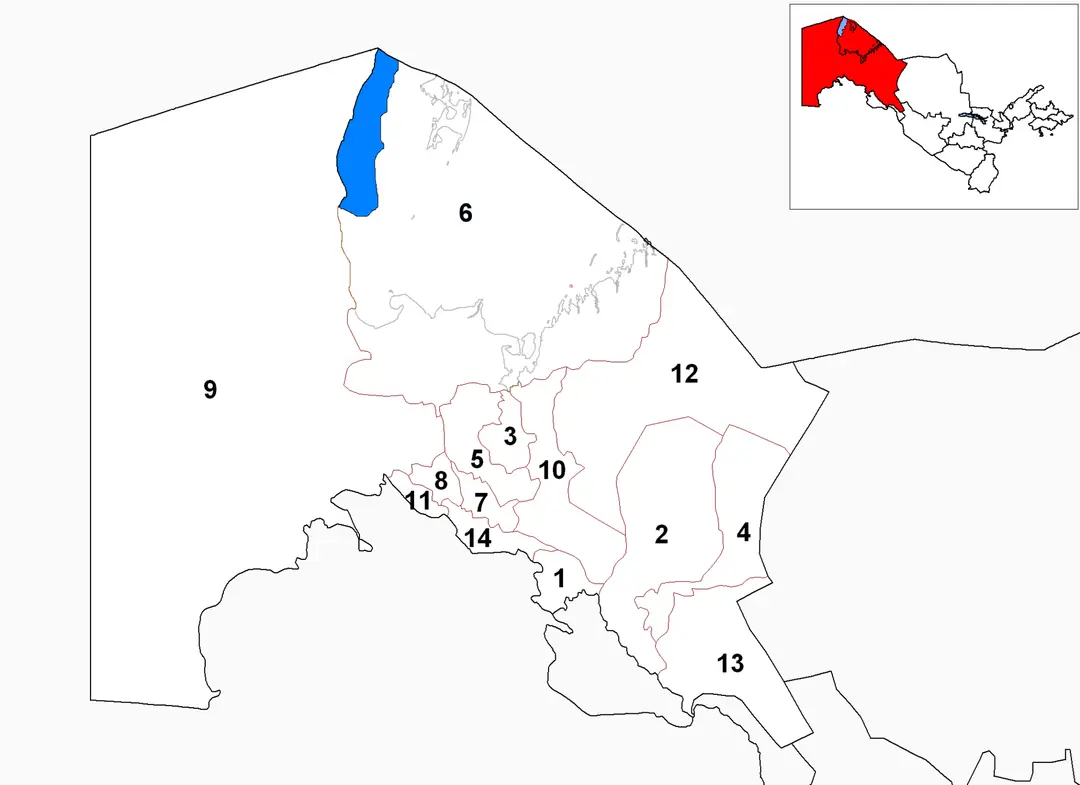
Karakalpakstan covers almost a third of Uzbekistan, yet it sees a fraction of the visitors Samarkand does. It is a land of deserts, salt lakes and wind, and also home to one of the most remarkable museums in Central Asia and the remains of a civilisation more than two thousand years old. Three days are enough for the essentials: Nukus, Muynaq on the former shore of the Aral Sea, and the mud-brick fortresses on the way to Khorezm.
Getting to Nukus
Most people fly from Tashkent to Nukus, a flight of about two hours. The train takes almost a full day, but it is an experience in itself as the Kyzylkum Desert and its oases roll past the window. The road from Tashkent to Nukus is over 1,100 km via Bukhara or Navoi, which means two days of driving or a night on the way. Many travellers combine the two: overland in one direction via Bukhara and Khiva, flying in the other.
Day 1: Nukus and Mizdakhan
Start with the highlight, the Savitsky State Museum of Art. Between the 1950s and the 1980s the artist and collector Igor Savitsky brought thousands of works of Russian avant-garde art, banned at the time, to Nukus, along with archaeological finds from ancient Khorezm and Karakalpak carpets, jewellery and costumes. Allow three to four hours; the display changes and part of the collection is kept in storage.
After lunch drive to Mizdakhan, about 20 km from Nukus near the town of Khodjeyli. It is a vast necropolis spread over hills, where medieval mausoleums, the ruins of the Gyaur Kala fortress and modern graves stand side by side. The hilltop looks out over the desert. According to legend, Adam's grave is here, and pilgrims come all year round. Keep your voice down: it is a working cemetery.
Day 2: Muynaq and the Aral Sea
Set off early. The drive from Nukus to Muynaq is about 200 km across flat country and usually takes three hours. Muynaq was once a fishing port on the seashore; today the water has retreated by many tens of kilometres.
What to see:
- the ship cemetery, rusting fishing boats on the sand of the old seabed;
- the viewpoint by the memorial on the line of the former shore;
- the small local museum with photographs and paintings of life in the town before the sea dried up.
Reaching today's shoreline is a separate adventure: another 100–200 km off-road across the Ustyurt Plateau, only by 4x4 and usually with a night in a yurt camp. If you want to see the Aral with your own eyes, add an extra day and book with an established operator. For a three-day trip, returning to Nukus by evening is enough.
Day 3: Chilpyk and the Ellikkala fortresses
Day three heads south towards Khorezm. The first stop, 40 km from Nukus, is Chilpyk, a round Zoroastrian tower of silence on a hill above the Amu Darya, where the dead were once laid out. The climb is steep but the view is worth it.
The road then continues into the Beruni and Ellikkala area. The drive from Nukus to Beruni is about 100 km, roughly an hour and a half. The fortresses of ancient Khorezm are scattered around it:
- Toprak Kala, a former residence of the Khorezmian rulers with a towering citadel.
- Ayaz Kala, three forts on hilltops, with a yurt camp at the foot.
- Kyzyl Kala, small but well preserved and perfectly square.
The forts are 10–30 km apart along steppe tracks, so you cannot do them without a car. By evening you can reach Khiva or Urgench, another hour or so, and fly out from there, or return to Nukus.
When to go
The best months are April–May and September–October. Summer brings 40°C and more, and there is almost no shade at the forts. Winter is freezing and windy but empty of tourists. Dust storms happen in spring and autumn, so check the forecast before heading to Muynaq.
What to pack
- Plenty of water: there are almost no shops on the steppe between villages.
- A hat, sunglasses and sunscreen.
- Closed shoes for climbing over clay and sand.
- Cash: there are ATMs in Nukus and Beruni, but do not count on them in Muynaq or at the forts.
- A windproof jacket even in summer, as desert evenings can be cool.
About the region
Karakalpakstan is an autonomous republic within Uzbekistan, with its own language, cuisine and music. Try the local dishes: beshbarmak with homemade noodles and meat, tushpara dumplings, and tea with camel's milk if you are offered it. The population is small, and people are open and happy to help with directions.
Getting around Karakalpakstan
Public transport between Nukus and the villages is irregular, and long-distance taxis are not cheap. A shared ride on Yo'ldosh is a sensible middle ground: you book a seat with a verified driver who is already heading your way. Look for rides on Tashkent to Nukus, Nukus to Muynaq and Nukus to Beruni, and plan your onward journey under all routes.
Cover photo: Karakalpakstan_districts.png: Rarelibra derivative work: Anatoliy Honcharov, CC BY-SA 3.0, Wikimedia Commons.
