Kungrad: a railway junction on the edge of the Ustyurt plateau
What makes Kungrad interesting for travellers and how to organise trips from here to the Aral Sea, the Ustyurt cliffs and the lakes of north-western Karakalpakstan.
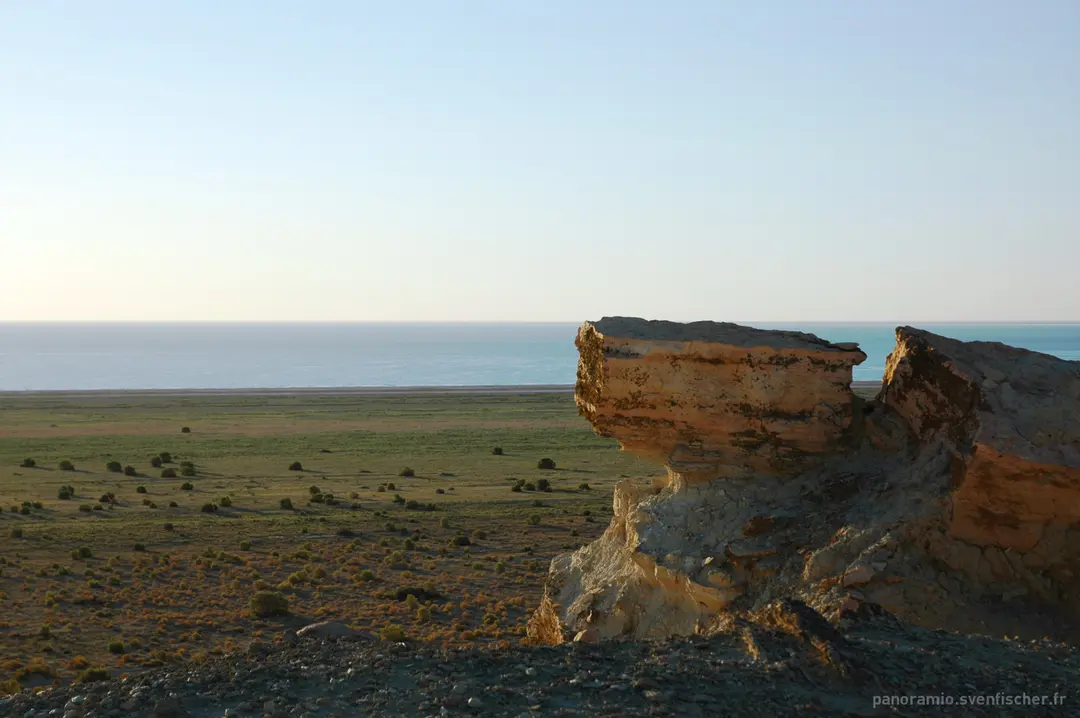
On the map of Karakalpakstan, Kungrad looks like the last outpost of the inhabited world before a vast empty space. To the west begins the Ustyurt plateau, a stony desert that drops to the former bed of the Aral Sea in sheer cliffs called chinks; to the north lie the dried-up bays of the sea and Muynaq. Few people think of the town itself as a tourist destination, but many expeditions to the far edge of the country start here. Here is how Kungrad can help you and how to plan the trip.
Where Kungrad is
Kungrad lies in north-western Karakalpakstan, on the lower reaches of the Amu Darya, about 100 km from Nukus. The drive from the republic's capital takes about an hour and a half. The town sits on the border between the delta and the desert: on one side irrigated fields, canals and reed beds, on the other the first rises of the Ustyurt.
Historically Kungrad was the centre of a tribal confederation of the same name and one of the important places on the lower Amu Darya. Today it is an industrial and transport town: there is a soda plant, and gas is extracted on the plateau, so Kungrad has many visiting engineers and workers.
A railway junction
Kungrad's defining feature is the railway. A line runs through the town and across the Ustyurt towards Kazakhstan, with branches to Nukus and further east across the country. That makes Kungrad an important point for freight and long-distance trains. For travellers it means you can arrive by train, but check the timetable in advance: there are few trains and some run overnight.
The station and its square are a visible part of town life, with taxi drivers, food sellers and passengers with big bags gathering around them.
What to see in town
Kungrad has no ancient monuments to boast of, but you can spend a few useful hours here:
- The bazaar. It sells fish from the delta lakes, fermented dairy products, flatbread and dried fruit. A good place to stock up before a desert trip.
- The main street and park. A quiet provincial centre that shows how northern Karakalpakstan lives.
- Teahouses. Try Karakalpak dishes: beshbarmak, fish, flatbread and tea with milk.
Trips from Kungrad
The Ustyurt plateau and its cliffs
The Ustyurt is a huge stony plateau between the Aral and the Caspian. Its edges drop to the former seabed in sheer cliffs tens or even hundreds of metres high. The view from the chinks over salt flats and rock outcrops is one of the most powerful experiences in Uzbekistan. On the plateau you can see traces of ancient caravan routes, old burial grounds and, with luck, wild animals.
The Aral Sea and Muynaq
A road runs from Kungrad to Muynaq, the former fishing port where rusting ships stand on the old seabed. Trips to the present-day shore of the Aral are organised from Muynaq and from the Ustyurt. It is a drive of many hours off-road, so go only in a properly equipped four-wheel drive with an experienced driver.
The delta lakes
Around Kungrad and to the north lie the lakes and reed beds of the Amu Darya delta. Birds nest here, and spring and autumn bring migrations, making it a good place for photographers and birdwatchers.
How to organise an expedition
- Do not drive into the desert in an ordinary car. The Ustyurt and the Aral require a 4x4, spare fuel and a driver who knows the tracks.
- Arrange things in advance. Aral tours are usually organised from Nukus and Muynaq; check the programme, the overnight stays (often in yurts or tents) and what is included in the price.
- Carry water and food for a day longer than you plan.
- Tell someone your route and expected return time, as there is almost no signal on the plateau.
- Check for restrictions. Some areas near the border may have special visiting rules, so ask your organiser.
When to go
The best months are April to May and September to October. Summer on the plateau brings intense heat and dust; winter brings biting wind and frost. In spring the desert turns green for a short while, and in autumn the air is clear, which is good for photography.
How to get there
Minibuses and taxis run from Nukus to Kungrad, and there are trains. A convenient option is a shared ride: on the Kungrad – Nukus route drivers post trips on Yo'ldosh, and you book a seat at a time that suits you. It is cheaper than a taxi and easier than fitting around the infrequent trains. Many travellers use such a ride to get back to Nukus after an Ustyurt expedition.
Practical tips
- Bring plenty of cash: there are no ATMs in the desert.
- Sunglasses, sunscreen and covering clothes are needed in every season.
- Nights on the plateau are cold even in May, so pack warm layers.
- Respect old cemeteries and shrines: do not touch gravestones and do not leave rubbish.
Kungrad is not a town for leisurely strolls but a gateway to some of the most unusual landscapes in Central Asia. If you are heading to the Ustyurt or the Aral, start with a ride on the Kungrad – Nukus route, and see other connections across Karakalpakstan under all routes.
Cover photo: svenfischer.fr, CC BY-SA 3.0, Wikimedia Commons.
