Manti, Chuchvara and Honim: Uzbek Dough Dishes Explained
Large steamed manti, tiny chuchvara in broth and rolled honim: how these dishes differ, what to eat them with and where to try each one in Uzbekistan.
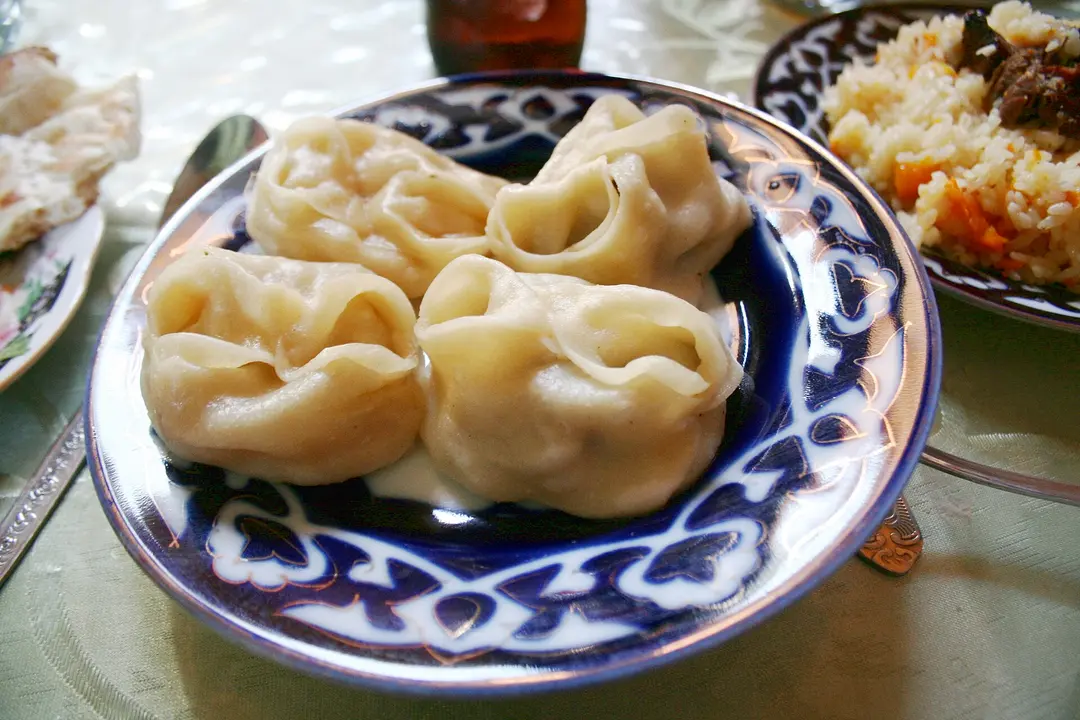
Everyone knows plov and kebab, but the meat-filled dough dishes are often mixed up even by people who have been to Uzbekistan several times. Manti, chuchvara and honim are made from similar ingredients — thin dough, meat, onion and tail fat — yet they are three separate dishes with their own serving style and mood. Here is how they differ and where best to try them.
Manti: large and steamed
Manti are the best known of the three. They are large pouches of thin dough steamed in a tiered pot called a kaskan.
What you should know:
- Filling. The classic is finely chopped lamb or beef with lots of onion and bits of tail fat. The meat is chopped with a knife rather than minced, so the filling is juicy with some texture.
- Seasonal versions. In autumn and winter pumpkin manti are popular: slightly sweet, with onion and tail fat or entirely meatless. In spring you find manti with greens, sometimes with potato.
- Serving. Manti come hot, usually with sour milk (katyk) or sour cream, sometimes with chilli sauce and ground pepper. Eat them by hand or with a fork, whichever is easier, but carefully: there is hot juice inside.
- Portion. Usually 3–5 per person, though the size varies a lot from place to place.
Manti are eaten at home and in specialised cafes called mantikhonas. There they are cooked in batches, and a fresh batch comes out every 40–50 minutes.
Chuchvara: small and in broth
Chuchvara are small dumplings made from very thin dough and folded into an "ear" shape. The filling resembles that of manti but is chopped finer, with less tail fat.
Ways it is served:
- Chuchvara shurva: in clear meat broth with herbs and pepper, a soup and a main course at once.
- With katyk: boiled chuchvara without broth, topped with sour milk, herbs and pepper.
- Fried: sometimes boiled chuchvara are fried until golden, a common home-style option.
Making chuchvara takes a long time and the whole family joins in, so in an Uzbek home it is often a reason to get together. In cafes you are more likely to find it in the cold season, when hot broth is especially welcome.
Honim: "lazy manti" in a roll
Honim (also spelled khanum) is dough rolled out into a thin sheet, spread with filling, rolled into a long log and steamed like manti. The finished roll is cut into portions.
Fillings include:
- meat: mince or chopped meat with onion;
- potato: with onion and spices;
- pumpkin: especially popular in autumn;
- mixed: meat with potato or pumpkin.
Honim is served like manti, with katyk or sour cream and chilli sauce. It is a home dish, made when you want manti but have no time to shape each one. It appears less often on cafe menus, but canteens and bazaars sell it by the piece or by weight.
How to tell them apart at a glance
| Dish | Size | How it's cooked | How it's served |
|---|---|---|---|
| Manti | large, a few per portion | steamed | with katyk, sour cream, sauce |
| Chuchvara | small, dozens per portion | boiled | in broth, with katyk or fried |
| Honim | a roll cut into pieces | steamed | with katyk or sour cream |
Where to try them
Dough dishes are made all over the country, but each region has its preferences. In Tashkent it is easy to find mantikhonas and home-style cafes serving both manti and chuchvara. The Fergana Valley, including Namangan, is known for juicy manti and generous portions; people there like more onion and tail fat. Bazaars in Namangan and Tashkent sell honim and manti to take away in the morning and during the day.
A few practical tips:
- Order manti where they are made all day long. The best sign is steam rising from the kaskan and a queue.
- If you prefer less fat, ask for pumpkin or potato manti.
- Chuchvara in broth makes a good breakfast or late lunch: it is light and warming.
- Manti are usually priced per piece or per portion; roughly, they are one of the more affordable items on the menu, but check on the spot.
If you are on the road
The trip from Namangan to Tashkent over the Kamchik Pass takes about 4.5–5 hours, and many passengers manage a breakfast of manti in Namangan before leaving and lunch in the capital. If you are travelling by shared ride with Yo'ldosh, it is convenient to agree on the departure time with the driver in advance so you do not set off hungry. Upcoming trips are listed on the Namangan — Tashkent route page.
In short
- Manti: large, steamed, with a juicy meat or pumpkin filling.
- Chuchvara: small boiled dumplings, in broth or with katyk.
- Honim: a filled dough roll, steamed and sliced.
- Try all three in Tashkent and the Fergana Valley, and for the journey between cities pick a convenient shared ride such as Namangan — Tashkent.
Cover photo: Ramón from Llanera, España ; brightened by Off-shell, CC BY-SA 2.0, Wikimedia Commons.
