Gijduvan Kebab: Why People Drive Out to Gijduvan
Chopped meat on wide skewers, tandoor bread and famous ceramics: why locals and visitors make a 45-kilometre detour from Bukhara to Gijduvan.
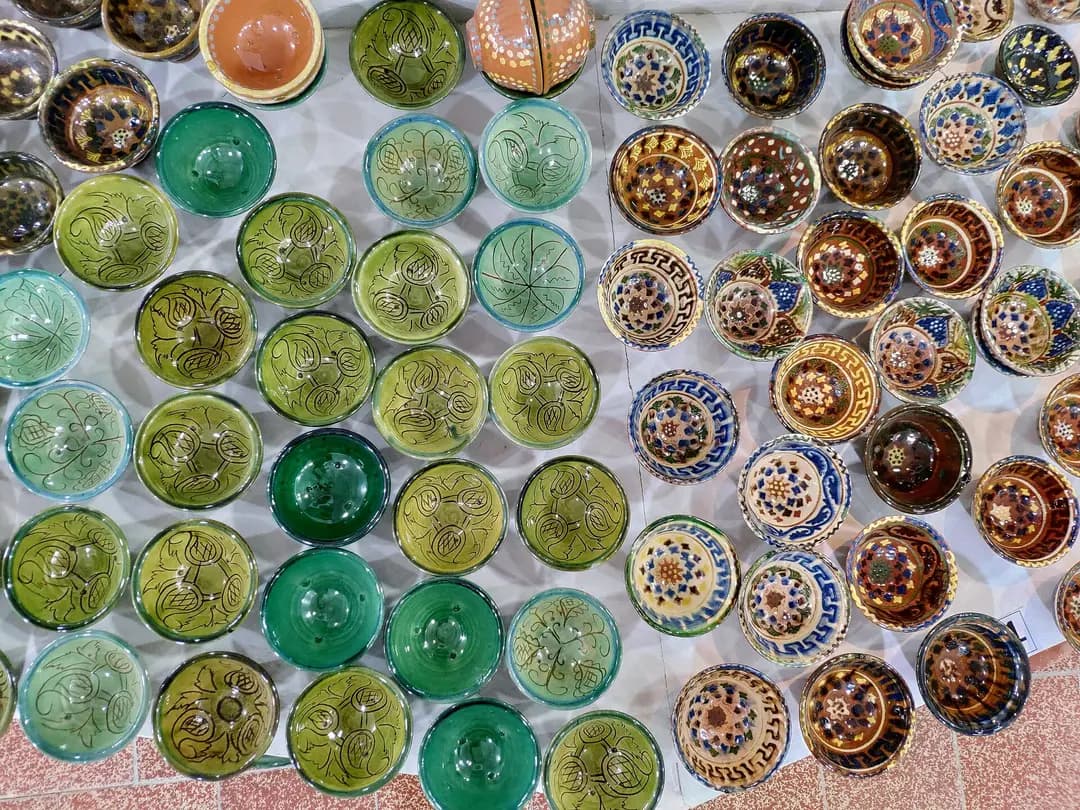
Ask in Bukhara where to find the best kebab and you will often get the name of a town rather than an address: "Go to Gijduvan." This small district centre, 45 kilometres north-east of Bukhara, has long been a food brand in its own right. Gijduvan-style kebab is served in Tashkent and Samarkand too, but for the original people come here. Here is what sets it apart, how to order it, and how to turn a kebab run into a proper half-day trip.
What Gijduvan kebab is
The key difference is that the meat is chopped rather than cubed. Classic Gijduvan kebab is made roughly like this:
- lamb or beef and tail fat are chopped with knives (not put through a grinder) to a fine texture;
- onion, salt, cumin, pepper and other spices are added according to the cook's own recipe;
- the mixture is pressed firmly onto a wide flat skewer in a long strip;
- it is grilled over charcoal, often quickly and over high heat.
The result is juicy inside with a crisp crust. In texture it is close to lyulya kebab, but denser and meatier. The important detail is the tail fat: it provides the juiciness and characteristic aroma. Another difference from city kebab houses is the serving. The kebab usually arrives on or with flatbread, with raw onion and sometimes vinegar or a sour dressing.
How to order
Ordering in Gijduvan kebab houses is simple, but a few rules help:
- Kebab is counted by the skewer. You order by the piece. For an adult with a good appetite 2–3 skewers of Gijduvan kebab are usually enough, but skewer sizes vary — ask.
- Get a mix. Besides the signature chopped kebab, many places offer lamb chunks, liver and sometimes chicken. Try the signature one; the rest is up to you.
- Do not skip the bread. Gijduvan flatbread is baked in a tandoor and is thicker and softer than the Bukhara kind. It is what you use to mop up the juices.
- Salads. Achichuk (tomato and onion) and fresh herbs go best with rich meat.
- Tea. A pot of green tea is a mandatory part of lunch.
Prices in Gijduvan are generally lower than in the tourist centre of Bukhara, but portions and prices change. Go by the menu and ask the price per skewer in advance.
When to go
Kebab houses work mainly during the day and in the evening. Lunchtime is best, when the coals are hot and the meat is fresh. Summers in the Bukhara region are very hot, so many people head to Gijduvan for an early dinner once the heat eases. On weekends and holidays the popular places get busy; weekdays are calmer.
What else to see in Gijduvan
Kebab is the excuse, but Gijduvan has enough for another hour or two.
Gijduvan ceramics
Gijduvan is one of Uzbekistan's best-known ceramics centres. The local school is recognised by warm yellow-brown and green tones and intricate floral patterns. The family workshop of the Narzullaev dynasty works in town; you can watch pottery being made and buy a lagan platter or tea bowls. If you plan to buy, think ahead about carrying fragile items and ask for careful packing.
The Abdulkhaliq Gijduvani memorial
Gijduvan has a complex associated with the Sufi sheikh Abdulkhaliq Gijduvani, one of the founders of the teaching later known as the Naqshbandi order. It is a pilgrimage site, so dress modestly and keep your voice down.
The local bazaar
The Gijduvan bazaar sells fruit and vegetables from nearby farms, dried fruit and bread. It is a good chance to see rural life in the Bukhara region without the tourist wrapping.
Getting there from Bukhara
Bukhara to Gijduvan is about 45 km, roughly 40–50 minutes by road. The road is flat with no passes, and the trip combines easily with other sights north of Bukhara.
Options:
- A taxi for the day. Convenient but the most expensive.
- Minibuses and public transport from Bukhara bus stations — cheap, but you will need to fit their schedule.
- A shared ride. In the Yo'ldosh app drivers post trips between Bukhara and Gijduvan: you book a seat, pay only for yourself and leave at a convenient time. See the options on the Bukhara — Gijduvan route page.
Practical tips
- In summer bring water and a hat: at midday it can be over 40°C outside.
- Carry cash: small places do not always accept cards.
- Do not over-order at once; the kebab is filling, and you can always add a skewer later.
- Travelling with children? Ask for chicken kebab or baked potatoes, which many places offer.
In short
Gijduvan kebab is chopped meat with tail fat on a wide skewer, juicy and fragrant. It is worth at least half a day out of Bukhara, and you can see the famous ceramics and the Gijduvani memorial at the same time. The road is short and finding a shared ride is easy: check the Bukhara — Gijduvan page or the full list of routes.
Cover photo: Ekaterina Kvelidze, CC BY-SA 4.0, Wikimedia Commons.
