The Kyzylkum Desert: How to See a Real Desert
Dunes, saxaul and a night under the stars: the most convenient places to see the Kyzylkum, how to choose a format and how to avoid risk where there is only sand around.
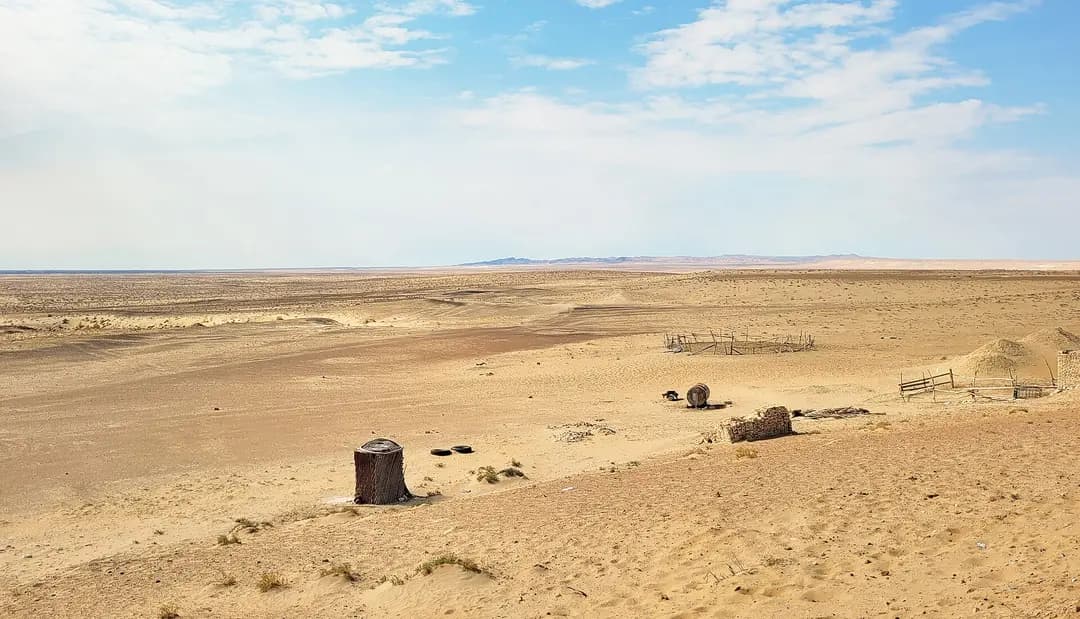
The Kyzylkum, the Red Sands, spreads between the Amu Darya and the Syrdarya and covers a huge part of Uzbekistan and neighbouring countries. Many people think of a desert as endless dunes, but the real Kyzylkum is more varied: sandy ridges, clay plains, salt flats, saxaul shrubland, rare wells and lakes. You can see it in different ways, from a drive along the highway to a night in a yurt camp. Here is what to choose and how to prepare.
What the Kyzylkum is
The Kyzylkum is one of the largest deserts in Central Asia. It is hot in summer and cold in winter, and temperature swings between day and night can be sharp. Vegetation is sparse but hardy: saxaul, calligonum, camelthorn, and in spring ephemerals, tulips and poppies bloom. Animals include lizards, tortoises, snakes, small rodents, gazelles and many birds. Life in the desert is not obvious, but it is there, and an attentive observer will see tracks and burrows.
Where to see the desert
- The Bukhara to Khiva road. The highway crosses the Kyzylkum and covers about 450 kilometres depending on the route, roughly five to seven hours by car. Outside the window are sands, saxaul and sparse villages. Route description: Bukhara — Khiva. It is the simplest way to see the desert without special effort, but you can only look from the car.
- Towns in the heart of the desert. Navoi, Zarafshan and Uchkuduk lie in the Kyzylkum and show how people live and work here. Details: Navoi — Uchkuduk.
- Lake Aydarkul. A huge lake in the sands with yurt camps where you can swim, ride camels and stay overnight.
- The fortresses of Khorezm. On the fringes of the desert, in Karakalpakstan and Khorezm, ancient fortresses stand. Some are surrounded by sands and offer wide views. Yurt camps are sometimes nearby.
- Organised tours. Agencies offer trips across the desert in off-road vehicles with a night in a camp and dinner by a campfire.
A night in the desert
A night in a yurt camp is why many people come. In the evening people sit by the fire, drink tea, eat plov or shurpa and listen to stories and music. Then the sky fills with stars that cannot be seen from the city. It is cold at night even in summer, so blankets and warm clothes matter. In the morning the sun rises, the sands change colour and you can walk over the dunes. Conditions in camps vary, from simple yurts with shared facilities to comfortable ones. Choose a camp by reviews and ask what is included in the price.
When to go
- March and April. Spring bloom and moderate temperatures. The best time.
- May. Warm, but already getting hot.
- Summer. Very hot, with daytime temperatures that can exceed forty-five degrees. If you go in summer, set off at dawn and do not walk by day.
- September and October. Pleasant weather, clear sky, good nights.
- Winter. Cold, windy, with frost at night. Some camps are closed.
How to avoid risk
The desert is beautiful but merciless to the unprepared. A few rules to follow:
- Carry more water than seems necessary: at least three litres per person per day, and more for a walk.
- Do not go far from camp or the car without a guide. It is easy to lose your bearings in the sands.
- Do not leave the highway onto the sands without an off-road vehicle, experience and an escort.
- Fill up in advance: fuel stations are rare.
- Tell someone your route and return time. Mobile coverage vanishes.
- Wear a hat, light long-sleeved clothing and sunglasses.
- Do not put hands or feet where you cannot see: burrows and stones can hold snakes and scorpions.
- At signs of heatstroke (headache, nausea, weakness) move into shade and drink water.
What to bring
- Water, a snack, salt and electrolytes.
- A hat, glasses and sunscreen.
- Warm clothes for evening and night.
- Closed shoes comfortable for walking on sand.
- A scarf against dust and wind.
- A torch or headlamp.
- A power bank and an offline map.
- Cash: there are no terminals in the desert.
- A rubbish bag.
Organising the trip
If you are short of time, you can limit yourself to the trip between Bukhara and Khiva with stops on the way. For a single night in the desert choose Aydarkul or a camp near Nukus and Beruni. For a deeper acquaintance go for a few days along the Navoi, Zarafshan, Uchkuduk route, but that is a trip for the prepared.
Getting around without your own car
Buses and trains run between Bukhara and Khiva, but they do not stop where you want. A shared ride suits part of the way. On Yo'ldosh you can find a driver heading along the Bukhara and Khiva or Navoi and Uchkuduk route and book a seat. You pay only for your seat, so it is cheaper than hiring a car for the whole way. For camps in the desert, arrange the transfer in advance.
Practical tips
Plan with a time reserve: distances are large and speeds limited. Confirm rules and permits in border and industrial zones. Do not leave rubbish. Prices for camps, tours and transport are approximate, depend on the season and programme, so confirm them in advance.
Find other directions on the all routes page, and read how to book rides in the for passengers section.
Cover photo: Bgag, CC0, Wikimedia Commons.
