Lagman Explained: Uyghur, Uzbek and Fried Noodles
Noodle soup, thick sauce or stir-fried noodles in a pan: the main kinds of lagman, where the dish came from and how to order exactly the one you want.
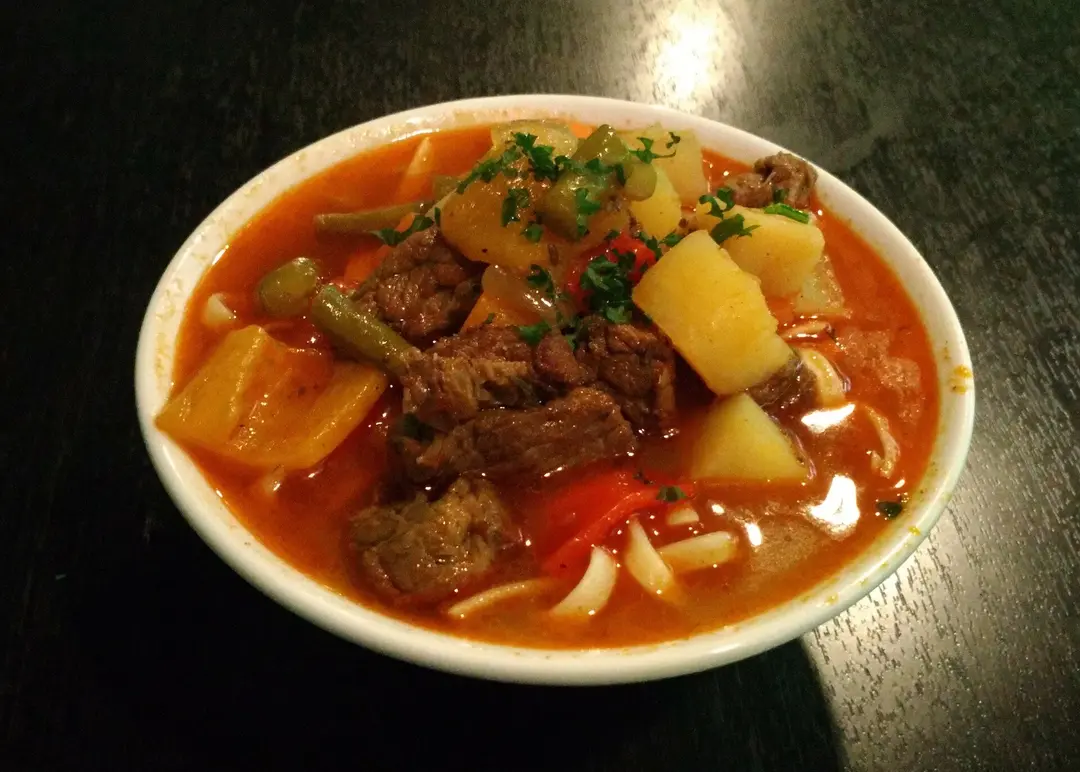
In an Uzbek cafe the word "lagman" can mean three completely different dishes. Order at random and instead of a plate with thick sauce you may get soup, or instead of soup a pan of stir-fried noodles. No harm done, it is all tasty, but it helps to know in advance. Let us go through it in order: where lagman comes from, what kinds there are and how to get your order right.
Where lagman comes from
Hand-pulled noodles are a dish of Uyghur and Dungan cuisine. They were brought to Central Asia by the Uyghurs, who have long lived in the Fergana Valley, Tashkent and neighbouring areas. Over time lagman became part of Uzbek cooking, acquired local variations, and today it is served in practically every canteen, from a roadside teahouse to a city restaurant.
The heart of the dish is the noodle. A good cook pulls it by hand: a stiff dough is kneaded, rested, oiled and then stretched, folding the rope in half again and again until the strands are thin and long. The noodles come out springy and "alive", and you taste it immediately. Cheaper places may use cut or shop-bought noodles, and the result is not the same.
Uzbek lagman (suyuq lagman)
This is essentially a thick soup. The noodles go into a deep bowl and are covered with broth containing stewed meat and vegetables:
- meat: beef or lamb cut into small pieces;
- vegetables: carrot, radish, bell pepper, tomatoes, onion, sometimes potato and cabbage;
- seasoning: garlic, cumin, ground pepper and herbs on top.
Suyuq ("liquid") lagman is especially good in cool weather. If a menu just says "lagman", most Uzbek cafes will bring you this one.
Uyghur lagman
Here there is much less liquid and more noodles. The boiled hand-pulled noodles are served separately or on a plate, topped with a thick sauce of fried meat and vegetables: peppers, celery, green beans, garlic and tomatoes. The sauce is called vaju, or simply "gravy". You mix the noodles and sauce at the table.
Uyghur lagman is spicier, brighter and denser than the Uzbek version. Vinegar and chilli sauce are often put on the table; add to taste.
Fried lagman (qovurma lagman)
Boiled noodles are stir-fried in a kazan or a wok-like pan with meat, vegetables and sometimes egg. The result is a filling, slightly crispy dish without broth. There is also a variation called boso lagman, where the noodles are first cut into short pieces and fried together with the other ingredients.
Fried lagman is a good choice for lunch on the road: it does not spill, it does not cool as quickly as soup, and it keeps you full for a long time.
How to order and get what you want
| What you want | How to ask |
|---|---|
| Noodle soup | "suyuq lagman" or just "lagman" in an Uzbek cafe |
| Noodles with thick sauce | "Uyghur lagman" |
| Stir-fried noodles, no broth | "qovurma lagman" or "fried lagman" |
| Short stir-fried noodles | "boso lagman" |
A few more tips:
- Ask whether the noodles are pulled on site. If the cooks are pulling dough in the dining room or behind an open kitchen window, that is a good sign.
- If you do not like spicy food, say so in advance: "achchiq emas" means "not spicy".
- Portions are large. For a light lunch you can ask for a half portion or share.
- Lagman goes well with a fresh vegetable salad and green tea.
Lagman usually costs about the same as plov or shurpa in the same place, but it depends on the city and the level of the cafe. Check the menu.
Where lagman is especially good
Lagman is eaten all over the country, but many people say the best versions are in the Fergana Valley and Tashkent, where the Uyghur culinary tradition has historically been strong. Andijan, Namangan, Fergana and Margilan are known for canteens where noodles are pulled by hand every morning. In Tashkent look for Uyghur cafes; you can spot them by the big pots of noodles and open kitchens.
If you are heading to the valley, lagman fits easily into the trip: Tashkent to Andijan via the Kamchik Pass takes about 5–6 hours, and most drivers make one or two lunch stops. A good rule is to wait until you are down from the pass, as there is more choice in the valley.
Getting to the Fergana Valley
The Tashkent — Andijan trip is about 330–350 km over a mountain pass. The road is scenic but calls for an experienced driver, especially in winter. A convenient option is a shared ride via Yo'ldosh: you book a seat with a verified driver, pay less than for a taxi and choose your departure time. The route page shows how many seats are free and when the next trips leave.
In short
- Uzbek lagman is a thick soup with noodles, meat and vegetables.
- Uyghur lagman is hand-pulled noodles with a thick sauce and no broth.
- Qovurma is stir-fried noodles with meat and vegetables, filling and dry.
- Look for the best lagman in the Fergana Valley and Tashkent's Uyghur cafes.
Heading east? Check rides on Tashkent — Andijan or the full list of routes, and try all three kinds of lagman while you are in the valley.
Cover photo: 赤猫法師, CC BY-SA 4.0, Wikimedia Commons.
