Nukus: what to see in the capital of Karakalpakstan
Nukus is more than the Savitsky Museum. We cover the bazaar, the ancient necropolises near the city, Karakalpak food and trips to the Aral Sea and Khiva.
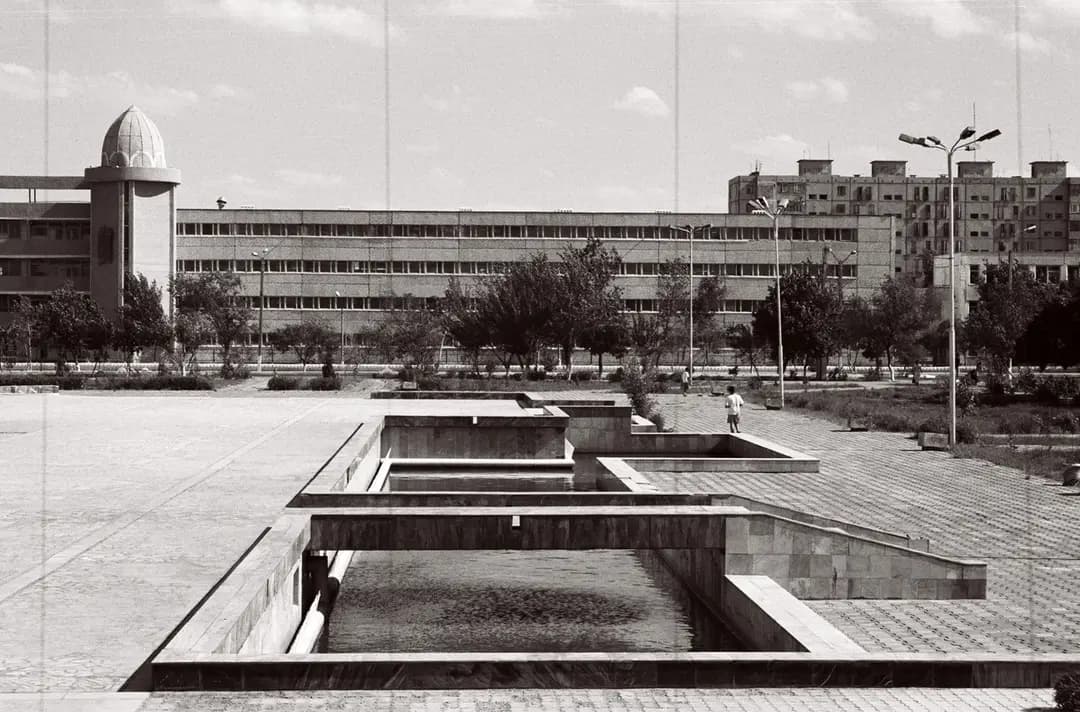
Nukus is the capital of the Republic of Karakalpakstan, the largest and most sparsely populated region of Uzbekistan. Most travellers know just one thing about the city: it is home to the Savitsky Museum and one of the world's largest collections of Russian avant-garde art. Many do exactly that — a day at the museum, a night in a hotel, off again in the morning. But if you linger, Nukus shows another side: Karakalpak culture, a bustling bazaar, ancient necropolises in the desert and the road to what remains of the Aral Sea.
Karakalpakstan in a nutshell
The Karakalpaks are a Turkic people with their own language, music, crafts and cuisine. The region covers the north-west of the country: the Amu Darya delta, part of the Kyzylkum desert, the Ustyurt plateau and the dried-up bed of the Aral Sea. It is a land of great distances, hot summers, cold windy winters and very hospitable people.
Nukus is a young city, most of it built in the 20th century. The streets are wide, the buildings mostly Soviet, and life moves at an unhurried pace.
The Savitsky Museum
Let us start with the main attraction after all. The Igor Savitsky State Museum of Art holds thousands of works by artists of the 1920s and 1930s whose art did not fit the official style of the time. Savitsky collected them over decades and brought them to remote Nukus, where they survived. Besides the avant-garde, the museum has rich collections of Karakalpak applied art — jewellery, embroidery and yurt textiles — and archaeology from ancient Khorezm.
Allow at least half a day for the museum. Photography rules and ticket prices change, so check on site.
The central bazaar
The best place to get a feel for the city. Traders sell fish, meat, vegetables, melons, bread, spices and fabrics, and among the shoppers you will hear Karakalpak, Uzbek, Kazakh and Russian. Come in the morning when trading is in full swing.
What to eat
Karakalpak cuisine is simpler and heartier than Uzbek food:
- beshbarmak — boiled meat with wide noodles and broth;
- fish dishes — fish from the lakes of the Amu Darya delta, fried or in broth;
- flatbreads and dairy products, served with almost every meal.
Cafe prices in Nukus are noticeably lower than in the tourist cities.
Around Nukus
Even if you only have one extra day, get out of the city.
- The Mizdakhan necropolis — about 20 km west, near Khodjeyli. A huge ancient cemetery on hills with mausoleums from different eras and the ruins of the Gyaur Kala fortress nearby. One of the most atmospheric places in the region.
- Chilpik — about 40 km south: a round structure on a hilltop, an ancient Zoroastrian tower of silence, with views over the Amu Darya and the desert.
- The fortresses of ancient Khorezm — Toprak Kala, Ayaz Kala and others, closer to Urgench; easy to combine with the move to Khiva.
There is practically no public transport to these places, so people hire a taxi for half a day or a full day. Agree on the price in advance and bring water.
Where to go from Nukus
To Muynak and the Aral Sea
Muynak is a former fishing port on the Aral Sea, now a town in the middle of the desert with a ship graveyard. It is about 200 km away, roughly 3 hours. Shared rides on Nukus — Muynak on Yo'ldosh mean you do not have to hire a car for the whole day: you book a seat in the app and pay only for yourself. To reach the water of the Aral itself, people go from Muynak by four-wheel drive with local drivers, usually overnight.
To Khiva
Khiva is about 180–200 km south, a 3-hour drive across the Amu Darya and through Urgench. It is a common next stop after Nukus. See trips on Nukus — Khiva: leave in the morning and you can be walking around Itchan Kala by lunchtime.
To Tashkent
The capital is more than 1,000 km away. The fastest way is to fly, and there are trains too. But some people choose to drive and see the country overland: Nukus — Tashkent trips are an option if you have a lot of luggage or want to leave at your own time. It is best to split the journey over two days.
When to go
| Season | Conditions |
|---|---|
| April–May | the best time: warm but not hot |
| June–August | scorching heat, desert trips only early in the morning |
| September–October | mild weather, melon season |
| November–March | cold and windy, but the museum is open all year |
Practical tips
- Keep your passport with you — there are sometimes road checks in the region.
- Carry cash: outside the centre cards are not accepted everywhere.
- In summer drink plenty of water and never head into the desert without a hat.
- Respect local customs: be quiet at cemeteries and holy sites and dress modestly.
The bottom line
Nukus deserves at least two days: one for the museum and the bazaar, the second for Mizdakhan and Chilpik. After that, the Aral Sea or Khiva. Trips on Nukus — Muynak, Nukus — Khiva and Nukus — Tashkent will help you plan the route, and every other destination is on the routes page.
Cover photo: Zartosht, CC BY-SA 3.0, Wikimedia Commons.
