Rabati Malik and the Sardoba: A Caravanserai on the Silk Road
An 11th-century caravanserai gate and a domed water cistern right by the Navoi to Bukhara highway. Why a 30-minute stop is worth it and what to see.
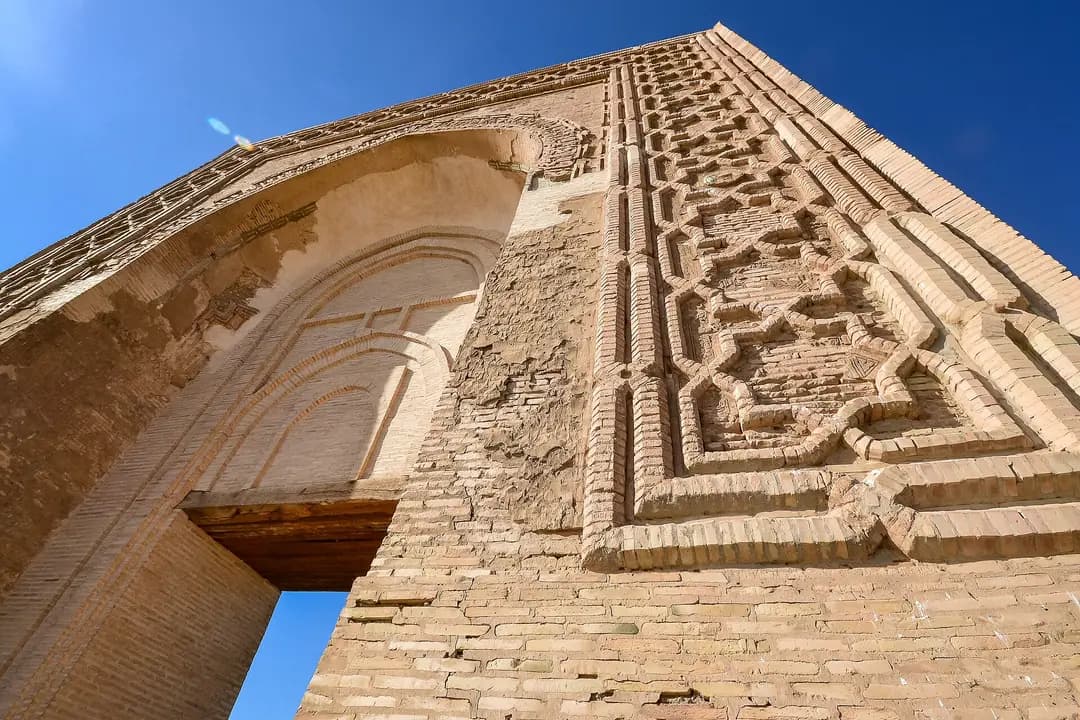
Most travellers rush past this place without noticing it: a tall brick gateway flashes by on one side of the highway, and a low dome on the other. Yet this is one of the oldest buildings along the whole road between Samarkand and Bukhara. Rabati Malik and the Malik Sardoba make a short stop that adds a real piece of the Silk Road to your journey.
Where it is
The monument stands in the Malik steppe beside the highway between Navoi and Bukhara, roughly 20 to 25 km from Navoi in the direction of Bukhara. It is easy to spot: a tall portal of fired brick by the road, and a domed cistern across the highway. Many drivers on this route know the place and will stop if asked.
What a rabat is
A rabat was a fortified station on a caravan route where travellers and merchants could spend the night, water their camels and shelter from storms and bandits. Rabati Malik was built in the 11th century, in the Karakhanid era. According to tradition it was built by the ruler Shams al-Mulk, and it was not an ordinary inn but more of a country residence with fortress walls and corner towers.
Of the huge complex, it is mainly the entrance portal that survives today: a high arch flanked by fluted half-columns. It has been restored, so its shape reads clearly. Behind the portal you can see the excavated foundations of walls and rooms, which make it easy to imagine the scale of the building: an inner courtyard, living quarters, a mosque and service rooms.
The sardoba: storing water in the desert
Across the road from the rabat stands the sardoba, an underground water reservoir covered by a brick dome. It was an engineering solution for the dry steppe: water flowed in through an underground channel from the Zarafshan River, and the dome protected it from evaporation and dust. It stayed cool inside even on the hottest days.
Steps lead down to the water, and if the entrance is open you can go down and look at the brickwork from inside. The acoustics under the dome are remarkable, so try saying something quietly. Sardobas are found across Central Asia, but this is one of the best known and best preserved in Uzbekistan.
A 30-minute stop: what to fit in
Half an hour is plenty to:
- Photograph the rabat portal from the road and up close. The best light is in the morning or towards sunset.
- Walk through the excavations behind the portal and look at the wall foundations.
- Cross the highway to the sardoba and look inside.
- Take a wide shot of the portal and the dome against the flat steppe.
In hot weather that is enough time, as standing longer in the open sun is hard going.
Safety by the highway
The road is busy here and lorries travel fast. A few simple rules:
- Cross only when you are sure the traffic is far away, and never run between vehicles.
- Do not step out of the car onto the carriageway; the driver should pull over onto the shoulder or the parking area by the monument.
- Hold children's hands, especially when crossing to the sardoba.
- In summer bring a hat and water, as there is almost no shade.
Fitting it into your route
Rabati Malik is easy to see on the way between the two main cities of the Zarafshan valley. Samarkand to Bukhara is about 270 km, roughly four hours by road, and the monument lies in the last third of the journey. Navoi to Bukhara is about 100 km, around an hour and a half.
If you are travelling with Yo'ldosh, message your driver in the app chat beforehand to say you would like to stop at Rabati Malik for 15 to 30 minutes. Many drivers agree, especially if the other passengers do not mind, but it is best to arrange it before departure. Shared rides on the Navoi to Bukhara and Samarkand to Bukhara routes are published every day.
A little context
The stretch between Samarkand and Bukhara was once lined with a whole network of rabats, spaced roughly a day's caravan march apart. Most have disappeared, and Rabati Malik is a rare survivor. If you want more detail after the trip, the museums of Bukhara and the Ark display material about the caravan trade that passed through this area for centuries.
On the way back you will pass the same spot again, but this time knowing that the gateway by the highway has witnessed a thousand years of people, goods and ideas moving along the Great Silk Road.
Cover photo: Arina Pan, CC BY-SA 4.0, Wikimedia Commons.
