The Kitab Latitude Station: An Observatory on the 39th Parallel
Why one of the stations of the International Latitude Service ended up in little Kitab, what it measures, and what a traveller can see on the road from Samarkand.
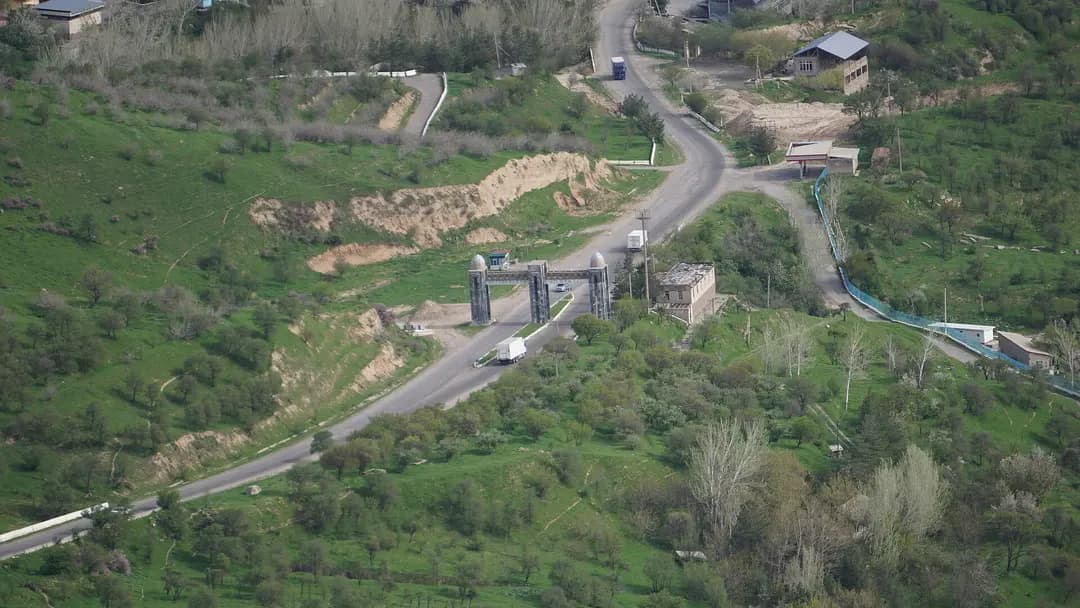
Kitab is a quiet district town in Kashkadarya Region, ten minutes' drive from Shahrisabz. Most travellers pass straight through. Yet Kitab holds a distinction few places in the world can claim: it is home to one of the handful of stations that for almost a century tracked how the Earth's axis "wobbles". Here is what the station is, why it is here and whether it is worth stopping.
The International Latitude Service: the idea
At the end of the 19th century astronomers discovered that the Earth's geographic poles do not stay put but slowly trace small circles. As a result, the latitude of any point changes slightly. To measure this motion, the International Latitude Service was set up in 1899. The principle was simple and elegant: several observatories on the same parallel, roughly 39°08′ north, in different parts of the world observe the same stars at the same time. By comparing the results, you can calculate how the pole is shifting.
Stations were placed in Japan, Italy, the United States and Central Asia. One of the original stations worked in Chardzhou (today's Turkmenabat), but its work was interrupted. In 1930 a replacement was opened in Kitab, which lies on the same parallel. The station was named after Ulugbek, the great 15th-century astronomer of Samarkand.
Why Kitab
Several reasons explain the choice:
- The parallel. Kitab sits almost exactly on the required latitude.
- The climate. There are many clear nights, the air is dry and the atmosphere is very transparent.
- Stable ground, far from big cities with their light pollution and vibration.
- Tradition. The Samarkand and Shahrisabz region is Ulugbek's land, and the link to his observatory carried symbolic weight.
For decades the station's staff carried out regular observations with zenith telescopes, and the data were sent to international processing centres. Today polar motion is measured with satellite and radio-astronomy methods, but the station remains a scientific institution with a rich history.
What a visitor can see
It is important to understand that this is not a tourist museum but a working scientific site. There is usually no free entry, and visits are possible by prior arrangement. If you manage to arrange one, you may see:
- pavilions with sliding roofs that house the observing instruments;
- zenith telescopes and instruments from different generations;
- material on the history of the latitude service and the station's staff;
- the grounds, a quiet park with neat little instrument houses.
If you cannot get inside, you can still see the station from outside and fill in the history with the help of a guide or local residents.
Tip: look for contacts through scientific institutions or through guides in Samarkand and Shahrisabz. Do not turn up unannounced expecting a tour.
Fitting Kitab into your route
Kitab is easy to combine with Shahrisabz, Amir Timur's birthplace, about 10 km away. A possible day plan from Samarkand:
- Morning: cross the Takhtakaracha Pass. The road is one of the most beautiful in the country, with hairpin bends, mountain views and flowering slopes in spring.
- Kitab: the latitude station if you have arranged a visit, and the local market.
- Shahrisabz: the ruins of the Ak-Saray palace and the Dorut Tilovat and Dorus Saodat complexes.
- Return to Samarkand in the evening.
Getting there
It is about 80 to 90 km from Samarkand to Kitab. Over the Takhtakaracha Pass the drive takes roughly one and a half to two hours. In winter and early spring the pass can be closed by snow, and cars then detour via Guzar or Jam, which takes much longer. Check road conditions before you set off.
Yo'ldosh has shared rides on the Samarkand to Kitab route. Drivers who use this road regularly know the pass and its quirks well. You book a seat in the app and can discuss the drop-off point in Kitab with the driver in the chat. It is usually cheaper than hiring a car for the whole day, especially if you are travelling alone.
Practical tips
- Even in summer it is noticeably cooler on the Takhtakaracha Pass than in Samarkand. Bring a light jumper.
- The hairpins can cause motion sickness; if you are prone to it, ask for a front seat.
- If you want photos on the pass, agree with the driver to stop at a proper pull-off, not on a narrow shoulder.
- Kitab and Shahrisabz are full of fruit in season, especially in late spring and summer.
The Kitab latitude station is a small but remarkable example of a modest town becoming part of a global scientific project. Even if you do not get into the pavilions, the thought that for nearly a hundred years people here helped measure the motion of the whole planet makes the stop worthwhile. Find other destinations on the routes page.
Cover photo: karb, CC BY-SA 3.0, Wikimedia Commons.
