Badai-Tugai Reserve: The Floodplain Forests of the Amu Darya
A rare forest type in the desert and the Bukhara deer: how to enter the reserve near Beruni, when it is at its best and which rules to follow.
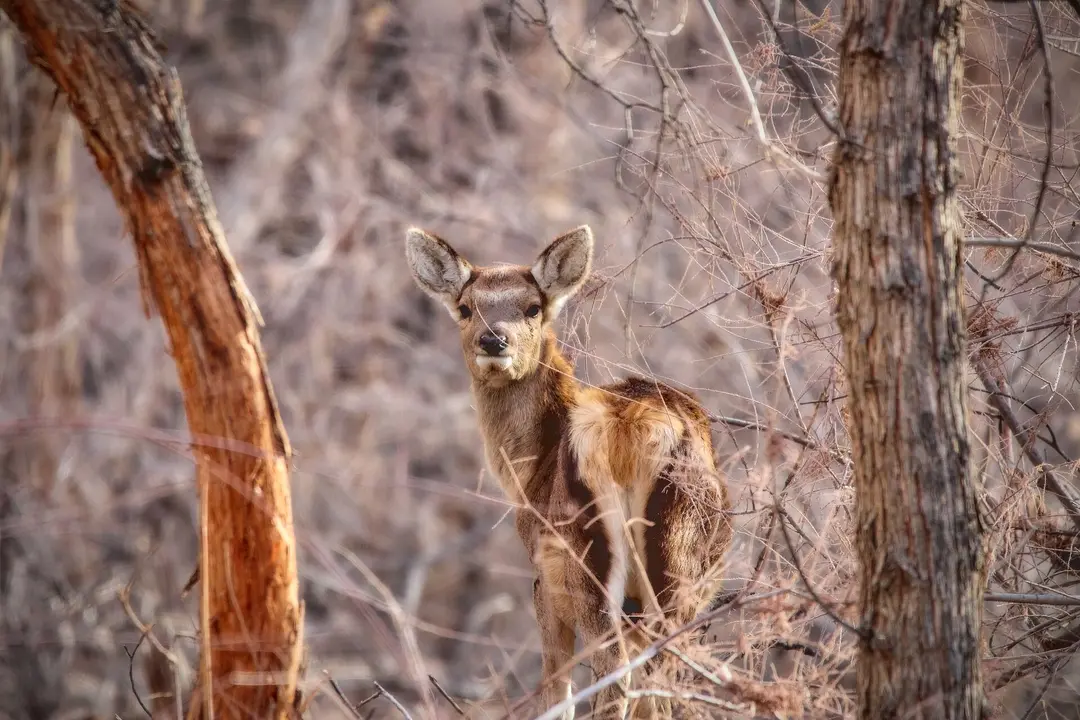
Imagine a forest growing in the middle of a desert, along a river, where the air is more humid and the ground is covered in fallen leaves. Such forests are called tugai, and in Uzbekistan they survive only in the Amu Darya valley. The Badai-Tugai reserve in Karakalpakstan protects one of the last large tracts of tugai forest in the region and helps to preserve the Bukhara deer. Here is what you can see and how to organise a trip.
What tugai are
Tugai are floodplain forests that grow along rivers in arid areas. They consist of poplars, oleaster, willow, tamarisk, dense thickets of shrubs and reeds. The roots of the trees reach groundwater, so tugai stay green even in the heat, when the sands around burn dry. Such a forest creates a special microclimate: it is cooler and more humid than the desert. For animals and birds tugai are a refuge and a source of food, and for people a rare chance to see what a river valley may have looked like before it was settled.
Who lives here
The main symbol of the reserve is the Bukhara deer, or hangul. It is a beautiful animal with branching antlers that once almost vanished because of logging of the tugai and hunting, and was then returned to protection. Besides the deer, the tugai hold wild boar, jackals, foxes, badgers, hares and many birds, including pheasants, herons and raptors. Seeing deer is not easy: they are cautious and most visible at dawn and dusk. Do not count on a guaranteed encounter, but those who are lucky keep vivid memories.
Where it is and how to get there
The reserve is in the Republic of Karakalpakstan, along the Amu Darya, near the town of Beruni and several dozen kilometres from Nukus. Route description: Nukus — Beruni. The road from Nukus to Beruni crosses flat country, and the last stretch to the reserve follows local roads that can wash out in wet weather. It is better to go with a driver who knows the route or to book a trip through a local ecological agency.
Organising a visit
The reserve is a protected territory, so you cannot simply turn up and walk in. To visit you need to obtain permission in advance and, as a rule, take an escort from the reserve staff. Contact the administration or local tourism organisations and find out when you can come, which routes are open and what it costs. A visit often comes down to a tour along a set trail by car and on foot. Prices are approximate and depend on the group and season.
The best time to visit
- Spring. Green thickets, many birds, comfortable temperature. The best season for walks.
- Autumn. Golden poplar leaves, clear sky, cool air. The most beautiful time for photographs. In October and November the deer are in rut, when they are more active and roar loudly, but they must not be approached.
- Summer. Hot, with many insects, so the trip is less comfortable.
- Winter. Cold, foggy and damp. The trees are bare and animals more visible, but conditions are harsh.
What to do in the reserve
- Walk through the tugai forest. The trail runs between trees, along water and thickets. Walk quietly so as not to scare birds.
- Watch animals. Dawn and dusk are the best moments.
- Photograph wildlife. Bring a long lens and do not use flash.
- Birdwatching. Binoculars help you spot birds in the branches.
- Visit the eco-centre, if it is open: staff tell about deer conservation projects.
What to bring
- Closed shoes you do not mind getting dirty.
- Clothing in protective colours: brown, green, grey. Bright clothing scares animals.
- Binoculars and a camera.
- Water and a snack.
- Mosquito and midge repellent, especially in summer.
- A hat and sunscreen.
- Warm clothes for dawn and evening.
- Cash: there are no terminals.
- A rubbish bag.
Rules of conduct
- Walk only on permitted trails.
- Do not feed animals or try to approach them.
- Do not light fires or leave rubbish.
- Do not make noise, play loud music or use drones without permission.
- Do not pick plants or collect feathers, bones and antlers.
- Follow the instructions of reserve staff.
Getting there without a car
Minibuses and buses run from Nukus to Beruni, and beyond that you will have to arrange rides to the reserve with drivers. A shared ride suits part of the way. On Yo'ldosh you can find a driver heading along the Nukus and Beruni route and book a seat. You pay only for your seat, so it is cheaper than hiring a car for the whole way. For the last stretch arrange in advance with a local driver or a reserve representative.
Practical tips
Leave early to be there for sunrise. Arrange the visit in advance, otherwise you may go in vain. Allow more time for the road than it seems you need. Prices for permits, guides and transport are approximate and best confirmed when booking.
Find other directions on the all routes page, and read how to book rides in the for passengers section.
Cover photo: Givte, CC BY-SA 4.0, Wikimedia Commons.
