Dastarkhan: Table Etiquette in Uzbekistan
Invited into an Uzbek home? Here is how to treat bread and tea, where to sit, when to start eating and how to politely decline a third plate of plov.
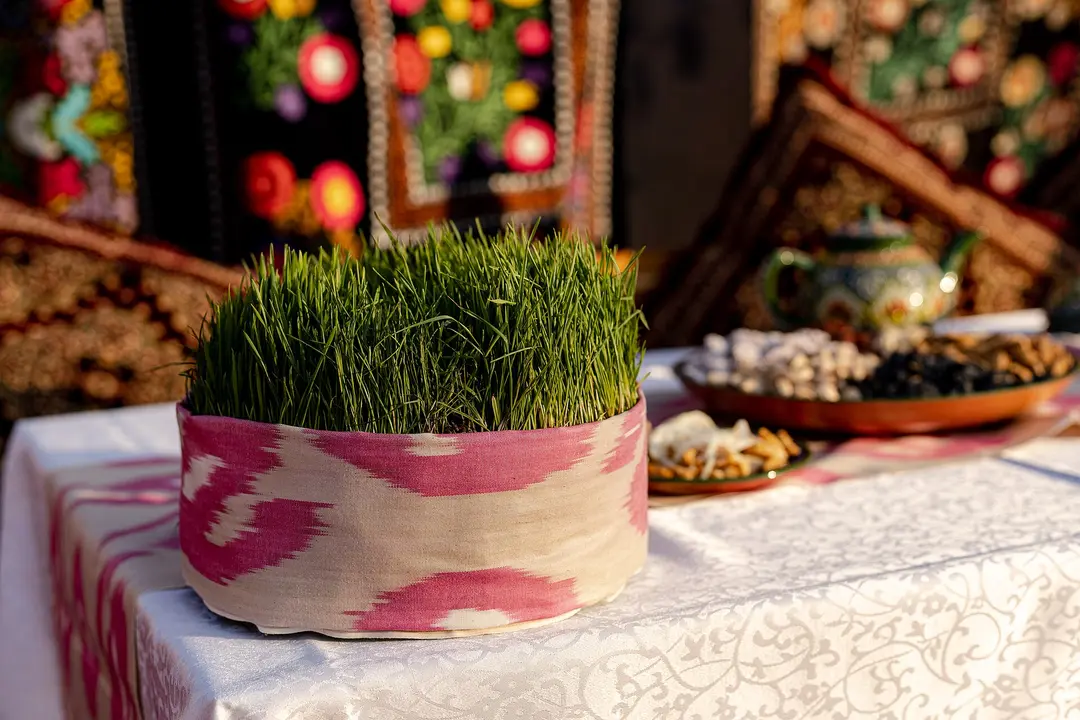
Uzbek hospitality is not just a figure of speech. Inviting a casual acquaintance for tea, sitting a fellow traveller down at the table or feeding the neighbour in your train compartment is entirely normal here. The dastarkhan, a laid table or cloth spread with food, is the centre of that hospitality. The rules around it are simple, and if you know them you will immediately be a welcome guest and your hosts will appreciate your respect.
What a dastarkhan is
Dastarkhan means both the tablecloth and the laid table itself. It may be set up in the living room, on a raised platform (topchan) in the courtyard or right on the floor on kurpachas, thin quilted mattresses. Even before the guests arrive it is covered with flatbread, sweets, dried fruit, nuts, fresh fruit and salads. The main dish, whether plov, shurpa or manti, is served later.
An empty dastarkhan is considered improper, so the table is always generously laid. You do not need to try everything: abundance is a sign of respect for the guest, not an expectation that you will finish every plate.
Arriving and greeting
- Arrive on time or a little late; arriving early may catch your hosts unprepared.
- Take off your shoes at the entrance if you see the hosts' shoes by the door.
- Greet everyone, starting with the elders. Men shake hands with each other; with women it is best to wait and see whether they offer a hand, or greet them by placing your right hand on your chest.
- A small gift is appropriate: sweets, fruit, tea or something from your home country.
Where to sit
Seats at the dastarkhan are not random. The most honoured place, the tor, is the one furthest from the door, reserved for elders and respected guests. Hosts and younger family members usually sit nearer the door, where it is easier to serve food. If unsure, wait to be shown your place. You may modestly decline the place of honour once, but if your host insists, accept.
If you sit on the floor, do not stretch your legs towards people or the food; tuck them in or sit sideways.
Bread comes first
Flatbread (non) is sacred in Uzbekistan, and the most important rules concern it:
- Bread is placed right side up and never turned upside down.
- Flatbread is not cut with a knife but torn by hand, usually by the host or the eldest.
- Bread is never dropped, put on the floor or thrown away. Even a fallen crumb is picked up.
- Nothing should be placed on top of bread except more bread.
The tea ritual
The host pours the tea. He fills a bowl and pours it back into the pot two or three times so the tea brews. Guests are given only a little, about half a bowl or less. This is not stinginess; quite the opposite: the less is poured, the more often the host returns to top you up and the more attention he shows. A full bowl can be taken as a hint that it is time for the guest to leave.
Take the bowl with your right hand, and you may put your left hand to your chest. Put the empty bowl down on the table and it will be refilled.
When to start eating
Do not start before the elders and the host. A meal usually opens with a short prayer or a wish, after which the host invites everyone to eat. Eat with your right hand. In some families plov is eaten by hand from a shared platter, but a guest will almost always be given a spoon.
A shared platter is shared only within your section: eat from the edge nearest to you and do not reach for the best pieces on the far side.
How to decline politely
Your hosts will insistently offer more; it is part of hospitality. A few ways to decline without offending anyone:
- eat a little, then thank them and say it is delicious but you are full;
- leave a little food on your plate: an empty plate is a signal to serve more;
- put your hand on your chest and say rahmat, to'ydim (thank you, I am full);
- if you do not drink alcohol, just say so; nobody is surprised by that.
Ending the meal
A meal ends with the omin gesture: passing the palms down over the face. If you are unsure how, follow the others or simply thank your hosts. It is customary to rise from the table after the elders. When leaving, thank the lady of the house once more; she usually cooked everything on the table.
Common questions
| Situation | What to do |
|---|---|
| You dislike a dish | take a little and do not over-explain |
| Casual acquaintances invite you home | accept if you feel comfortable, or decline politely |
| You want to pay | inappropriate as a guest; bring a gift instead |
| You want to photograph the table | ask permission first |
Hospitality on the road
The dastarkhan does not only begin at home. On trips between cities, for example on Samarkand to Tashkent, the driver and fellow passengers may offer you fruit or bread, and at a teahouse stop someone may pour you tea. Return the gesture: bring sweets or fruit to share. With Yo'ldosh, rides with verified drivers are booked in the app, and conversations over a shared bowl of tea often become the best part of the journey. Find out more on the for passengers page.
Cover photo: Bunyod Rustamov, CC BY-SA 4.0, Wikimedia Commons.
