Kokand Crafts Festival: how to visit the international craft fair
Kokand calls itself a city of masters and hosts an international crafts festival. Here is what is on show, where to buy pieces and how to plan your visit.
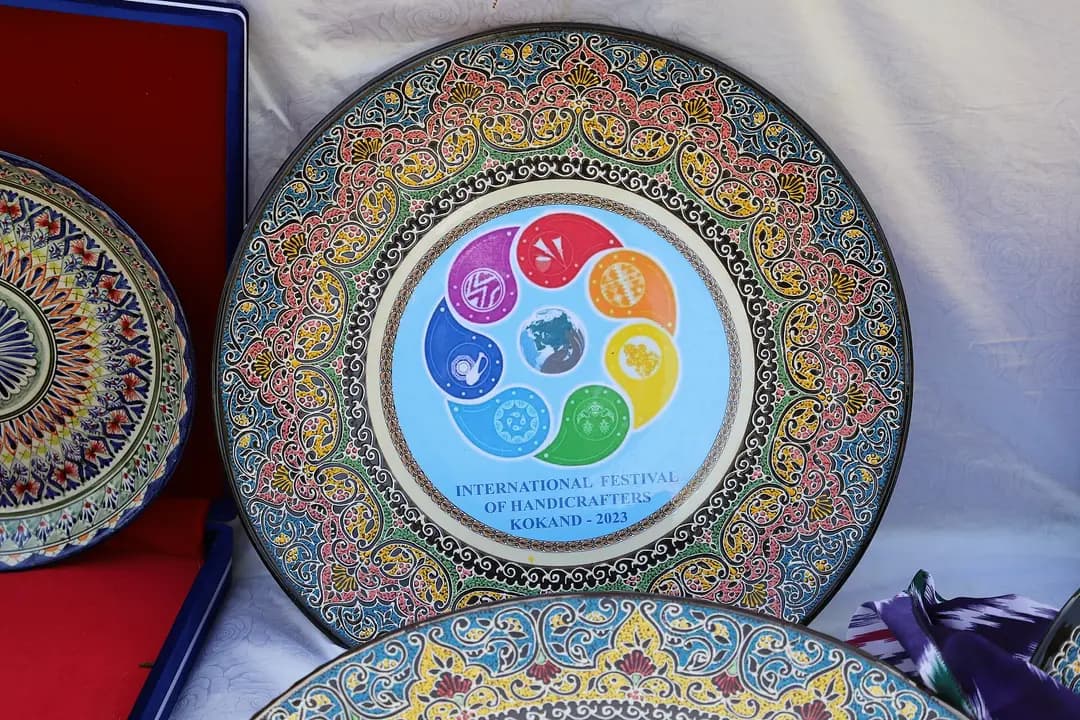
Fergana Valley is Uzbekistan's craft heartland. Rishtan makes ceramics in a deep turquoise glaze, Margilan weaves atlas and adras silk, Chust is famous for its knives and skullcaps, and Kokand itself is known for woodcarving, chased copper and embroidery. Small wonder that a big international celebration of craftspeople ended up here. The first festival took place in Kokand in 2019 and drew artisans from dozens of countries, and the city was named a World Craft City by the World Crafts Council.
What happens at the festival
The festival is an exhibition, a market and a series of workshops all at once. Pavilions and tents go up in central Kokand, around the Khudayar Khan Palace and in nearby parks. The programme usually includes:
- Exhibitions by artisans from every region of Uzbekistan and guests from abroad: ceramics, textiles, jewellery, musical instruments, carved wood and ganch plaster.
- Live work. Potters at the wheel, blacksmiths at the anvil, embroiderers with their hoops. You can watch as long as you like, and the makers are happy to answer questions.
- Workshops for adults and children, such as painting ceramics or trying embroidery.
- Concerts and street shows: folk music, dance and dorboz tightrope walkers.
- Conferences for specialists and museum staff, an optional part for tourists.
The festival does not run every year. Dates are announced in advance and usually fall in warm weather, in late summer or early autumn. Check the latest official news before you book accommodation.
Where to buy
At the festival you buy directly from the maker, and that is the main advantage: you know who made the piece and can ask about the technique.
A few tips:
- Look for a mark or signature. Many Rishtan potters sign the base of their work.
- Tell handmade from factory-made. Stitches on a hand-embroidered suzani are slightly uneven, while machine embroidery is perfectly uniform. Real silk atlas feels heavier and cooler than viscose.
- Bargain politely. Prices at the festival tend to be firmer than at a bazaar, but asking for a small discount on several items is fine.
- Ask about packing. Makers usually wrap ceramics in paper and newspaper; for a flight, bring your own bubble wrap.
- Do not take antiques out without paperwork. Old items may need an expert certificate for export. New pieces by living artisans travel without problems, but keep a receipt or the maker's card.
If the festival does not match your dates, you can still meet artisans on ordinary days: Rishtan has well-known family pottery workshops, and Margilan has the Yodgorlik silk factory, where the whole process is done by hand.
What to see in Kokand
Even without the festival, Kokand is worth a day. The highlights:
- Khudayar Khan Palace, the last residence of the Kokand khans, 19th century, with bright tiled portals and a museum inside.
- Juma Mosque, with a veranda resting on dozens of carved wooden columns, plus a minaret.
- Narbutabey Madrasah, one of the few that kept working in Soviet times.
- Dakhmai Shakhon, the burial complex of Kokand's rulers, with carved doors.
- Modari Khan Mausoleum.
You can cover all of this in a day on foot and by taxi.
Getting there
The drive Tashkent — Kokand takes roughly 4 to 4.5 hours for about 230 km. It crosses the Kamchik pass, which can have restrictions in winter but is open during festival season. The pass has lots of bends, and traffic is heavy on Friday evenings.
There is also a train from Tashkent to Kokand via Angren and the Kamchik tunnel, a good choice if the timetable suits you.
If you plan to tour the valley, it helps to know the Kokand — Fergana leg: about 90 km and roughly an hour and a half. Rishtan is practically on the highway, so it is an easy stop on the way.
Shared rides are very common in the valley, as many people travel between towns every day. On Yo'ldosh you can find a driver leaving at the time you need and book a seat in the app, instead of negotiating at a taxi stand.
Sample 3-day plan
| Day | Plan |
|---|---|
| 1 | Morning drive from Tashkent, festival in the afternoon, evening walk around the Khudayar Khan Palace |
| 2 | Workshops and concerts, shopping with the artisans |
| 3 | Rishtan and Margilan on the way to Fergana, then back to Tashkent or overnight in Fergana |
Practical tips
- Book accommodation early. Kokand has few hotels and official delegations come for the festival. Staying in Fergana is a good fallback.
- Carry cash. Plenty of artisans do not accept cards.
- Comfortable shoes and water. The grounds are large and early autumn in the valley is still hot.
- Photos. Craftspeople usually do not mind being photographed at work, but ask first.
The takeaway
The crafts festival is a convenient way to see the whole Fergana Valley in one city, and then to go and visit the makers at home. Watch for the dates and plan your route using the Tashkent — Kokand and Kokand — Fergana pages. If you are driving your own car and have spare seats, take a look at the for drivers section.
Cover photo: UzbekistanWikiEditor, CC0, Wikimedia Commons.
