Kogon: the emir's palace and a railway town
Kogon is more than Bukhara's railway station. The story of a Russian settlement, traces of the emirate era and a walk through the centre while you wait for a train or a transfer to old Bukhara.
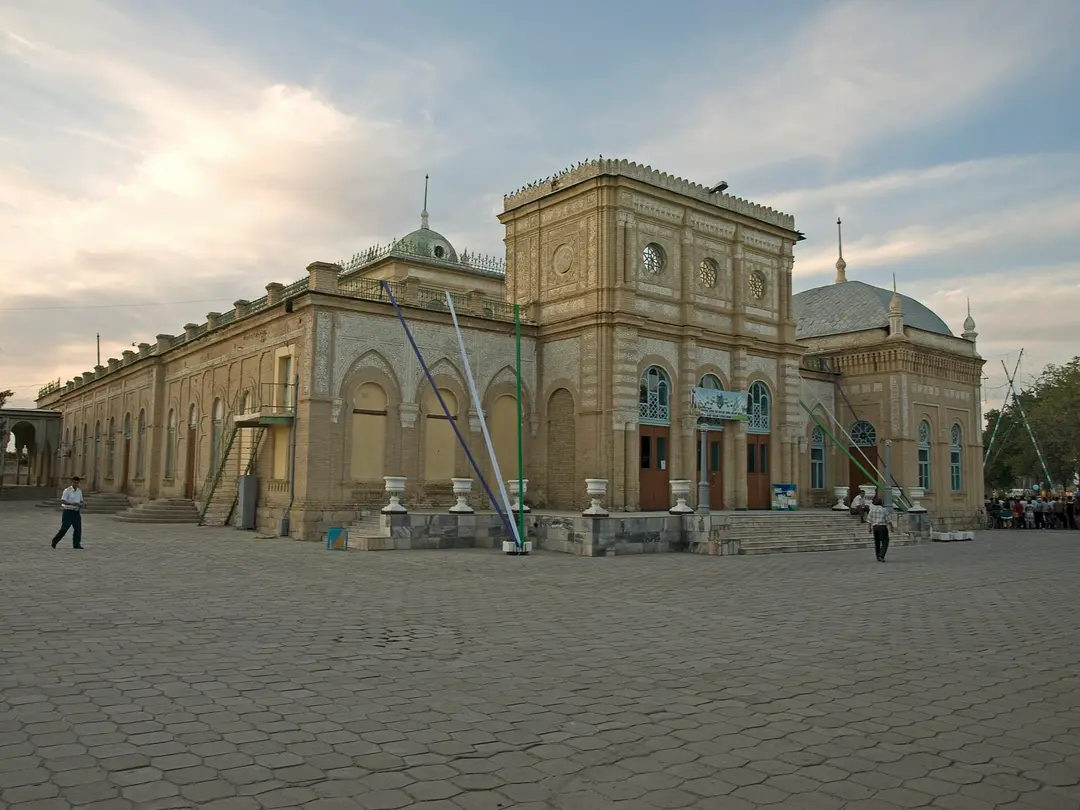
Many travellers meet Kogon when they step off a train and head straight on to Bukhara without stopping. Yet this town, once known as New Bukhara, has a history of its own that begins with the railway and the colonial era. If you have a couple of hours before your train or before hotel check-in, it is worth a look.
Why Kogon is called New Bukhara
In the late nineteenth century, when the Trans-Caspian Railway was being built across Central Asia, the Emir of Bukhara did not want rails run to the ancient city itself. So the station was placed 12 to 15 kilometres away, and a Russian settlement grew up beside it. It was named New Bukhara and later became Kogon. As a result Uzbekistan has two towns with similar names: old Bukhara with its madrasas and minarets, and railway Kogon, where the station and warehouses were.
This was the axis along which goods arrived in the region and cotton was later shipped out. The settlement grew quickly, with Russian engineers, officials and craftsmen settling there. Buildings from the late nineteenth and early twentieth centuries are a reminder of this.
The emir's palace
Kogon holds the country residence of the Emir of Bukhara, built at the very start of the twentieth century when the ruler wanted a home near the new centre and the railway. The building combines European and Eastern elements: columns, stucco and painted ceilings. The condition of the palace and visiting arrangements can change, so check current information before you go. If the palace is closed, admiring the facade is enough.
How to use Kogon
If you arrived by train
Many trains from Tashkent and Samarkand arrive at Kogon station, from which a road of about 15 kilometres leads to Bukhara. You can go by taxi, minibus or a pre-booked transfer. The journey takes 20 to 30 minutes. Note that you should arrive early at the station before your onward departure, because documents are checked in Kogon.
If you have a few hours
Walk around the centre of Kogon:
- look at the Russian-era buildings with their characteristic facades;
- visit the city bazaar and try fresh flatbread, samsa and fruit;
- stroll streets lined with plane trees and see everyday life in the town;
- stop at a tea house to rest.
How to get there from Bukhara
The drive takes about 15 to 25 minutes by car. Many take a taxi, but you can also use a shared ride, especially if you are heading for the station or leaving with luggage. See trips on the Kogon to Bukhara page. In the Yo'ldosh app you can find a driver heading your way and book a seat in advance. This is handy when you need to catch an early train.
What to eat
In Kogon you can eat well and inexpensively: plov, shashlik, lagman, samsa and fresh flatbread. Prices in tea houses are usually moderate. If you are trying Bukharan cuisine for the first time, ask locals for a recommendation.
Where to stay
Most tourists stay in old Bukhara, where the main route lies. But if you need an early train or arrive late, a night in Kogon can be convenient. The choice is small, but prices are lower.
Practical tips
- Arrive at the station early: checks and queues take time.
- Confirm the timetable and the departure station on your ticket.
- Carry cash for taxis and minibuses.
- In the heat wear a hat and carry water.
- If you want to see the palace, find out the opening hours in advance.
When to go
The best time for walks is spring and autumn. Summer is hot, and winter cool and windy.
Kogon and trips around the region
Kogon is a handy junction for trips around the Bukhara region. From here you can go south to Qarshi, west towards Khorezm or east to Navoi and Samarkand. Plan the route in advance and check timetables.
Plan your trip
To reach old Bukhara or the station, open the Kogon to Bukhara page. Other directions are in all routes. Drivers who meet trains and drive to Bukhara will find the for drivers page useful.
Cover photo: Ymblanter, CC BY-SA 4.0, Wikimedia Commons.
