Nurabad: the foothills south-west of Samarkand
Mountain villages, spring pastures and a road tourists rarely take. What to see in the Nurabad district and how to plan a trip there from Samarkand.
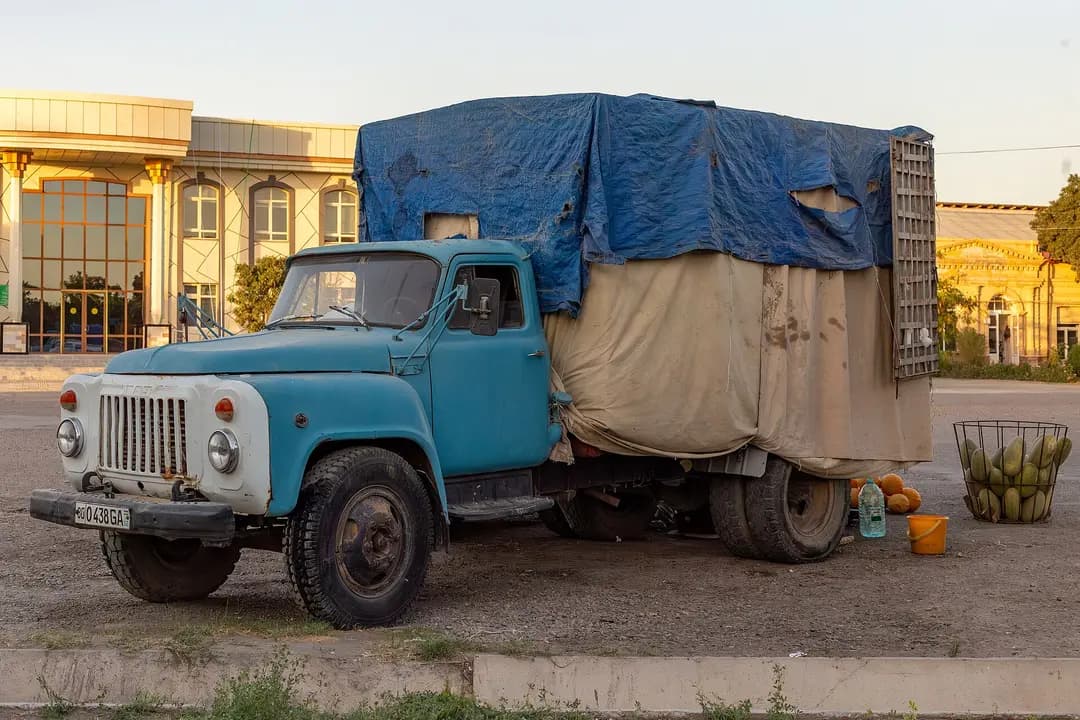
Most visitors to Samarkand only see its surroundings on the way to Shahrisabz or Bukhara. Yet south-west of the city lies a district where tourists almost never go: Nurabad. Here the plain of the Zarafshan valley gives way to hills and foothills, flocks graze along the roads and village life goes on much as it did decades ago. This is not a place to tick off a list of sights but a trip for landscapes, quiet and hospitality.
To avoid confusion right away: Nurabad is a district and its centre in the Samarkand region. Do not mix it up with Nurata, the town with a sacred spring and fish pool in the Navoi region.
Where Nurabad is
The town of Nurabad lies about 50–60 km south-west of Samarkand. The drive takes about an hour and passes through farming country with orchards, fields and small villages. The further you get from Samarkand, the more the land rises: hills, ravines and dry riverbeds appear, with ridges of foothills on the horizon.
The district borders the Kashkadarya region, so local roads run south through it. Tourists hardly ever use them; most travel to Kashkadarya over the Takhtakaracha pass to Shahrisabz.
Landscapes and villages
The main reason to visit the Nurabad district is the scenery. What you will see:
- Rolling pastures. In spring they are covered with grass, poppies and tulips; by midsummer they have burned to shades of gold and ochre.
- Flocks and shepherds. Livestock farming is one of the district's main occupations. Flocks of sheep, shepherds on horseback and big guard dogs make up the classic foothill scene.
- Mountain villages. Houses of clay and stone, flat roofs where hay and apricots are dried, and springs where villagers gather.
- Rain-fed orchards. Almonds, pistachios and apricots grow on the slopes; in spring the blossom turns hillsides into patches of white and pink.
The best way to see all this is a slow drive with stops: by a spring, at a viewpoint on a ridge, in a village where dairy products are sold.
What to see in Nurabad itself
The town is small, a district centre with administrative buildings, a bazaar, schools and a park. Visit the bazaar, which sells mutton, dairy products, dried fruit, honey and flatbread. Teahouses cook plov, shurpa and shashlik from local lamb; in a livestock district the meat is especially good.
Look out for the dairy products: katyk yoghurt, suzma curd and qurt are made in almost every household here, and they taste noticeably different from shop-bought versions. Qurt, small salty dried balls, is easy to take on the road or as a gift.
How to plan the day
A sample plan for a trip from Samarkand:
- Morning. Leave at 7–8 a.m. while it is cool and the light is soft, stopping by orchards and hills for photos along the way.
- Midday. Nurabad: the bazaar, lunch in a teahouse and a short walk.
- Afternoon. A drive to one of the foothill villages for a walk in the hills and tea by a spring.
- Evening. Back in Samarkand by sunset, when the Registan lights come on.
One day is enough for such a trip, but there is no tourist infrastructure in the foothills: arrange transport in advance and do not count on a cafe in every village.
When to go
- April to early May. The best time: green hills, tulips and poppies, almond and apricot blossom and comfortable temperatures.
- June. Still green in the hills, and the apricot season begins.
- July to August. Hot and dusty, with the pastures burnt dry; go only early in the morning.
- September to October. Mild weather, fruit and nut harvests and golden slopes.
- Winter. Cold, with possible snow on higher ground, and village roads can be washed out.
How to get there
Minibuses and taxis run from Samarkand to Nurabad, and on the Nurabad – Samarkand route drivers post shared rides on Yo'ldosh. This is handy if you want to leave at a particular time and return in the evening: you book a seat in the app and pay only for yourself. To reach the mountain villages people usually take a local taxi, agreeing on the route and price in advance.
Practical tips
- Water and food. Bring your own: village shops are small and cafes are almost non-existent.
- Clothing. Comfortable shoes for walking in the hills, a hat and a light jacket, as evenings in the foothills are cool.
- Signal. Coverage is weak on some roads, so download offline maps.
- Respect for locals. Ask before photographing people and courtyards, and do not enter private plots or pastures without asking.
- Dogs. Shepherd dogs take guarding their flocks seriously; keep your distance from the herd and do not provoke them.
- Cash. Cards are rarely accepted in the district.
Who will enjoy Nurabad
The Nurabad district will appeal to those who have already seen the Registan and Shah-i-Zinda and want to experience rural Uzbekistan: photographers, walkers and travellers who value quiet over a list of sights. If you are planning such a trip, check rides on the Nurabad – Samarkand route, and find travel tips on the for passengers page.
Cover photo: Nikolai Bulykin, CC BY-SA 4.0, Wikimedia Commons.
