The Tashkent Metro: Most Beautiful Stations and a Two-Hour Route
Cosmonaut mosaics, vaulted halls in honour of Navoi and chandeliers beneath marble ceilings. Which stations to see, how to ride them all in two hours and what the photo rules are.
The Tashkent metro is one of the capital's main attractions and also the most affordable: a ride costs about as much as a cup of tea, and in a couple of hours you can see a dozen stations, each decorated in its own way. Mosaics, carved ganch plaster, marble and crystal chandeliers — the stations here were built as underground palaces dedicated to people, events and themes.
A little history
The Tashkent metro opened in 1977 and was the first in Central Asia. It was built after the devastating earthquake of 1966, so the structure is designed to withstand strong seismic loads. The network has grown since then and now includes several lines, among them a new overground circle line.
For a long time photography in the metro was banned. The ban was lifted in 2018, and since then the stations have become one of the most popular photo subjects for tourists and locals alike.
The most beautiful stations
Kosmonavtlar
Probably the most famous station. The walls are finished in deep blues that evoke outer space, and the columns carry round ceramic medallions with portraits of cosmonauts, including Yuri Gagarin and Valentina Tereshkova. The lighting creates a feeling of weightlessness, especially when you look down the length of the platform.
Alisher Navoiy
This station is dedicated to the great poet. Beneath its high vaults are domes decorated with ganch ornament, and the walls carry panels with scenes from Navoi's poems. It is one of the most "oriental" stations on the network, and it is linked by a passage to Paxtakor.
Paxtakor
The name means "cotton grower". The walls are decorated with cotton-themed mosaics, a symbol of Uzbek agriculture in the Soviet era. The station is bright and restrained, with striking ceramic panels.
Mustaqillik Maydoni
The station by the country's main square. Marble columns, crystal chandeliers and a sense of ceremony make it feel more like a grand hall than a transport hub.
Other stations
Explore the neighbouring stations too: almost every one has its own theme, from architectural motifs to tributes to writers. Even if you do not know a station's story, studying the details is rewarding in itself.
A two-hour route
Here is a convenient route that covers the main stations without many changes:
| Step | Station | What to do |
|---|---|---|
| 1 | Mustaqillik Maydoni | Start here after a walk around the square |
| 2 | Paxtakor | One stop; get off onto the platform |
| 3 | Alisher Navoiy | Take the passage from Paxtakor |
| 4 | Kosmonavtlar | Two stops along the Uzbekistan line |
| 5 | Back or onward | Choose the next station to suit you |
At each station, step out onto the platform, wait for the train to leave and take 5 to 10 minutes to look around. There is no need to pay again: changes and platform stops are free within a single journey.
Photo rules
- Photography is allowed, but do not get in passengers' way or block walkways.
- No tripods or bulky equipment, as this may attract questions from staff.
- Do not photograph police officers or service areas.
- Do not use flash in people's or drivers' faces.
- The best time is weekdays after 10 a.m. or weekend mornings, when it is quieter.
How to pay
Metro fares are inexpensive. You can pay with a transport card or with a QR code in a mobile app. Payment methods and fares are updated from time to time, so check the current details at the station ticket office. Bags may be checked at the entrance; this is a routine procedure.
Tips
- Avoid rush hour — from 8 to 9 a.m. and from 5 to 7 p.m. the carriages are packed.
- Station names on signs are usually also given in Latin script, but save a metro map on your phone.
- In summer the metro is a great refuge from the heat, as the stations are cool.
- Combine the ride with a walk: Mustaqillik Maydoni and Amir Temur Hiyoboni stations are close to the main squares in the centre.
From Tashkent to Chirchik
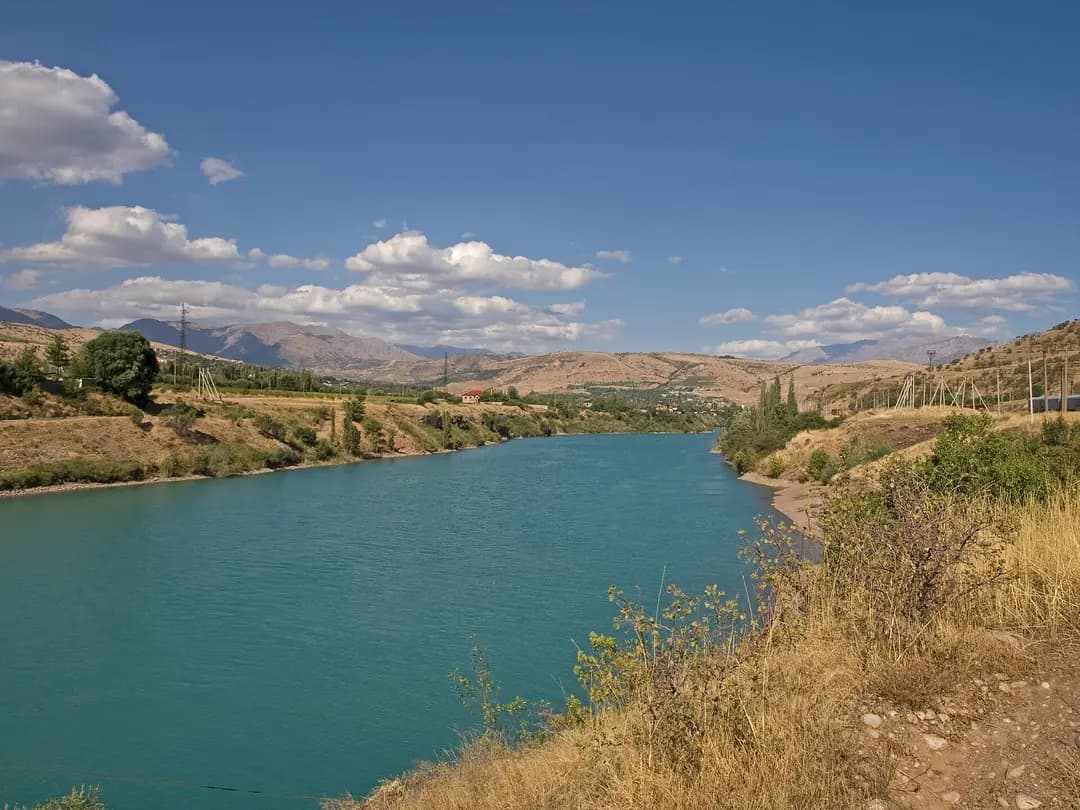
The metro is a great way to get to know the city, but if you want to see the surroundings, head to Chirchik. The town, 35 to 40 km north-east of the capital, is the gateway to the mountains and a convenient base for trips to the Charvak reservoir and the foothills of the Western Tien Shan. The drive takes about 45 minutes to an hour.
A handy option is a shared ride on the Tashkent — Chirchik route on Yo'ldosh: drivers go back and forth throughout the day, so you can book a seat and not depend on the suburban transport timetable.
Why the metro is worth seeing
The Tashkent metro is a museum that is open every day and costs next to nothing. It shows how the Soviet era blended monumental style with local motifs, and how these stations became part of the city's identity.
If you feel like getting out of town after your metro tour, check the Tashkent — Chirchik route and other destinations under all routes.
Cover photo: Ymblanter, CC BY-SA 4.0, Wikimedia Commons.
