Beruni: a scholar's homeland and gateway to Ellikkala's fortresses
A town on the right bank of the Amu Darya named after al-Biruni and a handy base for trips to the desert fortresses. Where to stay, what to eat and what to see.
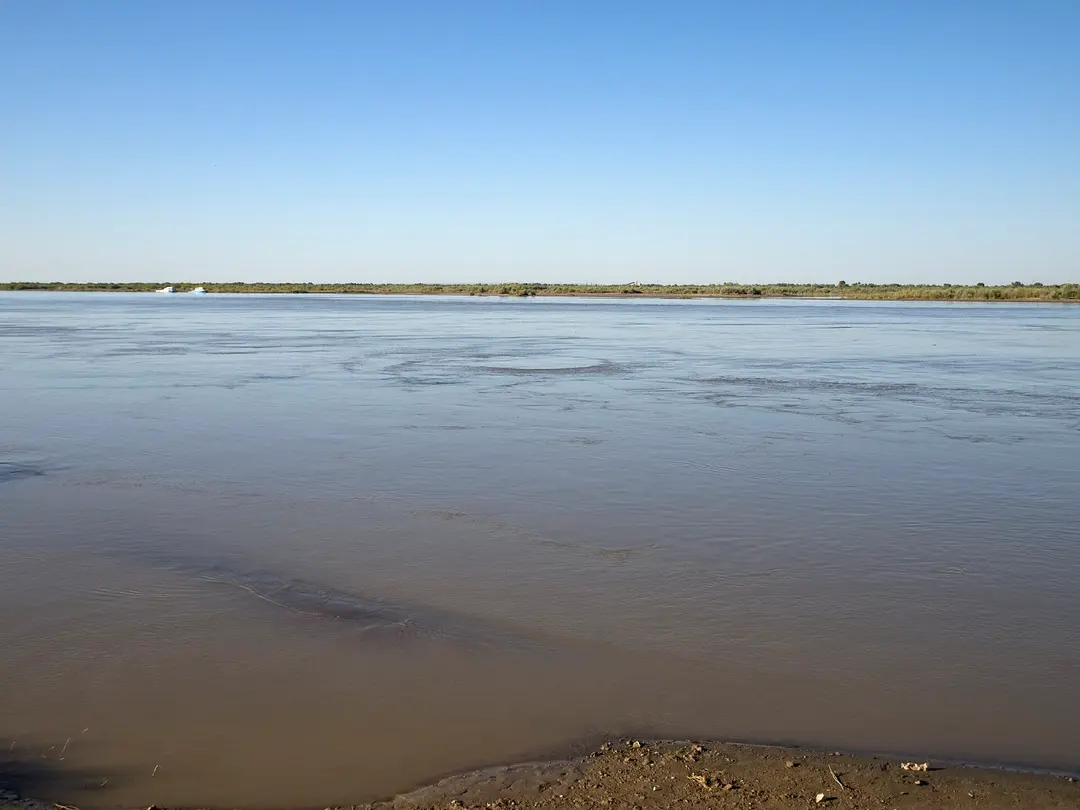
A thousand years ago, not far from here, a man was born who measured the radius of the Earth, described India and argued with Ibn Sina about the nature of light. Abu Rayhan al-Biruni was born in 973 in Kath, the ancient capital of Khorezm, and the modern town on the right bank of the Amu Darya bears his name. Today Beruni is a small district town in Karakalpakstan, but for travellers it matters for another reason: it is the closest town to the famous desert fortresses of Ellikkala.
Where Beruni is
Beruni lies on the right bank of the Amu Darya in the south of the Republic of Karakalpakstan. Urgench, on the other bank, is about 50–60 km away (a little over an hour via the bridge), and Nukus is roughly 110–130 km away, about a two-hour drive. The town stands on the edge of the oasis: to the east the sands of the Kyzylkum begin, and it is there, on the border between farmland and desert, that the ancient fortresses stand.
The town once had a different name and was renamed in honour of the scholar in the mid-twentieth century, for the thousandth anniversary of his birth.
The memory of al-Biruni
There is a monument to the scholar in town, and streets and schools are named after him. If you are interested in the history of science, here are the essentials:
- al-Biruni wrote in Arabic and Persian and worked at the courts of the Khorezmshahs and later Mahmud of Ghazni;
- he wrote a major work on India, chronological tables of different peoples, and treatises on astronomy, mathematics and mineralogy;
- he proposed a method of measuring the Earth's radius from a mountaintop and obtained a result close to the modern value.
Kath itself has disappeared: the city was washed away by the Amu Darya, which has shifted its course many times. So the places linked to al-Biruni are places of memory rather than historic buildings.
The fortresses of Ellikkala
Ellikkala means "fifty fortresses". In the neighbouring Ellikkala district and around Beruni, dozens of ancient towns and castles of old Khorezm are scattered along the edge of the desert. The best known are:
- Toprak Kala: a palace and temple complex from the first centuries AD with a tall citadel; excavations uncovered wall paintings and documents here.
- Ayaz Kala: a group of fortresses on hills above the desert. The upper fortress sits on a high outcrop, and its walls look out over sand and salt flats.
- Kyzyl Kala: a small square fortress with well-preserved walls, good for a short stop.
The fortresses are tens of kilometres apart and there is no public transport to them. People usually visit them in a day by car with a driver, starting early in the morning before the heat. The climb up to Ayaz Kala takes 15–20 minutes on a sandy path.
Visiting rules
- Do not climb fragile sections of wall or walk along the edges of drops.
- Take nothing away: pottery shards and pieces of brick are part of the monument.
- In summer carry at least two litres of water per person and wear a hat.
Where to stay
Beruni has a few hotels and guesthouses, but the choice is limited, so book ahead and confirm the details directly. Many travellers stay in Urgench or Khiva and come to the fortresses for the day. Another popular option is the yurt camp near Ayaz Kala, where you can watch the sun rise over the desert; conditions are simple and places fill up quickly in season.
Where to eat
Beruni has teahouses and small cafes around the bazaar. Khorezm and Karakalpak cuisines meet here:
- Shivit oshi: green dill noodles;
- Karakalpak beshbarmak: boiled meat with thin sheets of dough;
- Jugari nan: flatbread made from corn flour;
- Tea with milk: popular in Karakalpakstan.
Take snacks with you on the road to the fortresses, as there is almost no food at the sites themselves.
When to go
The best months are April to May and September to October. In summer the desert can be over 40°C and climbing the fortresses in the afternoon is exhausting. Winter is cold and windy, but the light is low and beautiful and there are almost no visitors.
How to get there
Beruni is connected by road to both Nukus and Urgench. Minibuses run, but not very often, and long-distance taxis are expensive. A shared ride is more convenient: on the Beruni – Nukus and Urgench – Beruni routes drivers post trips on Yo'ldosh and you book a single seat at the time you need. For example, you can arrive from Urgench in the morning, visit the fortresses by local taxi during the day and leave for Nukus in the evening.
Practical tips
- Cash is essential: there are ATMs in town but none near the fortresses.
- Download offline maps; mobile signal in the desert is patchy.
- Sunglasses and sunscreen are needed even in spring, since the sun reflects off the sand.
- Agree the fortress route with your driver in advance to avoid misunderstandings on the road.
Beruni is a town on the path from medieval science to the ancient fortresses of the desert. To plan your connections easily, check trips on the Urgench – Beruni and Beruni – Nukus routes.
Cover photo: Ymblanter, CC BY-SA 4.0, Wikimedia Commons.
