Kokand: City of Khans and Craftsmen
Khudoyar Khan's palace, a Friday mosque of carved wooden columns, craft quarters and the famous halva: how to spend a day or two in Kokand.
For many travelers, Kokand is the first town of the Fergana Valley they reach after crossing the Kamchik Pass, and it makes a good introduction. Here the valley's past is on full display. In the 18th and 19th centuries Kokand was the capital of a khanate that controlled almost the entire valley and the trade routes heading east. That era left behind a palace, a Friday mosque, madrasas and a royal necropolis. The town's craft reputation lives on in its woodcarvers, coppersmiths and confectioners, whose halva people carry home by the box.
Getting there
From Tashkent to Kokand it is about 230 km via Angren and the Kamchik Pass. The drive takes roughly 4–5 hours depending on the weather and checkpoint stops. In winter the pass can be snowy and icy, so it is best to travel in daylight. There is also a train, but the timetable is not always convenient, so check it in advance.
A shared ride is a practical option: trips on the Tashkent — Kokand route are posted regularly, and a single seat usually costs less than hiring a whole taxi. Within the valley distances are even shorter: Fergana is about 90 km away and Rishtan roughly 45 km.
Khudoyar Khan's Palace
The main sight is the Urda, the palace of the khanate's last ruler, Khudoyar Khan, built in the 1870s. Its tiled facade, grand portal and inscriptions are visible from afar. Inside, courtyards and halls survive, and today they house the regional history museum. Allow an hour or an hour and a half to see the exhibits on the khanate's history, weapons, clothing, household items and the painted ceilings.
Tip: come in the morning, when the courtyards are shaded and there are fewer groups. The facade photographs best from the small park in front of the palace.
Mosques, madrasas and the necropolis
- The Jami Mosque is an early 19th-century Friday mosque with a long veranda (aivan) resting on carved wooden columns. Walking along the colonnade is perhaps the best way to understand how strong the local school of woodcarving was. A minaret stands next to it.
- The Narbutabey Madrasa is a large late 18th-century madrasa, one of the few where teaching continued even during the Soviet period.
- Dakhma-i-Shakhon is the necropolis of the Kokand rulers, with carved doors and an elegant portal. Nearby is the Modari Khan mausoleum, the tomb of Umar Khan's mother.
Dress modestly: cover shoulders and knees, and women will want a headscarf in working mosques. Avoid entering the main prayer hall during Friday prayers.
The craft quarters
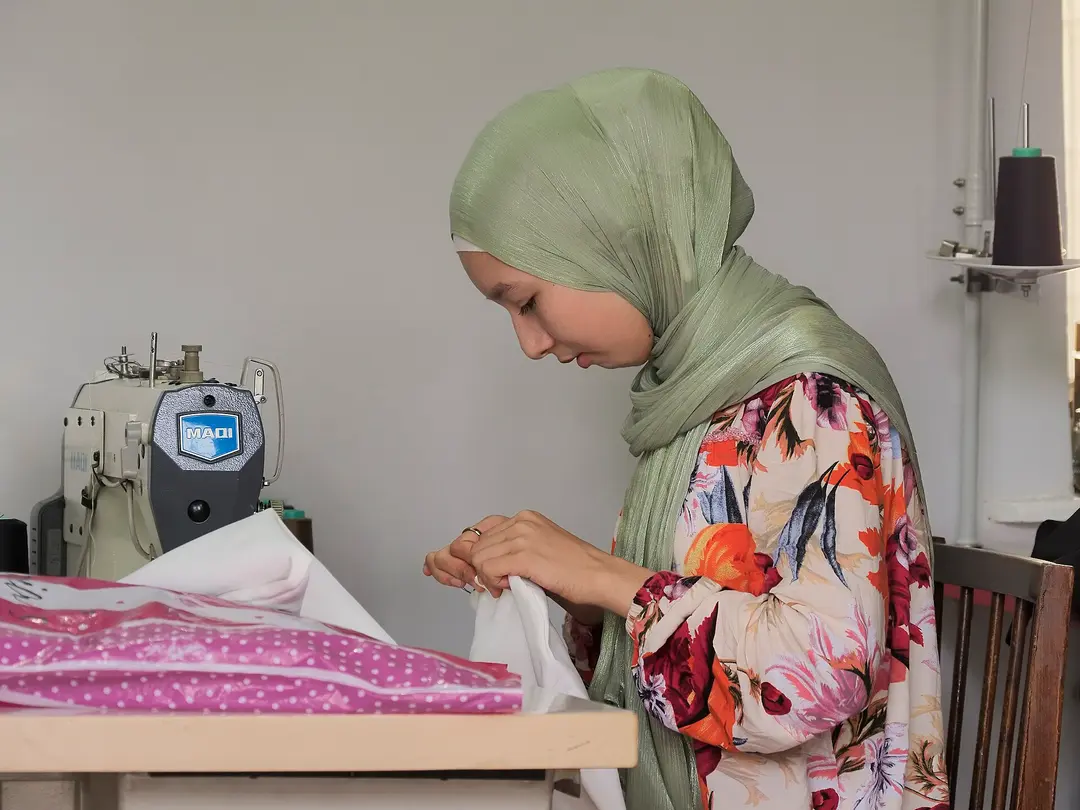
Kokand has long been known for its masters of woodcarving, copper chasing and weaving. Family workshops still operate in the old mahallas (neighborhoods). There are hardly any dedicated "tourist streets" here, so the best way to find craftspeople is to ask at the museum or the bazaar. Many artisans are happy to show their work, but it is polite to arrange a visit in advance and respect their working hours.
Good things to bring home:
- carved wooden boxes and small stands;
- copperware and chased decorative plates;
- skullcaps and fabrics with local patterns.
Kokand halva and food
Local halva is a reason to visit on its own. It is made from sugar, flour, butter or oil and nuts, sometimes with sesame, and sold by weight at the bazaar and in sweet shops. Ask to taste a few kinds: chewy, crumbly, with walnuts. Prices depend on the ingredients, so check on the spot, as they change.
For lunch, look for plov. Fergana-style plov is cooked in cottonseed oil with yellow carrots, and in Kokand every teahouse serves it around midday. In the evening, shashlik, lagman and tea in a shady park are a good choice.
What to do in the evening
Kokand is a calm town, so evenings are simple and pleasant:
- Stroll around the center and the park near the palace once the heat eases.
- Have dinner at a teahouse with shashlik and fresh flatbread.
- If you are staying two days, spend an evening at the bazaar, where fruit and sweets get cheaper toward sunset.
Practical tips
| What | Guideline |
|---|---|
| Time needed | 1 full day, ideally 2 with a trip to Rishtan |
| Best season | April–June and September–October |
| Distance to Tashkent | about 230 km, 4–5 hours |
| Distance to Fergana | about 90 km, 1.5 hours |
- Kokand is called the city of winds: even in summer evenings can be cool, so bring a light layer.
- Cash is useful at the bazaar and in small workshops.
- Museum hours can change, so check the day before.
Where to go next
Kokand pairs naturally with neighboring valley towns. Rishtan, the ceramics town, is less than an hour away, and rides on the Kokand — Rishtan route suit a half-day trip. The Kokand — Fergana route is an easy way to move on to the regional capital and continue to Margilan.
With Yo'ldosh you can pick a ride with a verified driver, book a single seat in the app and leave at a time that suits you. Browse every direction on the routes page and plan your valley trip your way.
Cover photo: Petar Milošević, CC BY-SA 4.0, Wikimedia Commons.
