Rishtan: A Town of Potters and Their Workshops
How Rishtan works for visitors: which workshops welcome guests, how to arrange a visit, what ceramics to buy and where to have lunch between potter's wheels.
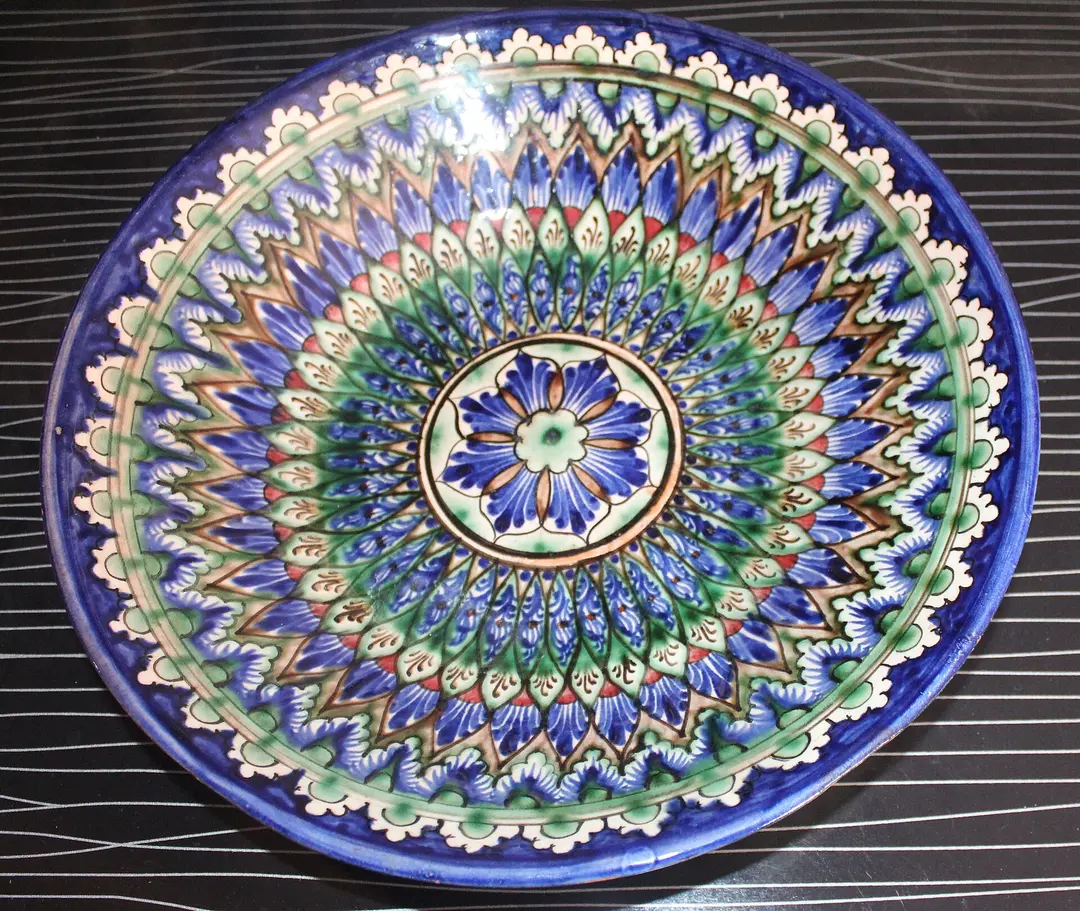
If you have seen a blue plate in Tashkent with a pattern like an opening flower, chances are it was made in Rishtan. This small town in the southwest of Fergana Province has lived by pottery for centuries. It has everything ceramics needs: red clay underfoot, water, fuel and, above all, dynasties of masters who pass their secrets from father to son. For travelers, Rishtan is not a museum behind glass but a town of working studios where you can walk in, talk to a potter and watch a lump of clay become a serving platter.
Getting there
Rishtan works well as a half-day trip. It is about 50 km from Fergana, roughly an hour's drive. On the Rishtan — Fergana route you can find shared rides in both directions and choose a departure time that fits your plans.
From Kokand it is even closer, about 45 km. If you are traveling through the valley from the west, it makes sense to stop in Rishtan on the way: rides on the Kokand — Rishtan route come up regularly.
What makes Rishtan ceramics special
The signature feature is ishkor glaze. It is traditionally made from the ash of steppe plants and gives that deep turquoise and cobalt blue. Typical pieces include:
- lagan, large flat platters for plov;
- kosa, deep bowls;
- piala tea bowls and teapots;
- jugs, vases and decorative plates.
Patterns are usually floral: blossoms, pomegranates, branches, and sometimes fish and birds. Each workshop has its own handwriting, and after a couple of visits you will start to tell them apart.
Which workshops welcome visitors
Rishtan has dozens of family workshops. Many are used to guests and are easy to find; people on the main streets, hotel staff in Fergana and drivers can all point you to the masters. The best known belong to hereditary potters, such as the Nazirov and Usmanov dynasties, whose work appears in exhibitions. Some workshops double as small private museums where you can see old pieces, the potter's wheel and the kiln.
The town also has a ceramics museum with examples from different periods. Opening hours change, so check before you go.
How to arrange a visit
- Give notice. A workshop is a place of work. Ideally, ask your hotel or local contacts to call the master the day before.
- Come during working hours. Morning and early afternoon are the best times to catch the process: throwing, painting or loading the kiln.
- Ask about a workshop session. Some masters let you try the wheel or painting. Agree on the price upfront; it is approximate and changes.
- Respect the space. Do not touch pieces that are drying, and ask before taking photos.
- Buying is not required, but if you enjoyed the visit, it is the best way to say thank you.
What and how to buy
| Item | What to check |
|---|---|
| Lagan platter | a flat base, no cracks in the glaze |
| Tea bowls and kosa | a matching set, stability |
| Teapot | a snug lid, a comfortable handle |
| Decorative plates | hand painting, the master's signature |
Ceramics are fragile. Ask for pieces to be wrapped in newspaper and cardboard, and carry large platters in your hand luggage on the plane if size allows. Prices depend on size and the complexity of the painting; workshop prices are approximate, so confirm them and do not hesitate to ask for a discount on a set.
Where to have lunch
Rishtan is a small town, so there are few restaurants, but simple teahouses and canteens near the bazaar serve plov, shurpa and lagman at midday. You can buy fresh flatbread and samsa at the bazaar. Some workshops that host tourists offer a family-style lunch; ask about it when you arrange your visit.
How to plan the day
- Morning: leave Fergana or Kokand and reach the first workshop by 10–11 am.
- Midday: lunch at a teahouse and a short walk around the bazaar.
- Afternoon: a second workshop or the ceramics museum.
- Evening: return to Fergana or move on to Kokand.
If you want to learn the wheel seriously, stay for several days: some workshops take students for short courses.
Good to know
- The best time to visit is spring or autumn. In summer the workshops are hot, especially near the kilns.
- Bring cash, as small workshops do not always accept cards.
- Do not buy antique-style ceramics as genuine antiques: exporting real old items requires paperwork.
- If you are traveling with children, ask the master to show them the wheel: many potters gladly let kids try shaping a simple bowl, and it makes a lasting memory.
- Keep the receipt or the workshop's business card: at the border it makes it easier to show that a piece is modern.
Hassle-free travel
Rishtan is easy to fit into a valley itinerary between Fergana and Kokand. Choose a ride on the Rishtan — Fergana or Kokand — Rishtan route on Yo'ldosh: seats are booked in the app, drivers are verified, and you can time your departure around your workshop visit. Every direction is listed on the routes page.
Cover photo: Xasanboy off, CC BY-SA 4.0, Wikimedia Commons.
