Pomegranates and persimmons: what to bring from Uzbekistan in November
In late autumn the southern bazaars turn red with pomegranates, piled next to orange persimmons and fragrant quince. How to pick the best fruit, where to buy it and how to get it home intact.
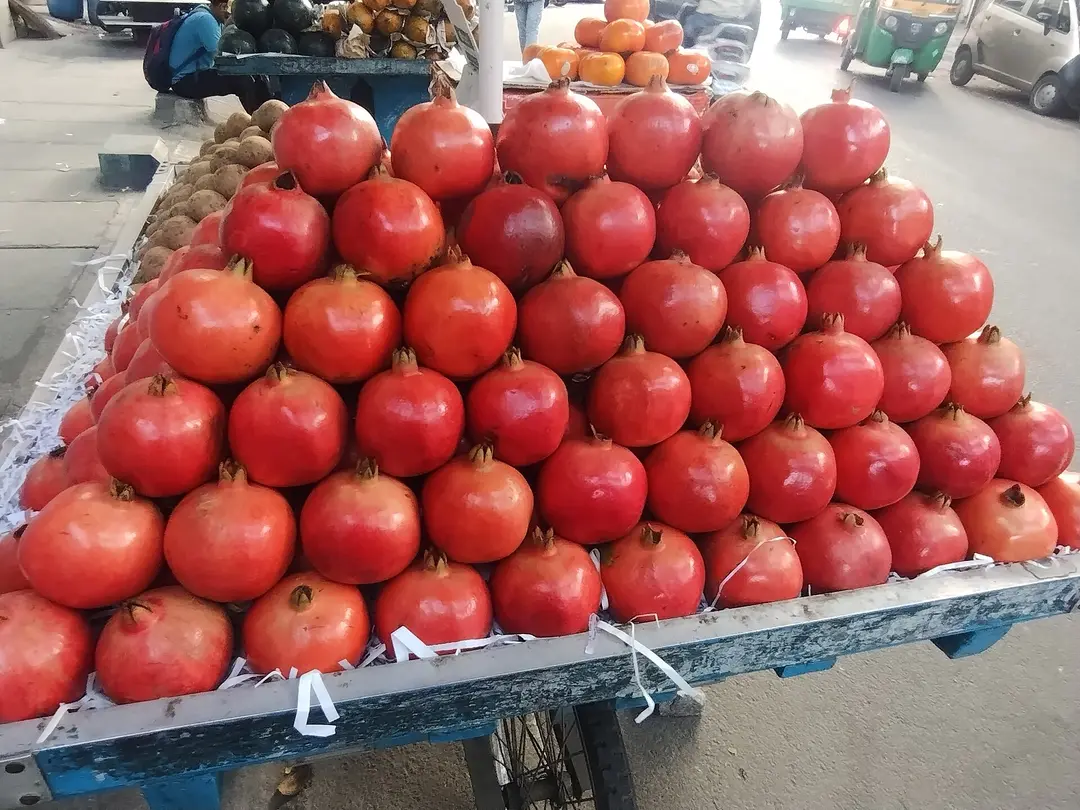
Summer fruit is long gone and the grape harvest is over, yet Uzbekistan's bazaars are bursting with colour again in November. This is the season of pomegranates, persimmons and quince. The best-known pomegranates grow in the south, in Surkhandarya and Kashkadarya, where a warm autumn lets the fruit ripen fully on the branch. If you are in the country in late autumn, it is the perfect moment to taste them on the spot and take a crate or two home.
Why the south
Surkhandarya is the warmest region in the country. Summers are long and hot and autumns are mild, so pomegranates have time to build up sugar and colour. There are pomegranate orchards in the Sherabad and Denau districts among others, and in Kashkadarya in the foothills around Kitab and Shahrisabz. Local pomegranates are large, with dark red juicy seeds and a pronounced tartness.
Pomegranates grow in other regions too, including the Fergana Valley and around Samarkand, but the southern ones are considered the benchmark.
Late harvest calendar
| Fruit | Best time to buy |
|---|---|
| Pomegranate | Mid October to late November, keeping varieties into winter |
| Persimmon | Late October to December |
| Quince | From October, keeps well until spring |
| Late grapes | Until early November |
| Greenhouse lemons | From November, sold at southern bazaars |
How to choose a pomegranate
Sellers at the bazaar will happily cut one open to show you the seeds. Still, it helps to know the signs of a good pomegranate:
- Heavy for its size. The heavier it is, the more juice it holds.
- Slightly dry, firm skin. A glossy, smooth skin often means it was picked early.
- A dry crown. The sepals at the top should be dry, with no green.
- A slightly angular shape. In a ripe pomegranate the seeds press against the skin, making it a little faceted.
- No soft spots or cracks, especially if you are taking it far.
If you want juice, ask for it to be pressed in front of you. Many bazaars have juice presses, and a glass of fresh pomegranate juice is an essential part of the trip.
Persimmons and quince
Persimmons at Uzbek bazaars come in two types: astringent ones that you only eat when very soft, and sweet ones you can eat while still firm. Ask the seller which is which. For travelling, buy firm fruit and let it ripen at home over a few days. There is no point carrying soft persimmons, as they will get squashed.
Quince in Uzbekistan is large and fragrant. It goes into plov, jam and slow-cooked meat dishes. Choose yellow fruit with no spots and a strong scent. Quince travels well and keeps for a long time.
Where to buy
- Termez bazaar, the city's central market, where whole rows are given over to pomegranates in season.
- Roadside sellers on the highway between Sherabad and Termez and around Denau.
- Qarshi bazaars, a good stop if you are heading north from the south.
- Tashkent bazaars are full of southern pomegranates too, but prices are higher.
Do not grab the first crate you see. Walk the whole row, taste fruit from two or three sellers and only then choose. When you buy a whole crate, the seller will usually offer a small discount or add a couple of extra pieces on top.
Prices change weekly depending on the harvest and variety, so quoting exact figures would be meaningless. One rule holds: fruit is much cheaper in the south than in the capital, especially if you buy by the crate.
Making a trip of it
Late autumn is a comfortable time to visit the south: the summer heat has gone, and Termez is still warm by day. A plan might look like this:
- Travel down on the Tashkent — Termez route: about 700 km, 10 to 12 hours by car, or take the overnight train.
- Spend a day in Termez: Fayaz Tepa, Sultan Saodat, the archaeological museum and the bazaar.
- Return via Qarshi. The Qarshi — Termez leg is about 280 to 300 km through Boysun and Guzar, 4.5 to 5.5 hours, with mountain views and the markets of Kashkadarya along the way.
Shared rides on Yo'ldosh suit trips like this: drivers from the south often carry produce to Tashkent for themselves and their families and are happy to take passengers. Let the driver know if you will have a heavy crate.
How to transport the fruit
- Pomegranates are the most travel-friendly fruit. Packed in a cardboard box with paper between them, they easily survive several days on the road.
- Persimmons should travel only when firm, in a single layer with nothing on top.
- Quince should be wrapped in paper so the fruit does not rub together.
- On a plane, check the box in as luggage marked fragile, and keep the airline's weight limits in mind.
- Abroad. Taking fresh fruit out of Uzbekistan may require phytosanitary documents, and your destination country may restrict imports. Check the rules in advance.
The takeaway
November is an underrated month for a trip south: few tourists, mild weather and the best pomegranates of the year. Plan the journey with the Tashkent — Termez and Qarshi — Termez pages, and read more about booking seats in the for passengers section.
Cover photo: Gpkp, CC BY-SA 4.0, Wikimedia Commons.
