The Aral Sea today: how to see what is left of it
The shoreline is now hundreds of kilometres from Muynaq, but you can still reach the water. What the Aral looks like today, whether you can swim in it and how to prepare for a drive across the former seabed.
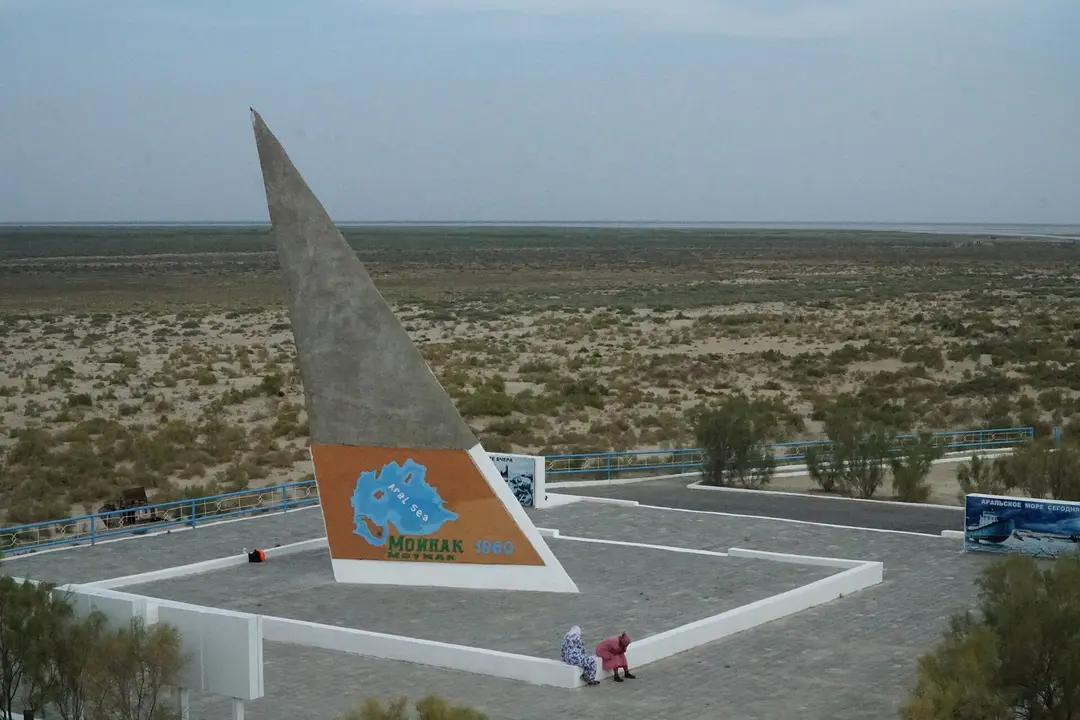
Half a century ago Muynaq was a port town. It had a fish cannery, and boats left for the open sea straight from the town waterfront. Today the water is more than a hundred kilometres away across dry seabed. Even so, the Aral has not disappeared completely, and you can still see it. This is not a beach holiday but a desert expedition, and it needs preparation.
What is left of the sea
From the 1960s onwards, water from the Amu Darya and Syr Darya rivers was diverted on a huge scale for irrigation, and the sea began to shrink. Over time it split into several parts. The northern part lies in Kazakhstan. From the Uzbek side you can reach the western basin of the Large Aral, a narrow strip of water at the foot of the cliffs, or chinks, of the Ustyurt plateau.
The water there is extremely salty, much saltier than the ocean. There are practically no fish in this part of the sea, but the shore is striking: the Ustyurt cliffs, white salt flats, turquoise water and an almost complete silence.
Muynaq: where the trip begins
Almost every route to the water starts in Muynaq. What to see in the town itself:
- The ship graveyard. Rusting fishing boats sit on the sand below the old shoreline. This is the most famous image of the Aral.
- The viewpoint with the memorial sign. It stands above the former shoreline and shows just how far the water has gone.
- The local museum. Photographs and paintings of Muynaq in its fishing days and the story of how the town lived while the sea was close.
Two or three hours are enough for the town. If you only want to see the ships, Muynaq works as a day trip from Nukus.
Getting there from Nukus
Muynaq is about 200 km from Nukus, roughly a three-hour drive. Scheduled transport is limited, so many people go by taxi or in a shared car. A convenient option is Nukus — Muynaq on Yo'ldosh: you book a seat with a verified driver and pay only for your seat rather than for a whole taxi.
Beyond Muynaq an ordinary saloon car will not make it. The shore is another 150–200 km away over dirt tracks, salt flats and the edge of the Ustyurt, around 4–6 hours by 4x4. So people reach the sea in four-wheel-drive vehicles with an experienced driver who knows the tracks.
Can you swim in the Aral?
Yes, with some caveats:
- It is shallow near the shore. To get even waist-deep you may have to walk a long way over a muddy or salty bottom.
- The water is very salty. You float easily, but it stings your eyes and any small cuts. Do not dive or put your head under.
- There is no fresh water to rinse off. Bring several litres just for washing the salt off after your swim.
- Wear shoes. Salt crust and shells can make the bottom sharp.
If you are unsure, just sit by the water at sunset. For many people that is enough.
Where to stay
A trip to the water almost always takes two days with an overnight stop. The options:
- A yurt camp on the edge of the Ustyurt. These camps run in the warm season and are organised by tour operators from Nukus and Muynaq. Conditions are basic: a yurt, dinner and sometimes a shower.
- A tent. Suitable if you travel with an experienced team and plenty of water. The wind on the plateau can be strong at night.
- A guesthouse in Muynaq. If you are not going to the water, you can stay in town and return to Nukus the next day.
When to go
| Season | What to expect |
|---|---|
| May to June | Warm but not yet exhausting, good visibility |
| July to August | Heat above 40 °C, a tough trip |
| September to early October | The best time: mild weather, the water is still warm |
| November to March | Cold and windy, many camps are closed |
What to pack
- At least 4–5 litres of water per person per day, plus extra for rinsing.
- A hat, sunscreen and sunglasses, as the sun reflects off the salt flats.
- A warm jacket: even in summer the nights on the Ustyurt are cool.
- A power bank and cash. Mobile signal disappears soon after Muynaq, and there are no ATMs on the way.
- Wet wipes and rubbish bags: take back everything you bring.
Photos and etiquette
The ships in Muynaq look solid, but they are old, rusting metal. Do not climb inside or onto the decks: hull plates can give way and sharp edges cut easily. Morning or the hour before sunset gives the softest light. Drone use in Uzbekistan is governed by its own rules, so check them in advance rather than on the spot. People in Muynaq are used to visitors, but ask before taking close-up photos of anyone.
Things to watch out for
Do not try to drive to the water on your own in a rented car. Tracks change after rain, salt flats can turn boggy and there is nobody to call for help. Always tell someone your route and when you expect to be back. Salt storms are not frequent, but if your driver says it is better to wait, listen to him.
How to plan the trip
A practical plan looks like this: fly or travel to Nukus, head to Muynaq the next morning, take a 4x4 to the water from there, spend the night in a yurt camp and return via Muynaq. The legs to and from Muynaq can be done as a shared ride — check trips on the Nukus — Muynaq route, and look for other destinations in Karakalpakstan under all routes.
Cover photo: Adam Harangozó, CC BY-SA 4.0, Wikimedia Commons.
