Chor-Bakr Necropolis: The Quiet City of the Dead near Bukhara
The family necropolis of the Juybari sheikhs, with courtyard 'streets', a mosque and a khanaka: why it is worth seeing and how to get there from Bukhara.
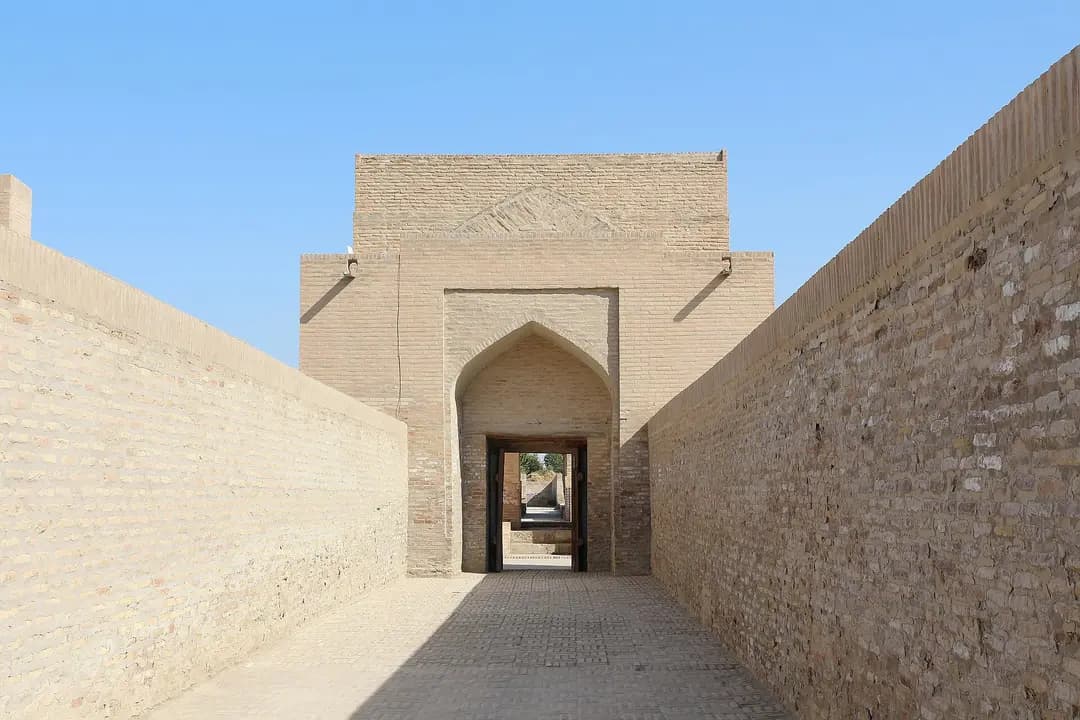
Six kilometres west of Bukhara, beyond the village of Sumitan, is a place that is almost always quiet. There are no noisy souvenir rows and no streams of tourists, only tall portals of fired brick, narrow passages between walls and old trees. This is the Chor-Bakr necropolis, a "city of the dead" built by the powerful Juybari family of sheikhs. If you have already seen Po-i-Kalyan and Lyabi-Hauz and want something more intimate, Chor-Bakr is an excellent choice.
Where the name comes from
"Chor-Bakr" means "four Bakrs". According to tradition, four brothers were buried here: Abu Bakr Said, Abu Bakr Tarkhan, Abu Bakr Hamid and Abu Bakr Fazl, descendants of the Prophet Muhammad who preached in Bukhara. The oldest burial dates from the 10th century: Abu Bakr Said died in 970. Ever since, the place has been revered as holy, and their descendants were buried nearby.
The Juybari family
In the 16th century the descendants of these saints, known as the Juybari khojas, became one of the richest and most influential families of the Bukhara Khanate. Their lands, caravanserais and trade connections brought enormous income, and their spiritual authority let them influence the khans themselves. The Juybaris were especially close to Abdullah Khan II, under whom Bukhara flourished.
In the mid-16th century a large family necropolis was built over the old graves. It was conceived not as a cemetery in the usual sense, but as a kind of town, with streets, quarters and public buildings.
How the necropolis is laid out
What sets Chor-Bakr apart from other memorials is its plan. Instead of separate mausoleums, there are hazira: walled courtyards with tall portals. Each courtyard belonged to one branch of the family, and inside are tombstones under the open sky. The courtyards line narrow passages, and walking through them really does feel like exploring an empty city block.
Public buildings stand along the main axis:
- a mosque with a tall portal and a dome;
- a khanaka, the Sufi meeting house, massive and austere;
- a madrasa, part of which survives;
- a minaret, added much later.
The portals are striking for their scale and restraint: almost no tiles, just brick, arches and niches. It is a very photogenic place, especially when a low sun casts long shadows across the courtyard walls.
Why it is worth seeing
Silence. Chor-Bakr is one of the few places around Bukhara where you can spend an hour almost alone. Pilgrims do come, but not many, and the atmosphere is focused.
Unusual architecture. A family necropolis laid out like a town is a rare thing. It shows clearly how the religious authority and wealth of one family were expressed in space.
Trees and garden. Old trees grow on the grounds, and there are green patches between the courtyards. In summer the shade is noticeably cooler.
Light. In the morning and in the last hours before sunset the brick turns warm and honey-coloured, and the passages between the courtyards fill with a play of light and shadow.
How to behave
Chor-Bakr is an active place of worship and a family cemetery:
- Dress modestly: shoulders and knees covered; a headscarf is advisable for women.
- Do not sit or stand on tombstones, and do not climb over enclosures.
- Speak quietly, especially if people are praying nearby.
- Photograph people only with permission.
- Do not take stones or fragments of brick; they are part of the monument.
Entry is usually paid but inexpensive; prices are approximate and change. Sometimes a caretaker on site can tell you a little about the history, and a small tip is appropriate.
Getting there
Chor-Bakr is about 5-6 km west of Bukhara's old city, 15-20 minutes by taxi. Public transport does run to the village, but a car is more convenient for visitors. Agree a return trip with your driver, with about an hour of waiting.
The necropolis combines easily with other suburbs in one day:
- Bahauddin Naqshband - the main Sufi shrine, north-east of the city;
- Sitorai Mohi-Hosa - the last emir's palace, to the north;
- Chor-Bakr - to the west, best left for last, towards evening.
That loop takes 5-7 hours with stops.
When to go
Spring and autumn are best. In summer come before ten in the morning or after five in the afternoon: the open courtyards heat up badly and there is almost no shade at midday. In winter the place is deserted and quiet, and it can be windy, so bring warm clothes.
Heading back to Tashkent
If Chor-Bakr is your last stop in Bukhara, it is convenient to leave for Tashkent after lunch or the next morning. It is a long way: about 560 km and seven to eight hours via Navoi, Samarkand and Jizzakh. Instead of a private taxi you can choose a shared ride through Yo'ldosh: you book one seat with a verified driver and pay only for yourself. Many people take a seat on an early-morning departure to reach the capital in daylight.
Trips are on the Bukhara - Tashkent route page. If you are driving this route yourself, take a look at the for drivers section.
Cover photo: Bgag, CC0, Wikimedia Commons.
