Oshkhona: How to Eat Cheaply Like a Local
Everyday canteens with kazans at the door, plov days and hearty soups: how an oshkhona menu works, when to go and roughly what lunch costs.
Ask a taxi driver, an office worker or a builder where they have lunch, and the answer is almost always the same: at an oshkhona. An oshkhona is an everyday canteen, a place with no laminated menu and no pretensions about decor, but with big kazans, hot food and honest prices. For a traveller it is the best way to eat home-style food and see the daily life of a city.
What an oshkhona is
The word roughly means kitchen or house of food. It can be a small roadside room with a few tables, a spacious canteen at a bazaar or a place with raised platforms (topchans) in a courtyard. What they share is this: a limited set of dishes is cooked in large quantities, and whatever is made is usually eaten by midday.
Telling an oshkhona from a restaurant is easy:
- kazans and pots stand at the entrance, sometimes right on the street;
- the menu is written on a board or there is none at all; you are simply told what is available today;
- most customers come at lunchtime, and many places close by evening.
How the menu works
An oshkhona menu is built around a few hot dishes of the day. The most common are:
- plov: the star of the show, in some places only on certain days;
- shurpa: a clear meat soup with large chunks of vegetables;
- mastava: rice soup with meat and vegetables, often with katyk (sour milk);
- lagman: hand-pulled noodles with a meat sauce or in broth;
- dimlama: vegetables slow-stewed with meat, a seasonal dish;
- manti and chuchvara: in some places;
- achichuk salad, bread and tea: the constant companions of any lunch.
In some oshkhonas you go up to the counter and point at what you want; in others you sit down and the waiter tells you the dishes of the day. Do not hesitate to ask what is available today; it is a perfectly normal question.
Plov days
Many oshkhonas do not cook plov every day but on particular plov days, often towards the end of the week. Traditions vary from one neighbourhood to another, so ask locals or the cooks themselves. On a plov day the kazan is started early in the morning, and the plov can run out by lunchtime, so come early.
When to go
| Time | What to expect |
|---|---|
| 7:00–10:00 | in some places morning plov, naryn, samsa, tea |
| 11:30–14:00 | main lunch, the widest choice and queues |
| 14:00–16:00 | choice shrinks, some dishes run out |
| evening | many oshkhonas are closed or have a reduced menu |
The ideal time is around noon, just before the main lunch rush.
What lunch costs
Lunch at an oshkhona is one of the cheapest ways to eat in the country. Roughly speaking, a portion of soup or plov, bread and a pot of tea cost noticeably less than in a restaurant with a printed menu and table service. Actual prices depend on the city and neighbourhood: central Tashkent is pricier, the regions and bazaar areas cheaper. Prices change, so ask before ordering if there is no price board.
What affects the bill:
- plov with kazy sausage or quail eggs costs more than the plain version;
- bread and tea are often charged separately;
- sometimes a small service percentage is added.
Oshkhona etiquette
- Greet people when you enter; it is customary.
- Place bread on the table right side up and never throw it.
- Tea is drunk from small bowls, poured a little at a time; the host or the eldest at the table usually pours for others.
- Strangers often join your table; that is normal.
- Pay at the till or to the waiter at the end, in cash or by card where there is a terminal.
How to find a good oshkhona
- Watch where taxi drivers and workers go: they know where it is tasty and fair.
- Look for oshkhonas near bazaars and on the roads out of town.
- A full room at lunchtime is the best sign of quality.
- Ignore the decor: the most famous places often look very plain.
Oshkhonas on the road: Almalyk
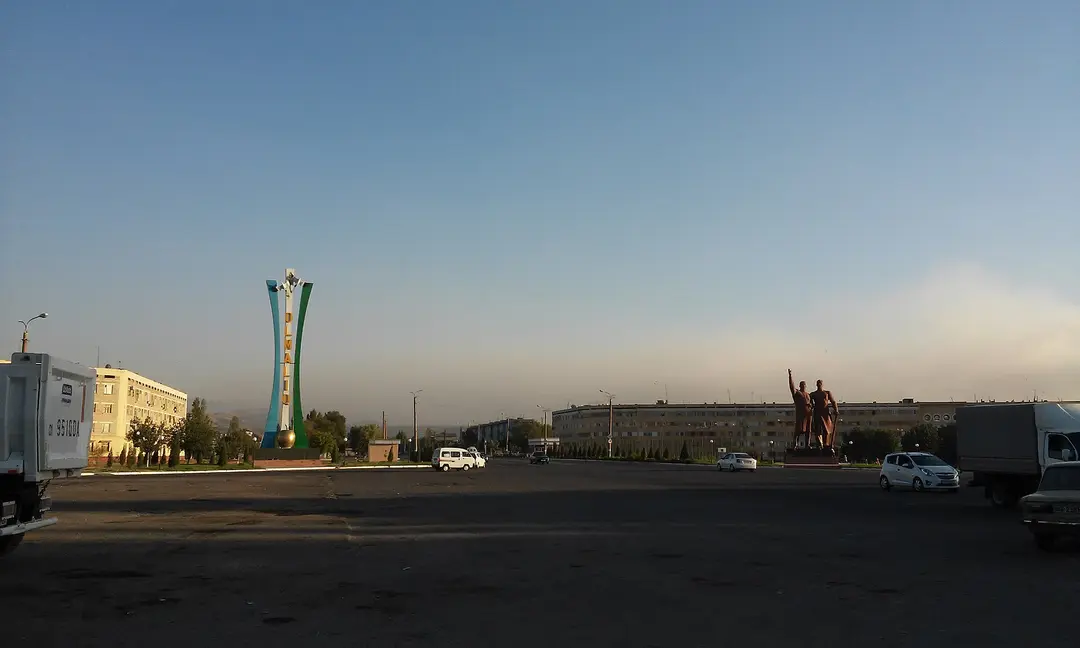
Roadside oshkhonas are a world of their own. On the way from Tashkent to Almalyk, an industrial town about 60 to 70 km south of the capital, you will pass roadside canteens where drivers and workers eat. The trip usually takes an hour to an hour and a half, and it is an easy way to see everyday life outside the capital.
A shared ride on Tashkent to Almalyk with Yo'ldosh is convenient: you book a seat in the app, drivers are verified and the fare is usually lower than a taxi. Drivers also tend to know the best oshkhonas along the way, so ask and they will probably tell you where to stop. All directions are under all routes.
In short
An oshkhona is not a special-occasion restaurant but everyday food cooked fast, in quantity and well. Come at lunchtime, ask for the dish of the day, order bread and tea and do not be put off by simple interiors. This is where you taste genuine home-style Uzbek cooking without mark-ups or tourist menus.
Cover photo: Vol71193, CC BY-SA 4.0, Wikimedia Commons.
